

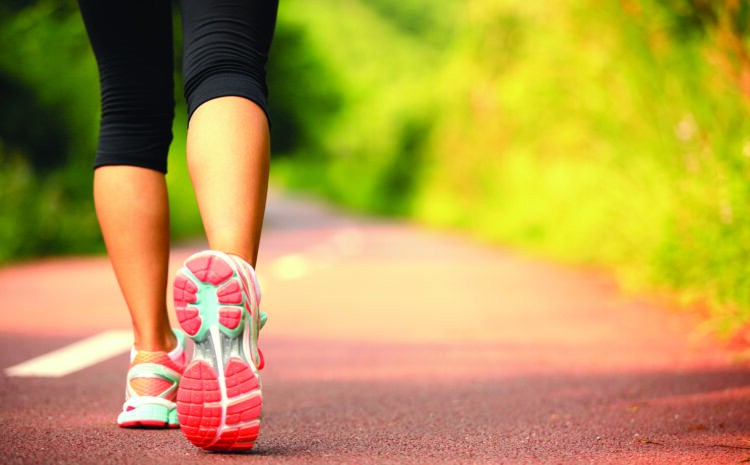
Is basic physical therapy right at our feet?
Doctors across our country have been seeing an increased incidence of sports and activity injuries among people over the age of 50. That should really come as no surprise, given our nation’s aging demographic and the fact that many people are remaining active well into their 80s—which is good news in terms of our nation’s general health.
However, a person’s age does matter when it comes to treating sports injuries. Younger athletes tend to suffer more acute and severe injuries caused during a sporting event or as a result of a serious accident, although they are not immune from overuse injuries, either. While an older person may also suffer from such a catastrophic event, they tend to have a higher incidence of repetitive injuries often involving joint pain.
Naturally, any severe physical injury needs immediate medical attention. But even seemingly minor injuries should be checked out by primary care physicians—especially with more elderly athletes. Of course, as many of us get back off the couch and get outside in summer, regardless of our age, there are bound to be minor pulls, sprains, joint pains and injuries that occur.
“I always tell my patients, especially with our senior adults, that it is always good to get checked out by your primary doctor, even if it seems like a minor injury,” says Dr. Carlos Ventura, an internal medicine specialist with Kettering Health, the official health care provider of the Cincinnati Bengals. “A simple X-ray and a physical examination are always very helpful. They also allow us to tell the patients when it is safe to go back to exercising, especially if you are a senior adult.”

It turns out, one of the best therapies for minor sports injuries as well as a means of avoiding future sport injuries, is by simply walking—a key to remaining active in our old age and a great way for younger adults to get ready for the active months ahead.
Walking is a great way to reboot your system after a sedentary winter of Netflix, Cheese Doodles and a comfy couch. Just 30 minutes a day can increase cardiovascular fitness, strengthen bones, reduce excess body fat and boost muscle power. But it can also help reduce the risk of developing more serious conditions such as heart disease, type 2 diabetes, osteoporosis and some cancers.
It’s free and requires very minimal equipment. It’s also a low impact way to get back in the game, or to recover if you do suffer a small injury.
If you do get injured, make sure that you are cleared by your primary care physician to resume exercising or to start a physical therapy regimen. There are some new walking techniques that can be very helpful in recovery, says Ventura.
“And the one that keeps coming up rather strongly is something called Nordic walking,” he says.
This involves walking where you use sticks or poles like they do in Nordic countries with skies. Nordic walking burns more calories and works more muscles than conventional walking.
There are several different techniques that can be used in Nordic walking. The first is something called “double polling,” which involves planting both poles in front of you symmetrically and then pulling yourself forward as you walk a few steps. Another technique is called “single poling,” in which the use of the poles mimics what your feet are doing, placing one pole in front of you each time you stride.
Regardless of which technique you use, “Nordic walking is a very safe and secure alternative, because using the sticks while you walk provides better balance, so you avoid potential falls,” says Ventura. “And you are using your upper body in addition to your lower body, to help you heal.”
Because it offers vigorous muscle workouts for shoulders, arms and core as well as the legs, you may use 80-90% of your body as opposed to just 50% with regular walking.
“It’s great cardio because you are getting your heart rate up, but you are also engaging your lungs,” adds Ventura. Always check with your primary care physician and get cleared before you start a regimen of Nordic walking.
Regardless of whether you are recuperating from a minor sports injury or restarting an exercise program, walking should be added to your daily routine—and the sooner the better—especially if you want to remain or become active. And it really doesn’t matter how much you walk. Never underestimate the power of even 15 to 20 minutes of walking.
“I cannot tell you how many times I ask patients if they are exercising and the typical answer is, ‘I’m just walking,’” says Dr. Ventura. “First of all, if it’s not sitting on the couch watching Netflix, I’ll take it. Whatever physical activity you are doing is better than no physical activity at all.”
For elderly individuals, walking not only prepares the body for further activity, but also helps to stave off potential injuries once you become more active.
But aren’t there a certain number of steps you should take each day?
“That concept has created some controversy,” says Ventura. “There was some previous research that said that anything less than 5,000 steps a day was considered a sedentary lifestyle and anything over 10,000 steps a day and you were considered an active person.”
But it’s more important that you incorporate walking into your daily schedule as a part of a more active lifestyle.
“There are little things you can do to add walking to your routine,” says Ventura. “Start with small changes and add it on to something you are already doing so it becomes a habit.”
That might mean walking 15 to 20 minutes in the morning before work and then adding another 15 to 20 minutes when you get home afterward.
“I have a number of patients who also take walks as a part of their lunch,” says Ventura.
Summer is obviously a great time to start. It is not only good for our body, but also our mental health, says Ventura, citing a recent article in the Journal of Sports Medicine called “Walking and Sunshine.
“While we might have to wait until we get the full benefit of sunshine here in Ohio, there is a lot of evidence that walking is highly related to an improvement in mood as well,” he says.
But nature, even in the middle of a pleasant Ohio summer, is not always cooperative.
“Coming from Arizona and as a new resident to the state of Ohio, I have had to learn a few tricks when there is inclement weather,” Ventura says. “Even when it is raining, there are plenty of local community centers and other facilities that may have a basketball court open for morning walks. There are also local shopping malls.”
Local health clubs and gyms may have treadmills that offer the convenience of jumping in and getting started.
“But I would caution you to start up slow because you might injure yourself or have heart issues,” he says. “So, start on a lower setting then crank it up as you get used to it. If you are older, that will help you avoid things like hip and knee pain.”
