

Local experts dispel the myths surrounding Generative AI
Artificial Intelligence (AI) and machine learning have been around for decades, especially in manufacturing. However, with the introduction of Generative AI, especially programs like ChatGPT, AI has caused quite a stir in the business and industry, especially in arts and entertainment industries where creativity and copyright are essential to pay.
Generative AI is any artificial intelligence that produces various types of content such as text, imagery, audio and synthetic data. But the real concern with AI really didn’t come into focus until OpenAI rolled out ChatGPT last year. Officially known as Chat Generative Pre-trained Transformer, ChatGPT is a language model-based chatbot used to refine and steer a conversation towards a desired length, format, style, level of detail and language.
And there is no arguing that it is very powerful and effective, especially when it comes to research.
Across the entertainment industry, artists, writers and actors began to wonder if their work would become irrelevant, or if their work would still be protected by our nation’s copyright laws. Within the media, AI horror stories popped up. Actors would be thrown out of work, their images and likeness used without compensation. Writers would have stories repeated in multiple formats, once again without compensation.
Soon, all AI technologies became suspect. Will the technology herald in a new dawning of the age of machines? Will computers soon be able to control elections, the dissemination of information and eventually become sentient and perhaps even competitive with biological life? AI became synonymous with Mary Shelley’s Modern Prometheus.
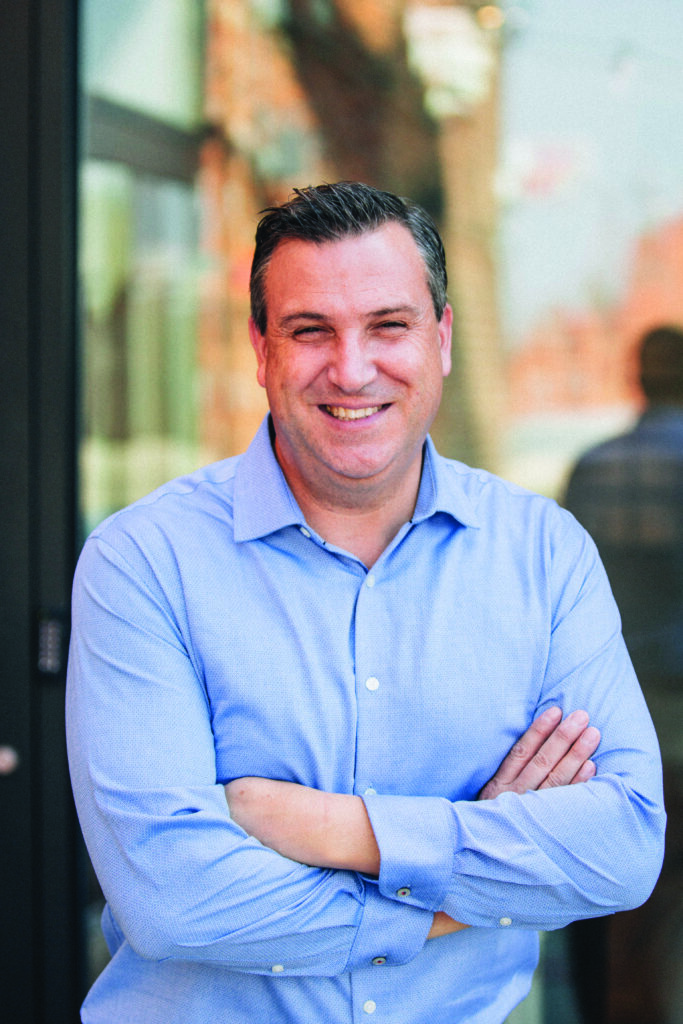
“We should absolutely not be afraid of AI,” says Pete Blackshaw, CEO of Cintrifuse, a syndicate “fund of funds” and startup incubator in the Greater Cincinnati. “But there are some ‘watch outs.’ I am currently building a whole coalition around the concept of ‘Responsible AI,’ which gets into the trust and ethics of the technology.”
It certainly doesn’t help with all the recent corporate infighting within ChatGPT’s founding company OpenAI. Its founders, Sam Altman, Elon Musk, Ilya Sutskever and Greg Brockman marketed themselves as society’s protectors against runaway evil AI. We were at least protected by high-minded corporate executives with compassion and vision.
But the peace was short-lived.
OpenAI got its start in 2015 as a research organization consisting of nonprofit and for-profit subsidiaries. As the AI technology quickly improved, the for-profit side of OpenAI received a $1 billion investment from Microsoft in 2019 with an additional $10 billion investment made just this year.
Like most areas of human enterprise, where there’s that much money involved, there’s always trouble. Last month, Altman was removed as OpenAI’s CEO and Brockman bounced as chairman, later resigning as president as well. A few days later both Brockman and Altman returned, the board stepped down, Bret Taylor became chairman and Microsoft was given a non-voting seat on the board.

“There is a bit of a tug-of-war going on with respect to that company,” says Tom Humphrey, an intellectual property attorney with the Cincinnati firm of Wood Herron Evans, LLP. “While ChatGPT allowed the public to see what was available and to raise some serious questions, the [in-fighting] at OpenAI is not really an intellectual property issue, it’s more of your classic corporate arm wrestling.”
ChatGPT does have limitations, especially within the legal profession, notes Humphrey.
“I know of one law firm who recently found themselves on the wrong side of a judge for using ChatGPT to write a legal brief,” Humphrey cautions. “They got found out because the program hallucinated a number of case citations that were not real.
“When the judge asked his clerk to pull up the case citations so they could be evaluated, they found that some of the cases simply didn’t exist. Clearly, you have to have a human filter for anything that AI creates, especially in legal writing, because it is prone to hallucination.”
But what about the arts? Turns out that our nation’s copyright and intellectual property laws as well as AI’s limitations should keep artist’s writers, artists and actors pretty well protected.
As far as the creation of artwork or text generated by AI, it does not have an imagination.
“First of all, it’s not really possible for AI to create something. It has to generate something from material that already exists,” says Humphrey. “The technology tends to create cliches and tropes as opposed to using actual cleverness. It’s not so great at the creation of something that doesn’t already exist. It only tends to be good at combining concepts that a prompt provides.”
In addition, those creations cannot be protected under our nation’s copyright laws.
“You would have to acknowledge to the copyright office that your artwork or text was AI generated,” says Humphrey. “They would refuse to register it on the basis that it does not have human creativity. There is no copyright protection for non-human generated works because they don’t involve human creativity.”
The same is true when it comes to the protection and use of celebrity or actor’s images. That’s been the interpretation of our existing laws so far. So what’s the future of Generative AI? Will it only be relegated to school research, book reports and the like?
“I feel that the primary commercial use of AI right now is in creating documentation and commercial artwork for marketing purposes, user manuals and that sort of thing,” says Humphrey. “For instance, using AI to generate additional views of a vehicle or a piece of machinery, or to generate a 3D model of something. AI can be used to simplify and streamline a lot of that documentation and artwork—which does employ a lot of people.
“One of my concerns is to what extent is there an intellectual property issue with AI being trained to use protected content, because it has been trained to use everything that is on the internet or available in the databases of books and magazines—just about all of which is protected by copyright,” says Humphrey. “There is very little content of human civilization that is not copyrighted right now. So, the question then becomes, ‘Is just training AI on that material somehow a copyright infringement?’ The other problem is that AI is not making a copy and circulating it, but just internalizing the words and images for use in something else.”
While the use of AI has raised a lot of questions for the entertainment and artistic community, it’s not something we should fear, as Blackshaw notes. Laws and the interpretation of those laws should offer enough protection, at least for the foreseeable future.
There will always be bad actors, people who abuse the new technology, just like there are hackers and scam artists on the internet today. But the impact of AI on business and industry is very powerful and too real to dismiss, especially if we put up the right guardrails for its use. We would be falling behind if we didn’t use and exploit every aspect of AI or Generative AI.
Currently Blackshaw has the University of Cincinnati, Northern Kentucky University, Xavier and Miami University as well as a host of major corporate players involved in the Responsible AI initiative, which you’ll be reading about in the very near future.
“Now we have this much more disruptive technology of Generative AI, and the world is responding to it,” says Blackshaw. “We just have to find out how we use this new technology responsibly.
“This is the new electricity and we’re just figuring out how to manage the lights.”
