

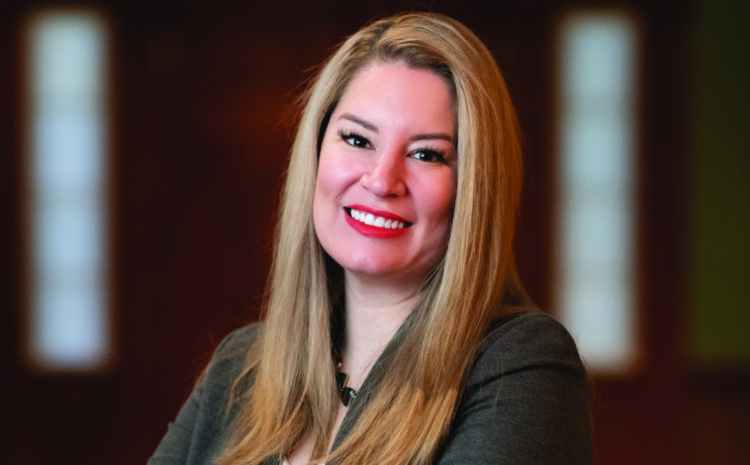
Rebekah Beaulieu, the new CEO of the Taft Museum of Art, aims to grow and sustain the historic house
Great art moves people. As an impressionable teenager, Rebekah Beaulieu was captivated by an exhibit of artworks by three generations of the famed Wyeth family, an exhibition she took in during a family vacation in Maine. The experience launched her on a journey into the museum world that culminated last year in her being named the seventh president and CEO of the Taft Museum of Art.
“I just fell in love with, not just the vibrancy of the works themselves, but also the stories that were unfolding,” she says. “I just found it so engaging.” The next summer, she was back at the Farnsworth Art Museum in Rockland, Maine, as an intern, learning the details of how a small, historic museum is run from the ground up.
That was followed by a degree in art history and American Studies from George Washington University, two master’s degrees—one in art history and one in arts administration—and a Ph.D. in American Studies, all from different universities. Her intent was to be an art curator, working directly with objects of art, cataloging, organizing and exhibiting them. But during her second master’s coursework at Columbia University, she discovered another passion—keeping art museums alive financially.
“Many of us in the arts don’t necessarily consider ourselves to be people who have a strong business sense or a strong sense of finance,” she says. “That was something where I really had to face my fears. And I found that I actually really loved—which I could not believe—nonprofit finance.”
For her Ph.D dissertation at Boston University, she wrote the book—literally—on financing museums like the Taft. Her thesis, “Accounting for the past: historic house museums and America’s urban Midwest,” dissected the financial management of three such museums in Milwaukee, Chicago and St. Louis. Shortly after, she wrote a 184-page, step-by-step guide on managing small museums located in historic properties, Financial Fundamentals for Historic House Museums. She followed that up in 2022 with the publication of Endowment Essentials for Museums.
Understanding the intricacies of nonprofit museum finance is part of telling the stories of those institutions, Beaulieu says. “We’re storytellers in museums, we’re passionate about our mission. If we can take those skills and can transpose them over to finance, that’s obviously something that makes a lot of sense.”
Beaulieu (she goes by “Becky”) started at the Taft in September 2022, arriving from the Florence Griswold Museum in Old Lyme, Connecticut, where she was director of that national historic landmark, its house museum and its exhibition space dedicated to American art, history and landscape design.
As one of the newest CEOs in the region, she’s taken over an institution that appears to be on relatively good financial footing. The Taft enjoys a $35 million endowment, and last year it completed a $12.7 million structural renovation of the 200-year-old Taft house, work that was financed by a capital campaign.
In her first year as CEO, she’s examined the museum’s budget process and explored new revenue opportunities. She and her leadership team crafted a strategic plan outlining areas of focus for the next three years. “We have priorities that relate to making sure that we are rightfully inhabiting our role as a leading arts organization and a thought leader in our field, creating a sense and a spirit of welcoming and accessibility for all audiences, all abilities, and making sure that we have a completely visitor-centric experience,” she says.
In the planning for her first fiscal year, she implemented a zero-based budgeting process, building department budgets from the ground up. “The intention was to get people to understand what they actually were investing in and helping them understand what the costs are and where we can bring in dollars to offset those expenses,” she says.
The museum and gift shop are expected to generate more revenue, as a new director of visitor experience was hired earlier this year from the hospitality sector. Offsite, satellite locations for the shop are under consideration.
Even a 96-year-old museum located in a 200-year-old historic home needs energetic management to stay vital and healthy, she says. Her guiding principle: “Make sure that you’re investing in stability, and not complacency. Just because it has survived this long, we should never take that for granted. Even our most stable institutions require very consistent, transparent oversight. “
Revenue in the current fiscal year is exceeding projections despite attendance still being down from pre-pandemic levels. The pandemic, combined with a year-long closure while the renovation was under way, contributed to the drop off. She hopes to begin to restore attendance by adding free admission days. The museum is now free on Sundays and Mondays, with admission ranging from $8 to $12 the other days (it’s closed on Tuesdays).
“We want to encourage people to come back to the Taft,” she says. “We want to encourage people to spend a whole afternoon at the Taft, come to the café, come and visit the shop, do your holiday shopping here in addition to visiting our exhibitions.”
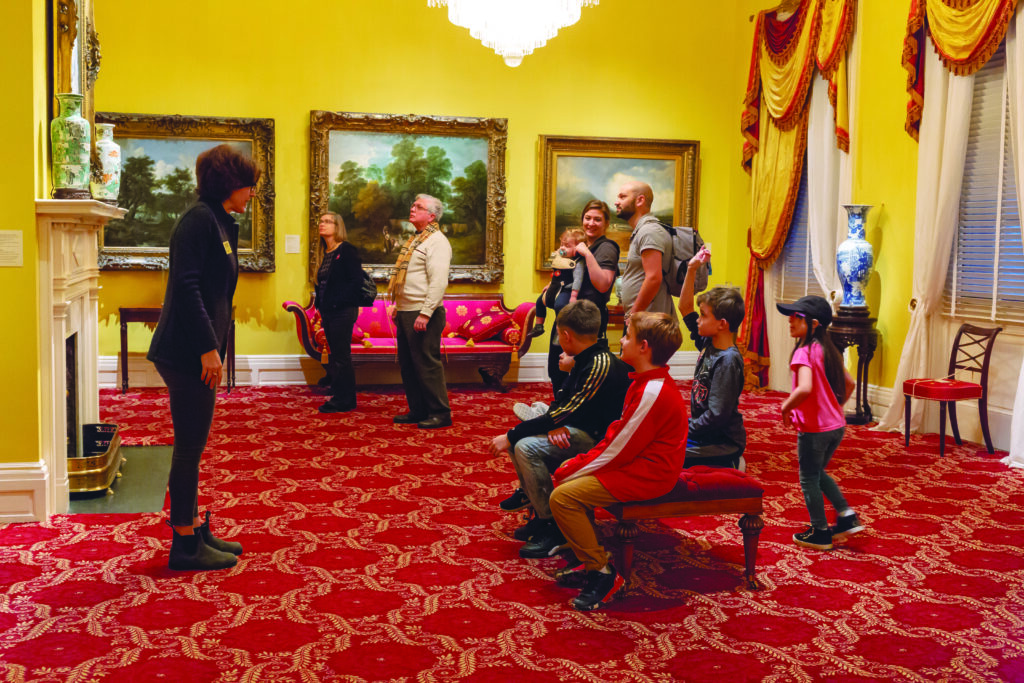
She’s working on improving accessibility, for example, collaborating with Clovernook Center for the Blind and Visually Impaired to create Braille introductions to some of the standing collection and bringing in 3D modeling of some of the objects. She’s also planning to install a state-of-the art lift for people with physical disabilities. That will be paid for with a portion of the $6 million gift announced in October from the estate of Carol and William Eckerle, the largest gift received from individual donors in the history of the Taft.
Beaulieu met her future husband, Patrick Ford, when they were both graduate students in art history at the University of Wisconsin-Milwaukee. He also has a degree in library science and is a rare books librarian at the Lloyd Library and Museum in downtown Cincinnati. They married in 2012, and share their home in Crestview Hills, Kentucky, with their two cats.
She plans to work on making the Taft, a Cincinnati treasure, into a more engaged member of the region’s life. That includes buying locally sourced food for the cafe, contributing to food pantries and creating service days for Taft employees to volunteer for other nonprofit institutions.
“Sometimes, when an organization has been around for such a long time, it can be considered an anchor of the past,” she says. “For us, it’s how do we bring that history to life, how do we bring our collection to life, and ensure that we are an active participant and a leader of Cincinnati’s future?”
