

Local politicians set example for trajectory of Trump’s upcoming trials
As a crusty old lawyer leaning to the blue side, lately I’ve been getting a lot of the same questions: “Will he go to jail?” “Can he get elected if he’s in jail”? Of course, these curious friends are referring to Donald Trump, now facing a plethora of criminal charges—federal indictments in Miami and Washington D.C., state charges in Atlanta and more changes in his hometown, NYC.
My answer: Don’t count on any jail time from these cases anytime soon. Just look at the sordid track record of charges against several Ohio and Cincinnati public servants sucked into the criminal justice system in recent years.
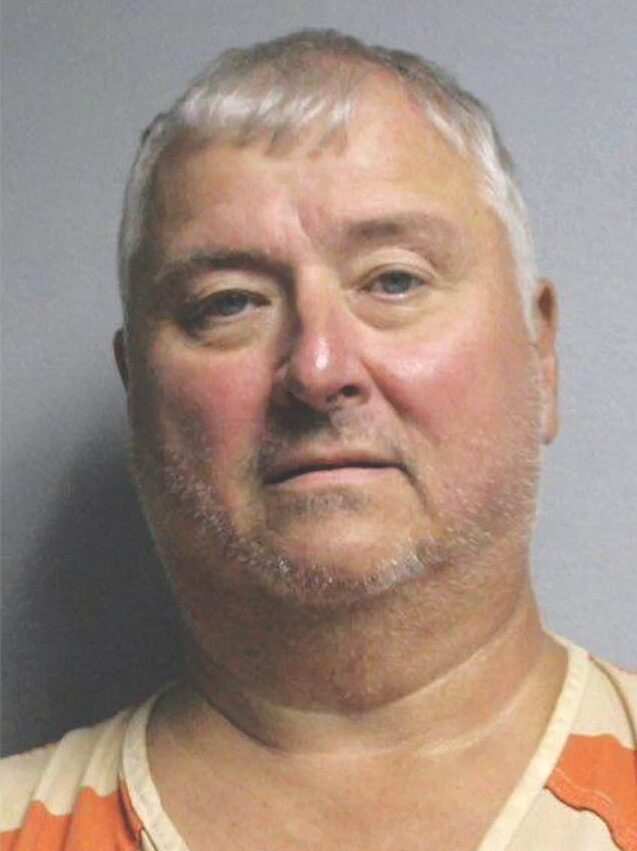
Exhibit One: Former GOP House Speaker Larry Householder, now locked up in a cozy federal pen. But it took about three years despite his leading role in what was described as the “biggest corruption case in Ohio history.” Federal prosecutors indicted the speaker and pal Matt Borges, the former GOP state chair, in July 2020, describing a $60 million bribery scheme funded by a giant Ohio public utility seeking a ratepayer bailout for two nuclear plants. Householder hot-wired the scheme through the Ohio General Assembly. Householder’s trial did not begin until early in 2023, nearly three years later, resulting in a jury conviction last March. In June, Householder was sentenced to 20 years. He was finally jailed, about three years after his indictment. It could be another year or two until all appeals are concluded.
Exhibits Two, Three and Four: The three Cincinnati Council members accused of soliciting and accepting bribes from actual (or apparent) Cincinnati developers. All three were indicted in 2020 for conduct that occurred in 2018-19.
The most publicized case involved P.G. Sittenfeld, former wunderkind of Cincinnati politics who seemed destined for the mayor’s office until his stunning indictment in November 2020. Sittenfeld is on tape soliciting campaign funds from FBI agents posing as developers. The trial did not occur until nearly two years later, resulting in a guilty verdict in July 2022. But that’s hardly the end of it. Sittenfeld’s high-priced defense team filed post-trial motions to overturn the verdict. The court took about nine more months to deny those motions in April 2023. Now the case is on appeal to the U.S. Court of Appeals and then, if necessary, to the U.S. Supreme Court. Those appeals could take a year or two more. Meanwhile, Sittenfeld is free on bond. It shows how a well-heeled and extravagantly defended alleged criminal, even one found guilty by a jury of his peers, can run out the clock to get all process that is due.
Not so well heeled was former Cincinnati Council member Tamaya Dennard, a former Sittenfeld aide and protégé, who faced her own bribery-related indictment in 2020 for taking cash and benefits from a developer. Without the resources to mount a costly defense, she faced the music and pled guilty, serving part of an 18-month sentence before her release in May 2022.
But even a guilty plea can be leveraged into a lengthy delay from charge to conviction. That’s the example shown by former Cincinnati Council member Jeff Pastor, who was indicted in November 2020 for soliciting and accepting a “retainer” from yet another would be developer in 2018 and 2019. He finally pled guilty more than two years after indictment in June 2023, and now faces some time in federal prison.
The Lesson: With a savvy defense team that he and his donors can surely afford, Trump can waltz through the election campaign while still proclaiming innocence. Even if he goes to trial and loses, he surely will accuse the jurors and judges of bias and put his faith in the Courts of Appeals, or his appointees in the Supreme Court, whose rulings will not be final for years to come. So, fasten your seat belts, America! The criminal justice system won’t solve this problem before November 2024.
Don Mooney is an attorney, a past member of the Cincinnati Planning Commission and is active in local politics.
