

Pandemic and aging baby boomers are changing how senior-care industry operates
It’s no secret that nursing and retirement homes often are viewed negatively. Some think of the facilities as being glum, where no one wants to go. COVID-19 certainly didn’t help, as those homes were some of the places hardest hit by the pandemic.
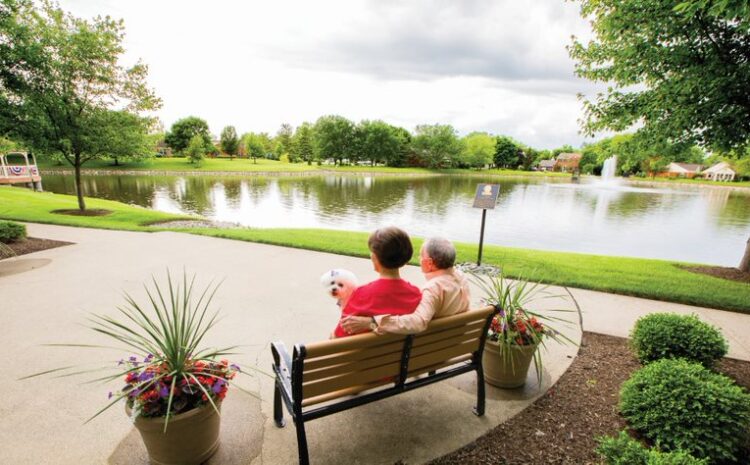
In recent years, retirement facilities have been working hard to prove that such communities can be radiant places to live. As they adjust to a global health crisis and a new generation aging into retirement, nursing and retirement homes across Greater Cincinnati are providing new approaches for a fresh perspective on retirement.
Lizz Stephens, vice president of marketing and business strategy for Christian Village Communities, says the pandemic brought a unique opportunity for a new approach to how the homes operate their facilities.
“Technology is now playing a key role in how current and future residents, as well as team members, stay connected,” Stephens says. “Virtual meetings are much more frequently utilized, and our prospective residents want the ability to visit both in person and virtually.”
In addition to increasing the amount of virtual offerings, Stephens says Christian Villages has moved to focus more on wellness, both physical and mental.
“Our industry has seen an increased focus on wellness, and I think the pandemic really emphasizes that more,” she says. “Christian Village at Mason has a large independent-living population, so we have a full-time director of fitness and wellness who operates our fitness center.”
Although it might seem that people would be hesitant to move into communal living in the age of a pandemic, Pam Huesman, marketing director of Colonial Heights & Gardens in Florence, Kentucky, says several advantages—such as the widespread access to vaccines—have caused people to be more willing to move into the communities.
“People have learned that they are more interested in being in a community where they are not as isolated if something like that were to occur again,” Huesman says. “They’re much more willing to understand that the time that they spent alone was certainly not beneficial, and that even just being able to at least see other people is much better.”
The risk of contracting COVID, for instance, is one many residents are willing to take, Huesman says. Residents “understand that being isolated costs them in more ways than they thought. They were scared. But just knowing that they have a neighbor that they could have is a lot more important to them than being completely alone.”
In addition to COVID-19 changing how retirement homes operate, aging baby boomers are putting more demand on the system as they begin moving into the facilities.
“Baby boomers are looking for access to amenities that will keep them connected, in addition to having access to things that will give them fitness and wellness,” Stephens says. “There’s so much competition in the area, so we really want to make sure that our facilities are the best they can be.”
Huesman also sees an increase in interest in independent living among baby boomers—a notable change from earlier generations.
“We’re all counting on more active lifestyles for the boomer generation,” she says. “Most people that are not in a community don’t want to be in one. They want to stay in their house as long as possible.” They discover that retirement communities often include independent living, so “they realize that they still have the autonomy, the ability to have their independent lifestyle.”
