

Who Dey will pay to keep the Bengals in town?
Bengals fans are suffering through a second consecutive lost season, as the talents of their highly paid quarterback, Joe Burrow, are squandered. Need a distraction? Check out the confusing dance that the Brown family and Hamilton County are performing to determine the long-term fate of the team.
It seems like only yesterday (actually 1996) when county taxpayers voted to pay an additional half cent sales tax to build a $555 million riverfront palace named for team founder Paul Brown.
The vote to approve the stadium tax, which also funded the Reds’ Great American Ball Park, was angry and divisive in a typically Cincinnati way. Was the tax wasteful corporate welfare or the only way to assure the city remained Big League? As a season ticket holder, I was happy for taxpayers to subsidize my fall Sundays. But my since departed mom was a no, not thrilled to pay to make rich team owners and players even richer.
Yeah, mom had a point.
The tax prevailed in a low turnout March election. The county-owned stadium opened in 2000. But there was a public relations hangover that still prevails among many voters. The Wall Street Journal described the Bengals 26-year stadium lease as “unusually lopsided in favor of the team and risky for taxpayers.” It obligated the county to pay for improvements to keep the stadium competitive with other NFL palaces in larger markets like Los Angeles and Dallas.
Democrat Todd Portune won a Hamilton County Commission seat in 2000 by decrying the lease as a shameful giveaway. His election paved the way for the demise of a decades long GOP monopoly. Democrats now occupy all three commission seats.
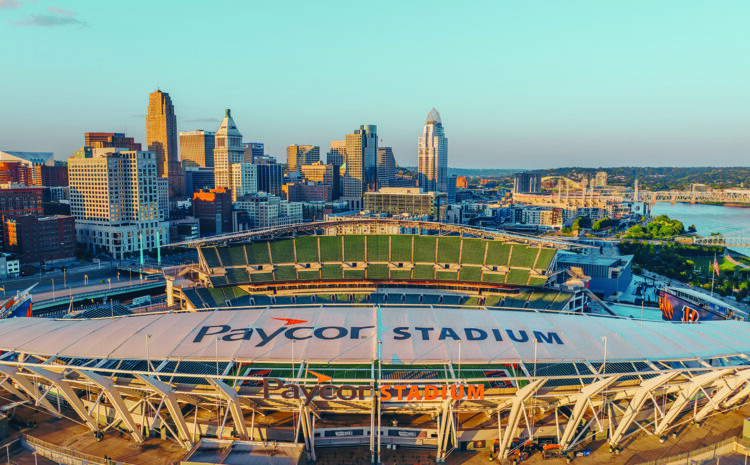
The lease ends in less than two years. By then taxpayers will have paid about $1.1 billion for what is now Paycor Stadium. Forbes estimates that the Bengals are worth about $4.1 billion, compared to the original 1967 $7.5 million purchase price. Taxpayers have already paid about $1 billion to build, maintain and “improve” the Bengals playground, about 96% of those costs. Yes, we’ve made the Brown family fabulously wealthy.
What happens next?
The lease expires in 2026, but the team has options to renew the lease for five additional two-year terms. If exercised, that would extend the lease until 2036. By then the team likely will say it needs a brand-new home—either here or somewhere else.
That first extension must be exercised by June next year, so the clock is ticking. As its price for extending for just those first two years, the team has reportedly asked county taxpayers to pony up an additional $300 million through the end of 2025. It has offered to kick in $50 million, or about 17% of those costs. Progress?
The Brown family has a reputation for both squeezing pennies and tough bargaining. Witness the recent refusal to sign a long-term deal with their star wide receiver Ja’Marr Chase, or letting some star defenders leave to earn more elsewhere.
But the current crop of commissioners seem determined not to fall into the trap that doomed their GOP predecessors. Commissioner Alicia Reece promises that taxpayers won’t get “screwed” again. She is demanding bigger contributions from both the team and the NFL, which has ponied up billions for new stadiums in places like LA.
Yet the county’s recent move is perplexing. In September, county administrators rolled out a plan for Paycor improvements with a whopping $1.25 billion price tag. That includes a new practice field, indoor training facilities and corporate offices adjacent to the stadium costing more than $336 million.
Maybe this was a ploy to seek a long-term extension, beyond 2036, rather than short extensions. But even county commission members did not seem on board with the stunning price tag their staff tossed on the bargaining table.
As the season winds down, Bengal fans will debate whether their Joe Burrow will make it to another Super Bowl in stripes. But with the June 2025 extension deadline approaching, the real question to consider is how much we are willing to pay to keep those stripes in Cincinnati.
