

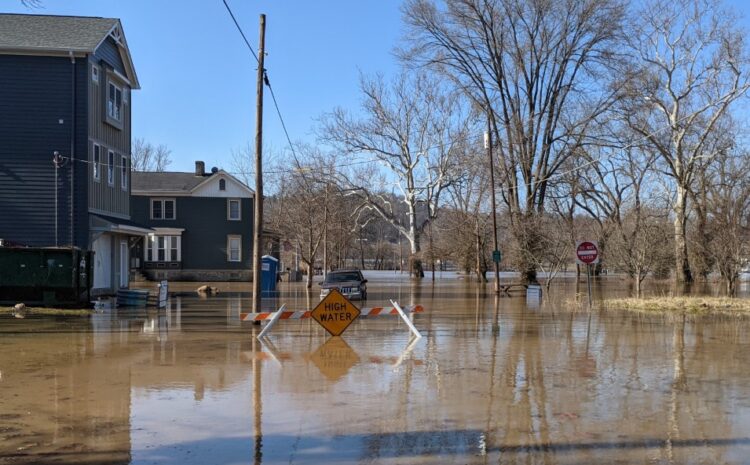
No precipitation in forecast this weekend, but beware flooded roads
Last weekend’s rain deluged the region, then continued eastward—pouring water into the Ohio River and creating flooding conditions not seen in three years, according to the National Weather Service office in Wilmington.
The good news: No rain is expected throughout this weekend, allowing Greater Cincinnati and beyond to dry out from February’s snow and rain. Mostly sunny skies and high temperatures in the upper 40s should prevail.
A flood warning for the Ohio River will continue until late Saturday night. Some local roadways remain flooded—and closed—as the water continues to recede this weekend. The Ohio River, with a flood stage of 52 feet, crested Thursday afternoon at 56.86 feet, which was in the moderate-flooding level as defined by the weather service, and almost a foot higher than originally predicted. The river hasn’t been that high since Feb. 25, 2018, when it peaked at 60.49 feet, records from the U.S. Geological Survey show. In 2019, it reached 55.46 feet Feb. 13. The high in 2020 was 54.42 feet Feb. 15.
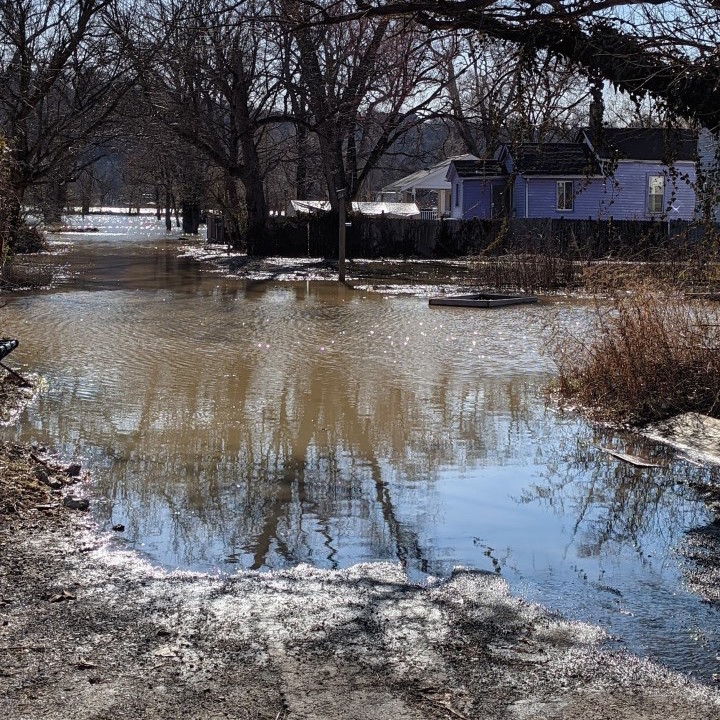
The weather service reported 21.9 inches of snow in February for the area. Snow began melting as temperatures warmed near the end of the month. That, combined with record rainfall last weekend, created ideal flooding conditions for streams and rivers. More than 2 inches of rain fell locally Sunday, breaking the 1.57-inch record for the date set in 2017. Some areas of Ohio and Kentucky received much more rain.
“At 2.08 inches, (Sunday’s) rainfall is also the 10th wettest single-day rainfall for the month of February in recorded history, dating back to 1871” in the region, the weather service said.
Significant flooding is occurring along the Ohio River at Coney Island and Riverbend Music Center and at businesses along Kellogg Avenue, the weather service said. Low-lying areas in New Richmond, East End, California, Anderson Township and Pierce Township also will be the most affected. Outlying areas in Ohio, Kentucky and Indiana are experiencing swollen smaller rivers and streams.
The weather service urges drivers to “turn around—don’t drown” when encountering high water on roadways.
