

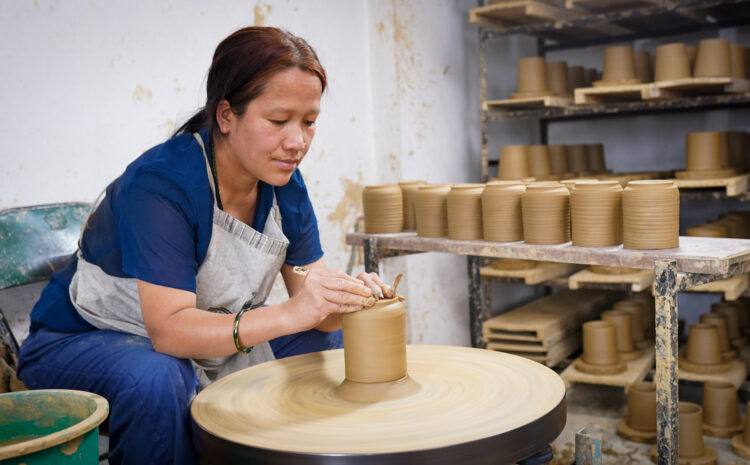
Ten Thousand Villages “takes out the middle man,” working directly with artisans in low-income countries
More than 20 years ago, Jodi Bockenstette was volunteering in Cincinnati, working with different organizations throughout the city. She began looking for something that “felt like I was going to give back more directly, in a more personal way.” When a friend suggested she check out Ten Thousand Villages, a local fair-trade nonprofit, she visited the newly opened O’Bryonville store. “I went into the store and that was it. I was hooked,” Bockenstette, who is now director of Ten Thousand Villages of Cincinnati, says. “I fell in love with the products and the mission.”
Ten Thousand Villages is a network of stores that “creates opportunities for artisans in developing countries to earn income by bringing their products and stories to our markets through long-term, fair-trading relationships,” according to the nonprofit’s website. Operating more than 100 stores across the U.S. and Canada, Ten Thousand Villages’ mission grew out of a Mennonite Community in Akron, Pennsylvania, that created a relationship with a group of Puerto Rican artisans, assisting them in building a sustainable market for their crafts. Today, the mission hasn’t changed much. “The goal is really to support artisans and their families,” Bockenstette says.
Working directly with the artisans, Ten Thousand Villages “takes out the middle man,” Bockenstette says. Artisans are paid 50% of costs when orders are placed and the other half before the order is shipped. “Your purchase truly makes a difference, 100% of that money is going back to the artisans,” Bockenstette says. “It allows them to be able to feed their children and keep them in school and out of sex trafficking, prostitution and child labor.”
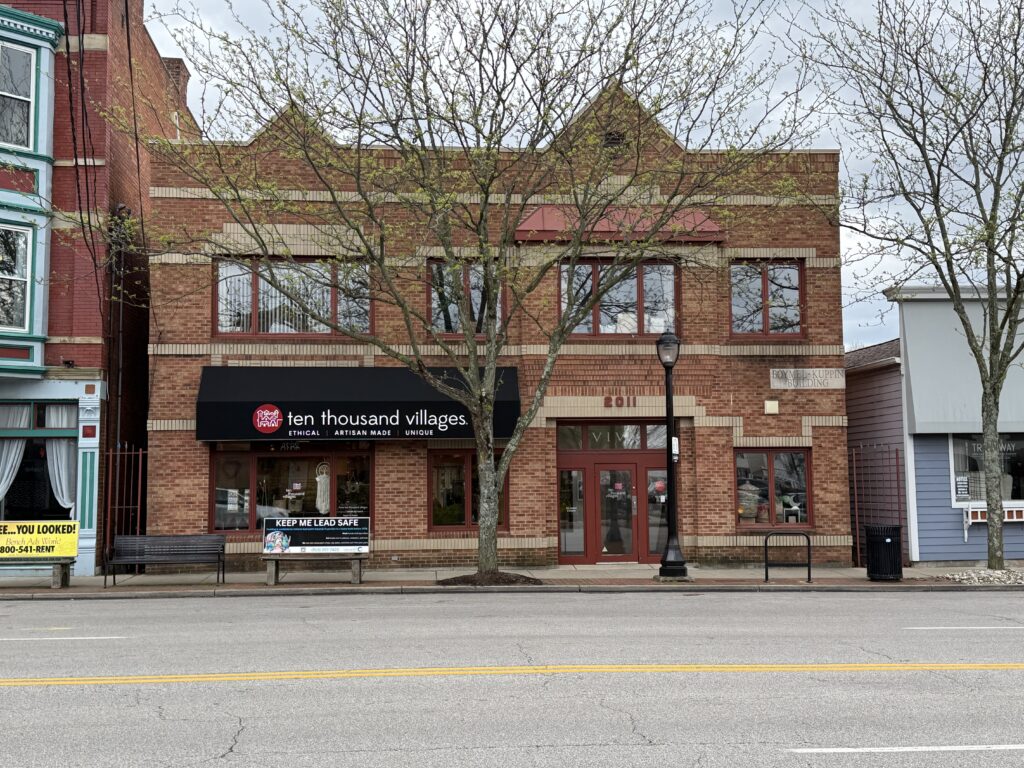
Since Bockenstette’s initial visit to the O’Bryonville store, Ten Thousand Villages has expanded in the area, opening a shop in Harper’s Point. Perhaps buoying the shop’s popularity is the shop’s quality control methods. Walking into the store, shoppers can see displays of items like bowls, rugs, jewelry, purses and more, with emphasis on marketability to American consumers. “We work with [the artisans] to kind of say, ‘OK, these are great color schemes. Or could you do this.’ But still trying to honor their craft,” Bockenstette says. The resulting product is something with mass appeal, yet with an interesting story that consumers can connect with.
Creating that connection is an integral part of the business. “If you walk up and you see a really cool planter or something, [our volunteers] give the story of that group of artisans,” Bockenstette says. Moreover, the store hosts classes, teaching participants different handicraft techniques reflecting the inventory. “It kind of connects you back to a particular artisan group so you can really appreciate and see what it takes to create those pieces.”
As a nonprofit, Bockenstette says there are obstacles in keeping this operation going. The pandemic proved particularly difficult and the continuing rise of online shopping is something Ten Thousand Villages is trying to catch up with. However, it is perhaps the obstacles Ten Thousand Villages faces, along with the lack of a necessary profit margin, that underlines its mission. “It’s not as though we’re trying to become this big corporation,” Bockenstette says. “Our goal is just to support artisans and their families.”
