

The Cincinnati Parks’ Fall ReLeaf Program expands the tree canopy across Cincinnati
How can you benefit your neighborhood and create a greater Cincinnati to live, work and play in? The Cincinnati Parks’ Fall ReLeaf Program has a free solution to make Cincinnati neighborhoods a better place to live.
For the past 38 years, the Cincinnati Parks’ Fall ReLeaf Program has worked to increase canopy coverage across Cincinnati and given out over 27,000 free trees. The program allows Cincinnati residents to receive free trees that they can plant on their property.
According to the ReLeaf Program, trees help with stress and anxiety, lower electricity usage, fight climate change, create cooler cities, control stormwater, provide cleaner air and create habitats for wildlife.
The Urban Forestry team for Cincinnati Parks says the first overall goal it had for the program was to reach 40% total canopy coverage of the city. From 2010 to 2020, the total canopy coverage went from 38% to 43%. It says the average American city has around 27% canopy coverage.
The team also says it has different goals for smaller areas, such as 40% coverage for residential areas, 10% for industrial or urban and 25% for mixed use areas. There are a number of neighborhoods that still do not reach the target goals. For example, Walnut Hills is at 33%, Lower Price Hill is at 20%, Over-The-Rhine is at 13% and Pendleton is at 12%.
Kelly Piller, marketing and communications for Cincinnati Parks, says for the last five years the program’s biggest priority is registering those who live in these lower canopy coverage areas for trees.
“Not every area is the same,” says Piller. “So there are certain neighborhoods that only have 5% tree coverage, and then there’s neighborhoods that have 50% coverage.”
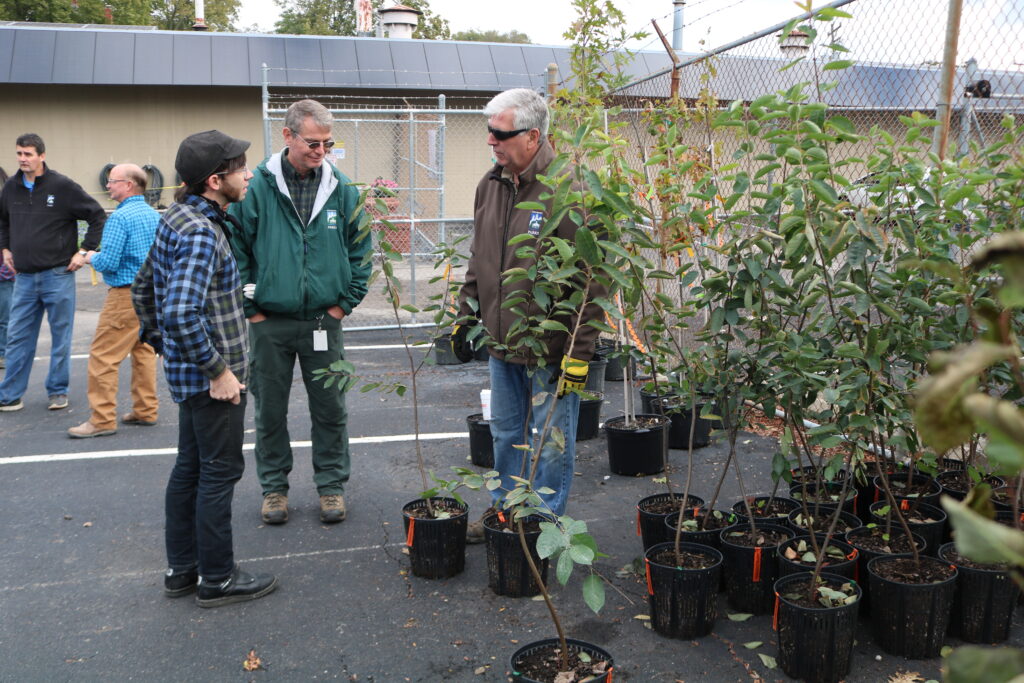
Piller says there will be eight types of trees available and 125 trees of each tree species to give out to those who register. This year the ReLeaf Program offers Sugar Maple, Buttonbush, Flowering Dogwood, Persimmon, Spicebush, Sweetbay Magnolia, Hoptree (Wafer Ash) and Willow Oak to those who want to adopt a tree and contribute to the city canopy coverage.
From an environmental standpoint, trees also help Cincinnati with the urban heat island effect. According to the United States Environmental Protection Agency (EPA), cities where trees are limited and buildings and concrete cover the city, the heat can be up to 1-7 degrees Fahrenheit hotter in the daytime compared to rural areas. Where concrete traps heat, trees offer shade and release water vapor into the air. Communities with trees can cool cities up to 10 degrees Fahrenheit and make it a better place to live.
Piller says as temperatures continue to rise, people are unable to handle the extreme heat and are no longer able to enjoy their neighborhoods. “Increasing the tree canopy is one of the best things that we can do to cool down the environment,” says Piller.
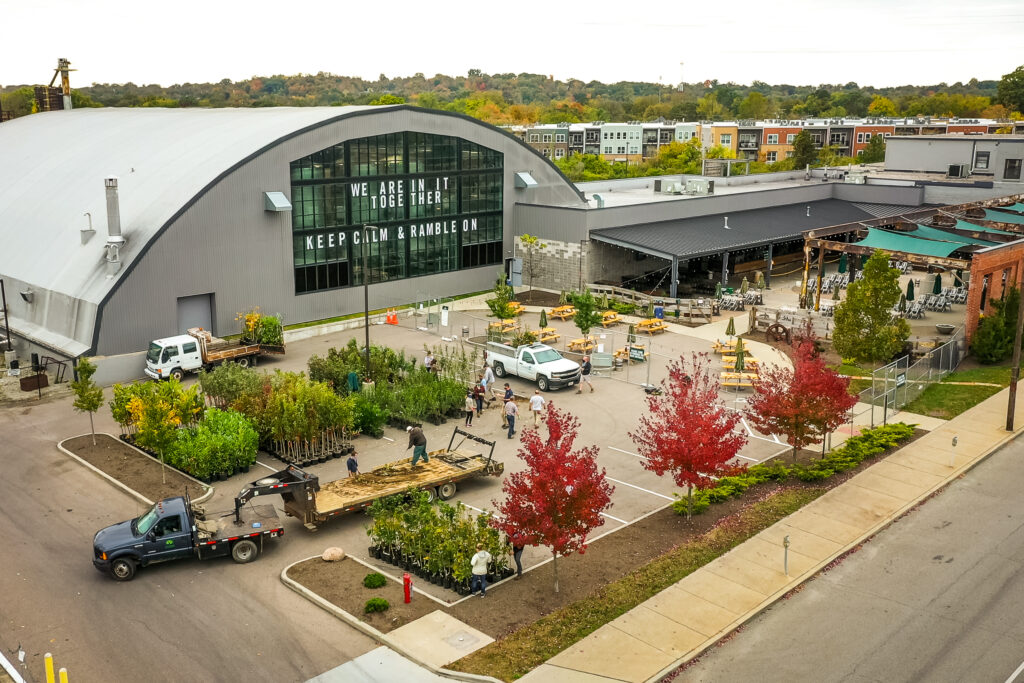
The program partners with MadTree Brewing, Dynegy and the Cincinnati Parks Foundation, who help with funding and getting trees to the community. The program aims to give out 1,000 trees each year.
The Cincinnati Parks’ Fall ReLeaf Program’s work and dedication to increase the canopy coverage in Cincinnati has greatly benefited the communities and the people who live within them. Anyone in the city can register for a free tree, especially those living in below target goal areas who will have priority registration.
Registration is currently open for Cincinnati residents.
