

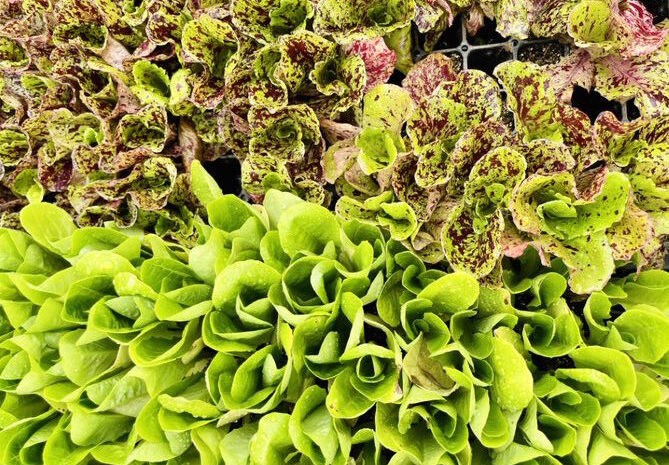
Technology makes it easier to connect local farmers with restaurants, stores and schools
A decade ago, Alice Chalmers was serving as the executive director of the nonprofit Future Harvest-Chesapeake Alliance for Sustainable Agriculture on the East Coast, working to connect local farmers with restaurants and other businesses in a sustainable farm-to-table system.
She helped obtain a grant for a study that examined the issues surrounding why small, local farms were facing issues in getting their products to consumers.
She wanted to know: “Why are farms around urban areas failing—why are they selling their farms? And we realized that a lot of the issues were around the local food-supply chain.”
The biggest issue? “It was not scalable without the right information system, the right IT,” she says.
She moved to Cincinnati in 2014 for personal reasons and wondered whether the same issues were occurring here. They were.
“Farmers have to manage everything—they have to grow, they have to sell, they have to deliver, they have to get paid, they have to manage customer service,” she says. “And the chefs have to manage for each product they buy—if they buy from five different farms, they have to match all those deliveries, all of those payments, all of those orders, who has what and when.”
She saw the same problem in Cincinnati that she saw on the East Coast. She went to work here, starting the Local Food Connection.
“By 2015, there were systems out there so that I could start this company with just two interns and myself,” she says. “People could order online, I could manage those orders, I could manage the deliveries, I could get the labels printed out—what goes where. The crux of this was very technology-related, but I still needed to make sure people wanted this.”
They did. She began connecting local farmers with restaurants, then institutions such as schools, and grocery stores. She started with 14 farms and 14 restaurants.
Chalmers remembers her first delivery day well. It was June 18, 2015, and it was hot.
She had bought a truck to pick up fruits and vegetables from local farmers to deliver to restaurants. It was the typical startup garage story, she says.
“It was a refrigerated truck that I would plug into my house, that served as transportation and a warehouse. That first day, when they delivered my truck, they didn’t put any oil in the refrigeration compressor, and so it failed, and I had 100 pounds of strawberries. It was just a horrible start.”
Despite that difficult start, Chalmers says farmers and others believed in her company. She grew the Local Food Connection into a firm with 100 farms and 600 restaurants, institutions and grocery stores.
Chalmers merged the company in 2019 with Louisville-based Creation Gardens, founded in 1987, and now known as What Chefs Want. That company is a large farm-to-table food hub with warehouses in Cincinnati; Columbus; Indianapolis; Louisville; Lexington; Nashville; St. Louis; Denver; Bardstown, Kentucky; and three in Illinois.
Many restaurant-goers, students in school cafeterias and grocery shoppers probably don’t know all of the logistics in getting local fresh food.
Megan Debanto, who started as an intern for Local Food Connection, now serves as local foods manager for What Chefs Want. “We’ve come a very long way since 2015,” she says.
The company offers various services. In one, Debanto says, products are listed online, and customers can order until 11 p.m. Sunday for a Tuesday delivery or 11 p.m. Wednesday for a Friday delivery. The farmers harvest their crops and drop them off at a warehouse Monday and Thursday. That keeps produce fresh for customers.
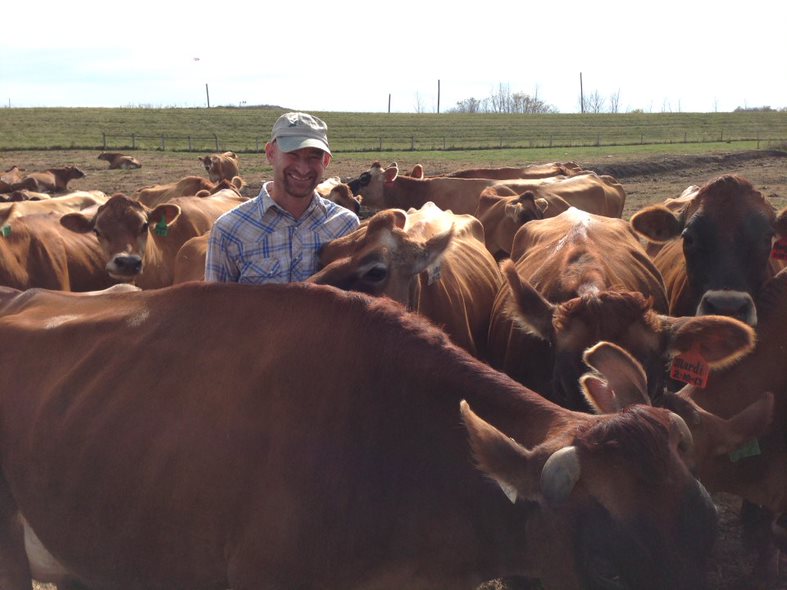
In another, customers can request a menu item, the food hub goes to a farm with the request, and the farmer plants the crop for delivery upon harvest. That’s popular for school cafeteria orders, for instance.
“It’s great for the farms because they know that they have a sale for this item that they’re putting in the ground,” Debanto says.
Anna Haas, local foods program director and an early Local Food Connection employee, says, “The whole concept is how to make local as convenient as possible for buyers. Buyers can go on farm tours and get to know who is behind these products.”
She says that in addition to traditional seasonal farming, there are two basic types of farms that can deliver year-round: aquaponics and hydroponics, in which crops are grown indoors in a water-based system with nutrients, and high-tunnel farming, an outdoor system using a plastic-covered semi-circular structure that absorbs the sun’s heat.
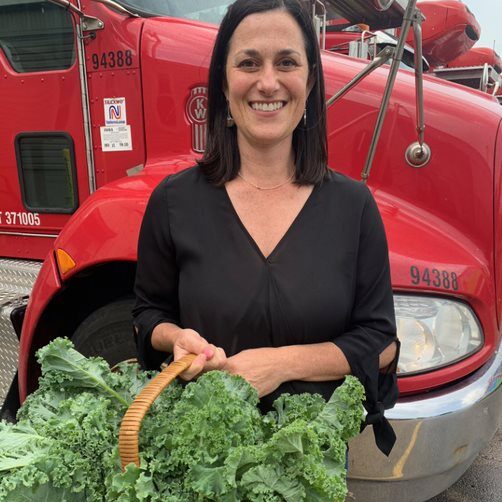
“What’s been innovative and different about our model is that it’s a just-in-time one,” unlike many food distributors, she says.
“Restaurants, schools and others can see what’s available, and buy it, so they’re actually buying it while it’s still in the ground—so super-fresh. The farmer would get the harvest-to-order order, and it would be to the restaurant or client the very next day.”
Haas also said there is Community Supported Agriculture, a subscription-based system in which families can pay a certain amount each year to a farm—say, $600—and the farmer delivers a number of crops each week during the various growing seasons.
Consumers might wonder about the price of locally grown food, vs. a nationwide/global distribution system.
Stephen Williams, owner/chef of Bouquet restaurant in Covington, Kentucky, who buys from about 60 farms, says it’s often less expensive to buy locally.
“They might have extra product, or a lot of farmers might have what they call B-grade because it’s not as pretty.” It all gets cut up for dishes anyway.
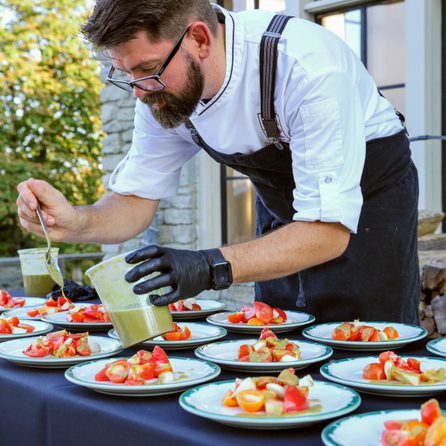
Williams started the restaurant 14 years ago and says that when he started, “we didn’t even use the phrase ‘farm to table.’ A few of us [chefs] were going to all of the local farmers markets daily, Findlay Market and going out to farms and meeting people and buying and coming back and writing a menu.” They even picked their own produce.
He says he now lists source farms on the restaurant’s menus and website, a selling point, because, for instance, “I personally know the farmer or fisherman that gets every one of our proteins. The food tastes better, and we thought it was a better way to support the community.”
A food hub’s customers pay the farmer’s price plus a percentage added by the hub to help cover the costs of doing business, Haas says.
“We try to keep that as low as possible. We’re in it to make sure that the farmer is taken care of.”
She also says they help advise the farms on how to price their goods, which not only include crops but other products, such as honey, jam, cornmeal or salt from a mine in West Virginia.
Farm to school is another aspect that is booming, according to Anne Schneider, farm to school coordinator for Green Umbrella, a regional sustainability alliance in Cincinnati.
“We realized that there was a very specific and unique need in the K-12 school marketplace because their procurement process is very complicated because they receive USDA (U.S. Department of Agriculture) funding and have specific nutrition guidelines, and they adhere to food-safety guidelines,” she says.
In addition to supporting local farms, there’s also an educational component—teaching students about different foods and where they come from. She also says schools helped save the local food system during the COVID-19 pandemic because of the disruptions that occurred in restaurants and distribution.
Williams agrees. With farm to table, “there’s been a huge uptick in local farmers, especially a lot of young families farming small plots of land, between 5 and 10 acres,” he says. And the uncertainty about the food chain during COVID led people to turn back to local farmers. “It pushed forward the local food scene by at least a decade.”
