

Hospital network establishes second center in Cincinnati region
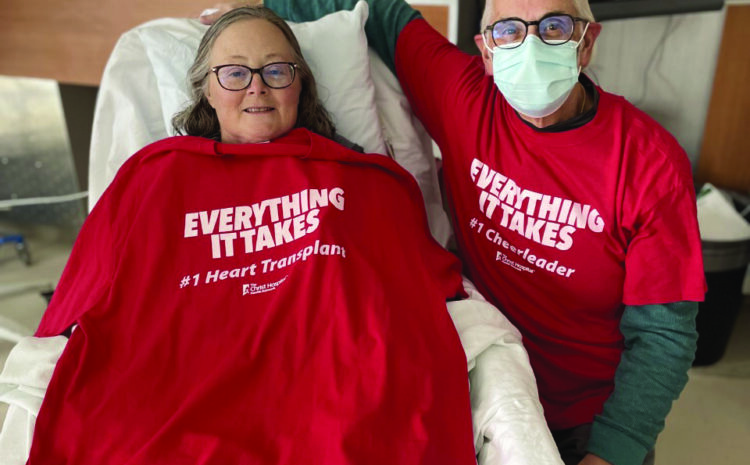
Severely ill Greater Cincinnati heart patients have a new option for a heart transplant.
The Christ Hospital Health Network in October established the second adult transplant center in the area, with the University of Cincinnati’s Heart, Lung and Vascular Institute being the first. Christ performed its first transplant surgery Nov. 6.
Christ recruited two respected heart specialists: Dr. Geetha Bhat, as medical director of the Christ Hospital Heart Transplant Program, and Dr. Rob Dowling, as surgical director of the transplant program and Chris and Trey Heekin Family Endowed Chair for Cardiac Transplantation.
“We’ve been taking care of advanced heart-failure patients for many years, so it was just a natural evolution for us to do heart transplants as well,” says Dr. Greg Egnaczyk, medical director of advanced heart failure and the Left Ventricular Assist Device Program and the Frank and Margo Homan Family Endowed Chair for Heart Failure at Christ. He says that in the almost 12 years that he’s been practicing in Cincinnati, about 100 Christ patients have had transplants elsewhere. “It came down to our patients—and wanting to take care of them along the entire spectrum of their disease course.”
“Not only are we doing heart transplants, which is our flagship, but we’ll also be starting a total artificial-heart program,” Dowling says. On tap is the continued research and development of left-ventricular assist devices, or heart pumps, to assist patients with severe heart failure, and artificial hearts.
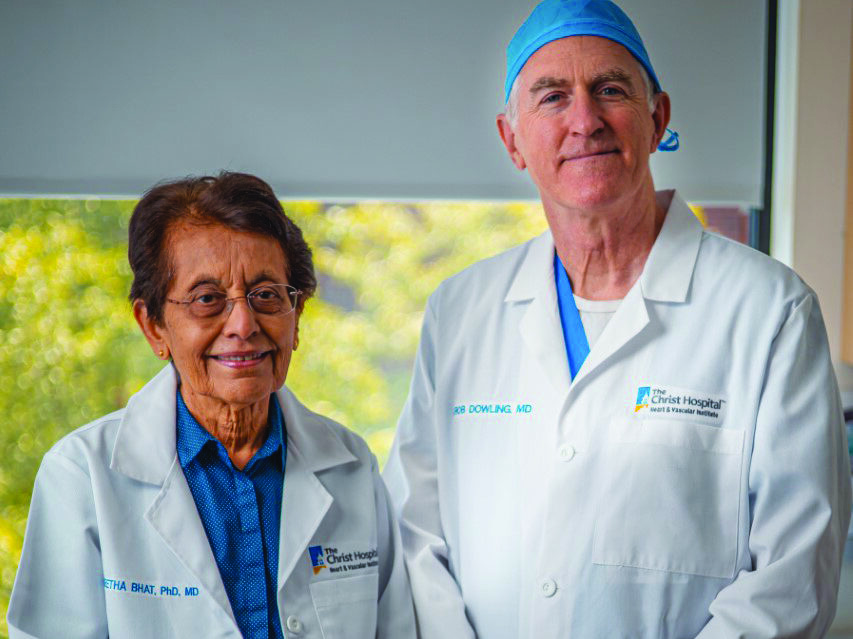
“The technology is improving significantly,” Bhat adds. “Of course, the gold standard is heart transplant, but it’s limited by donor availability.” The pair estimate that they have performed more than 400 transplants apiece.
The focus now is launching the transplant program, with devices getting more attention in the first quarter of 2023.
Bhat says the program will offer patients more options for cardiac care, especially those with advanced heart failure. Dowling says survival rates of patients with advanced heart failure are worse than those for any cancer, with the exception of pancreatic cancer. Advanced heart failure occurs when the heart is unable to pump enough blood to supply the required oxygen to the body.
“Heart transplants and mechanical devices are the way to go, if they are candidates for them,” Bhat says. “Survival has increased, as well as the quality of life.” She says the survival rate for a transplant is 90% after the first year, with the median survival at 13 years, with a number surviving 20 years and beyond.
Bhat says she hopes to complete 10 to 15 transplants at the beginning and perhaps 35 annually, but “it’s tough to predict” because the patient and donor lists constantly change. Dowling says similar-size cities typically do 50 transplants a year, so Christ and UC could easily achieve that number.
Other Heart-Health News
– Cincinnati-based TriHealth health system earlier this year started using advanced 3D modeling in diagnosing coronary artery disease. TriHealth physicians, using the new HeartFlow FFRCT Analysis, take data from a patient’s standard coronary CT scan and apply algorithms to produce a color-coded 3D model of their coronary arteries. The model provides patients and their doctors detailed information about arterial blockages and their impact on blood flow to the heart.
– Starting in mid-2023, Mercy Health will refer patients requiring open-heart surgery to Anderson Hospital and Fairfield Hospital. Mercy Health’s open-heart surgery teams will combine at the two hospitals with the goal of enhancing care, avoiding duplication of resources and decreasing the total cost of care for patients.
