

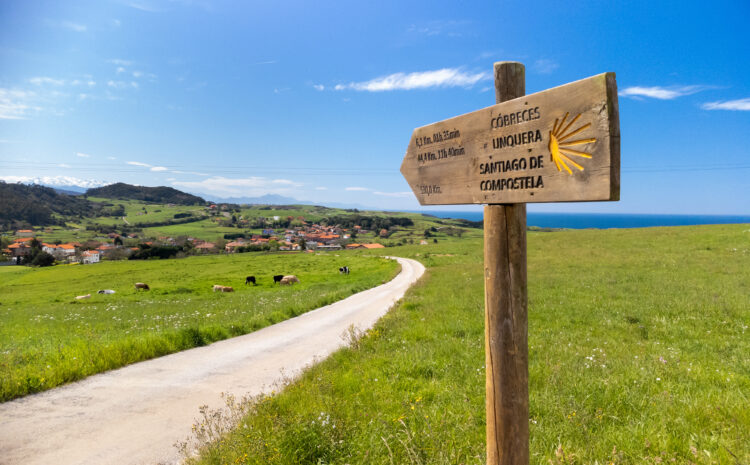
Don Mooney names his top 10 things from his trek on the Camino de Santiago
My wife, Jennifer, and I just polished off a 36-day, 401-mile trek across the north of Spain—the Camino de Santiago, Norte edition. It’s a journey us pilgrims have been undertaking since the Middle Ages, to visit the purported remains of James, the Apostle, enshrined in a massive cathedral in Santiago de Compostela. Mercifully distant from the desultory U.S. news cycle, I have no appetite for my usual political drivel. So here are 10 things about the Camino worth knowing:
1. The Food. Lots of wharf-fresh fish, tasty bread and pastries. When you are walking 10-15 miles per day, there is no excuse not to indulge. I loved the grilled pulpo (octopus), the almejas (clams) and the cachopo, a regional treat involving ham and cheese wrapped in beef, breaded, then deep fried. Jennifer labeled it “a heart attack on a plate.” But so tasty!
2. Surfing. Wandering across 300 miles of Spain’s North Coast, from San Sebastián to Ribadeo, we saw innumerable pristine beaches and surfing schools. California had The Beach Boys and Annette. The Costa Verde has the waves.
3. The Bars. The all-day places where small town Spaniards drink, eat, watch futbol and consume mucho coffee. These were oases for us during long and sometimes rainy days. They throw in a little treat, like a mini sandwich or pastry, every time you buy that delicious $1.50 café con leche or $2.50 beer or wine.
4. Kids. Unlike Americans’ fortress approach to parenthood, Spaniards let their children free range. We saw them scooting, biking and kicking balls on plazas in big cities and small towns as their parents sipped coffees, beers or vermut in the evening hours before dinner.
5. Dinnertime. It’s late, particularly for hungry Americans fresh off the trail. Many restaurants won’t seat you before 8:30 p.m., and when you get there, you feel like a Florida senior seeking the early bird special. Tables begin filling up at around 9:30 p.m.
6. Seistas. The way to deal with late dinnertimes. But don’t try to buy anything at a retail store between 1 p.m. and 5 p.m.
7. The Characters. Walking 12-18 miles daily, you engage with fellow pilgrims. We collected a few memorable ones, like Martin, a gregarious mid-30s German PhD from Hapsburg. He taught us how to use the bus on a final stretch at the end of one particularly long day, then kept popping up along the way. Another was Dr. Jaws, an Irish GP, badly sunburned, who never seemed to change his Jaws t-shirt. He could name the casts of the original Jaws and its sequels and had a strange affinity for JD Vance. Then there was Camino Know It All, a Seattle blogger who told us everything we were doing wrong, from phone plans to no Air Tags in our bags. And two Irish brothers-in-law, who seemingly did more drinking than walking on their Camino.
8. The Kindness of Strangers. I’m thinking specifically of a Cuban/German couple who saw us resting at the side of the road late one afternoon, after we’d walked 15 hot miles. They turned around and gave us a lift for the last 3 miles to Guernica. Another example is the locals who overcame the language barrier to warn us off a harrowing cliffside trail.
9. The Drinks. Jennifer enjoys the vermut (vermouth), white or red, served over ice with an orange wedge. I fell for the cheap and plentiful sidra (Cider), a specialty in Asturias, where the waiters pour it from up high, to give it extra fizz.
10. The U.S. On the Camino, you hear the fear, resentment and confusion about our current regime. A small retailer who sold Jennifer trail shoes talked about the disruption of our tariffs on his suppliers. And Martin, our young German friend, says his generation used to look up to America. No longer. An Irishman who travels to the U.S. on business fears new border controls and social media monitoring. In a few short months our image has turned from that shining city on a hill that Reagan invoked to a rogue elephant feared and to be avoided.
Oops. There I went again.

