

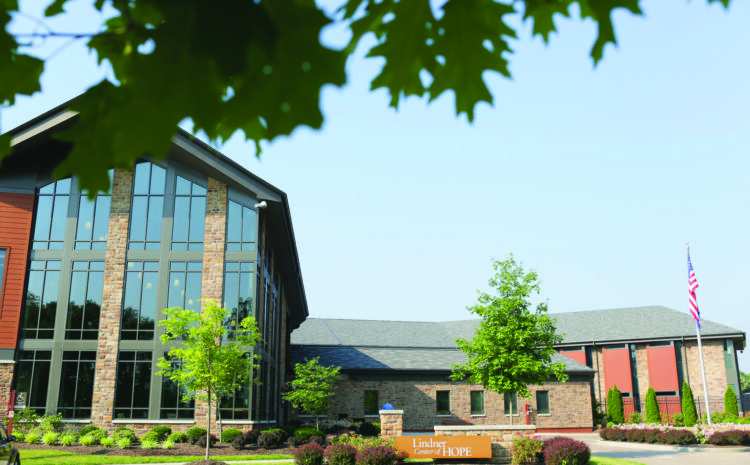
Lindner Center of HOPE plans to expand to meet growing need
It’s certainly no secret that mental health has become a very important issue at both the national and regional level. But are we seeing an increase in the incidence of mental health problems, or simply a greater awareness of the need for treatment?
Founded in 2008 as a 501(c)(3) nonprofit, Lindner Center of HOPE has served tens of thousands in our area who have faced the struggle of mental illness and addiction. And while it has built a stellar reputation for offering a wide range of mental health services at its 36-acre campus in Mason, it is poised to grow, recently adding 18 additional acres for future development.
“I really think it is a combination of things,” says Jennifer Pierson, senior director of marketing and outreach at the Lindner Center of HOPE, when asked about the growing awareness of mental health services and issues. “Unfortunately, over the last few years, we have had some shared societal experiences, such as the pandemic, that have turned a lot of attention toward the mental health of our community. There are people struggling at all ages.”
Suicide rates have been increasing among young adults and children, the latter who might also live in the fear of possible school shootings.
“So there is an increased demand to create more access for mental health services,” says Pierson. “But the conversations are also changing. More people are willing to talk about mental health issues and are much more transparent about addressing mental health needs.
“Businesses are talking more openly about the mental health of employees. Schools have adopted ways to create a safe environment where students can talk about mental health. People are bringing it up in conversations and are talking about it. And more people are willing to reach out and access treatment options.”
Which puts the Lindner Center in an excellent position to address our region’s needs.
“We were established to take into account that mental illness is a journey and there are different phases, stages and levels of severity that individuals may experience during the course of that journey,” says Pierson. “For instance, if someone is experiencing very acute symptoms, they might need hospitalization in order to become more stable by being in a safe therapeutic environment with 24-hour staff support.
“But we also have partial hospitalization programs that offer day treatment where people might come here at nine in the morning and leave at three in the afternoon and during that time they are participating in group activities, seeing a psychiatrist or meeting with a nurse practitioner to talk about their medication needs.”
And of course, Lindner offers treatments that Pierson describes as “just about everything in between,” such as Lindner’s massive outpatient practice that offers individual appointments with clinicians.
“Which again, is yet another level of care,” says Pierson. “Our outpatient services already see more than 50,000 visits annually.”
Which explains why a future expansion would include new outpatient facilities.
“But we are also looking to incorporate a wellness program that would require some additional space, and we also want to expand the capacity for the three residential services we offer.”
Lindner made the purchase of its additional adjacent 18 acres just this spring, so it’s still in the middle of finalizing a new master campus plan.
“We are really optimistic about beginning to secure contracts for construction in the summer of 2024,” says Pierson.
