

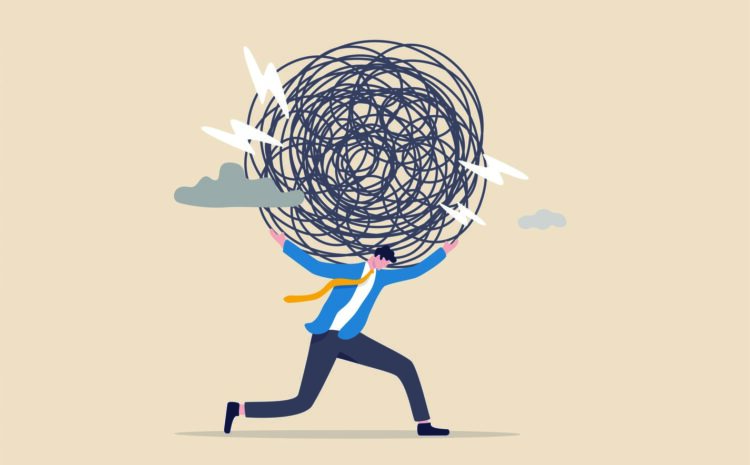
Local experts explain Generalized Anxiety Disorder and when it’s time to get help
The 40 million people in the U.S. who have them can attest that anxiety disorders are real, causing suffering as true as other illnesses.
They also know that none of us can claim immunity.
“As human beings we’re all wired up with this innate stress response; we all were born with this fight or flight system,” says Amanda Porter, psychiatric nurse practitioner at the Lindner Center of HOPE and author of the 40-Day devotional Dear Anxiety, Let’s Break Up. “We all have it and therefore we will all have anxiety from time to time.
“It’s very normal as a human to be worried or anxious or nervous about the future.”
What elevates this normal tendency to a disorder—specifically Generalized Anxiety Disorder (GAD), the most common—is when a person’s anxious thoughts become so hard to control that it affects their functioning.
“For example, not sleeping, not eating, not holding down their job, their relationships become damaged or strained, at that point it’s officially a disorder,” Porter says.
Other conditions that come under the umbrella of anxiety include obsessive compulsive disorder, post-traumatic stress disorder, phobias, social anxiety disorder and panic disorder, says Colleen Furey, clinical psychologist with Mercy Health Physicians.

GAD is defined as a persistent anxiety or worry about multiple things, not just one thing, says Melissa Jensen, clinical psychologist with Mercy Health Physicians. “It impacts an individual’s life, is not substance-related (such as the jitteriness we may experience when having too much coffee) and it’s difficult to control.”
GAD is also not episodic like a panic attack, but more integrated into someone’s day-to-day life, Furey says. “It’s more like your brain’s normal state of being.”
But diagnosing anxiety disorders, as with all psychiatric illnesses, requires a different kind of analysis.
“Psychiatry is a very different field of medicine compared to cardiology or neurology, in that we don’t have objective ways of testing for these illnesses,” Porter says. “The diagnoses that we give are very clinical in nature, meaning I sit with you and I talk to you and I get to know you and I listen to you talk about your life.”
From there, the clinical professional decides whether it matches up to the diagnostic criteria for that illness, which in this case includes at least six months of symptoms.
When assessing a patient for GAD, Jensen says, clinical professionals determine if the anxiety and worry are accompanied by at least three of the following physical or cognitive symptoms in adults and one in children; a restless, keyed-up feeling; feeling easily fatigued; experiencing insomnia or other sleep difficulties; trouble concentrating: irritability; and muscle tension.

Furey adds this does not require specific lab testing for diagnosis but patients may receive medical tests as part of a larger exam.
“If anxiety is getting in your way and impairing your life, that’s a sign to seek help,” Furey says.
“For this (GAD), we see a lot of fear, a lot of worry, a lot of dread, a lot of uncertainty feeling tense, irritable, restless,” Porter says. “There’s a lot of muscle tension involved; sometimes people have a hard time sitting still, sometimes they can’t sleep, sometimes they can’t eat, and these are all things that we ask for, that we look for and watch for when we are diagnosing someone with an anxiety disorder.”
The disruptive symptoms can wreak havoc on a person’s system, from losing sleep to adversely affecting their nutrition.
“Some people are stress eaters, emotional eaters, so they overdo it, and maybe do some binge eating,” Porter says. “Other people find that their appetite is completely zapped, and they are not able to eat much at all, which can tank your blood sugar and of course lead to mood swings and irritability.”
Multiple awakenings and delayed sleep onset “are very common with anxiety because a person with anxiety has a lot of racing thoughts and it’s very hard for them to turn their brain off and get any sort of restful sleep.”
At the peak of an anxiety disorder, a person’s life will suffer limitations, such as their ability to have stable and healthy relationships and their ability to be out in public or participate in activities where there are going to be in a large group of people.
“I often see anxiety affect people’s ability to drive; they might not feel comfortable driving on interstates, or they might get really weary of driving on country roads, back roads—I’ve seen it happen both ways and when a person can’t drive that really limits what they’re able to do with their time and their day,” Porter says.
Children can suffer from GAD, too, Furey adds.
“Because they don’t have the insight or language to describe what they are feeling, children may demonstrate GAD through behavior,” Furey says. “Instead of saying, ‘I feel restless,’ for example, they can have physical symptoms such as stomach aches or be irritable or angry.”
The gut-brain connection is very legitimate, Porter adds.
“A person is highly likely to experience some sort of physical symptom if they’re dealing with a chronic anxiety disorder.”
Still, the condition can often go undetected by others, Porter says.
“For the majority of the people I work with, their anxiety is completely invisible,” she says. “That again, contributes to the stigma and makes it difficult for people to understand that an anxiety disorder is truly a form of suffering because on the outside a person might appear like they have it all together.
“But for people who do manifest their anxiety on the outside primarily what I see is some sort of chronic pain issue, migraines, back pain, muscle tension or some sort of GI issue like nausea, vomiting, diarrhea, or constipation.”
COVID-19 seems to have had an impact, or at least brought sufferers forth to seek help.
“Our outpatient practice has grown by 40% since the pandemic and I think that really just goes to show you that we’re all feeling the dread and the weight of this,” Porter says. “We don’t know when it’s going to be over, we’re so exhausted that it’s lasted this long.”
Although everyone is susceptible, the data and numbers may seem to suggest women suffer more from men.
“My theory on that is that women are just more likely to come forward and get help for their symptoms,” Porter says. “They don’t actually suffer at a greater rate, they’re just more likely to speak up about it so it might appear as though women are affected at a higher rate compared to men.”
Jensen adds people with chronic illness and those from traditionally marginalized groups are more likely to have GAD, as are people who have issues related to the social determinant health issues, such as financial worries and living in family groups that have high levels of stress.
“Typically you are more likely to have GAD if you have ADHD, depression or a trauma history and vice versa,” Furey adds.
In treating the disorder, “we work on teaching people that their body is having a natural reaction to a heightened state of anxiety,” Jensen says.
“There are techniques they can use to try to prove to the brain that they are safe and OK, such as using calm or diaphragmatic breathing and muscle relaxation,” she says. “If you’re experiencing restlessness, something physical like exercise, taking a walk or doing yoga can help. Calming the body calms the mind. The part of the brain that does the critical thinking then takes over control and helps you work through the anxiety in a healthier way.”
Furey adds there are apps available to help guide you through deep breathing and meditation.
“If these techniques are not helping, it’s time to talk about seeking professional intervention,” she says.
