

The Children’s Theater of Cincinnati’s renovation marks a homecoming for the theater company
In Over-the-Rhine, near the corner of Central Parkway and Walnut, sits the Emery Theater. Once a grand venue that hosted speeches and performances by historical icons like Eleanor Roosevelt and Dr. Martin Luther King Jr. and was the former home of the Cincinnati Symphony Orchestra, one could be forgiven for being unaware of the theater’s existence today. Having fallen into disrepair, the theater—named after arts benefactor Mary Emery—had become a forgotten relic.
The Children’s Theater of Cincinnati, though, is looking to turn the theater’s fate around. The organization, which performed at the Emery from 1948 to 1969, has been renovating the historic theater. Hosting performances for the first time in years this fall, the process is a homecoming of sorts, but it also represents an exciting opportunity for the Children’s Theater to have its own venue, having shared the Taft Theater since the 1960s. Due to kick off its season this October with a three-weekend run of The Wizard of Oz: Youth Edition (“because there’s no place like home”), the renovation serves not only as a homecoming, but also as an exciting boost to Over-The-Rhine and the neighboring Theater District.
“The community has rallied around this project. I’ve never seen such engagement in any project I’ve been involved in,” says Kim Kern, president and CEO of the Children’s Theater of Cincinnati. “We were the theater’s last best hope. Theaters have tried and failed [to renovate the theater, but] we already bring 100,000 people downtown every year. We’re the oldest professional theater for young audiences in the country—we’ve got a proven track record.”
Thanks to this track record, the project has been a success. As of the time of writing, the theater has gathered $50 million of its $51.5 million goal with donations coming from well-known institutions and corporations like Bank of America, Farmer Family Foundation and even rapper Ludacris.

While these renovations include standard betterments like paint jobs and expansions, perhaps most exciting is the technology that the Children’s Theater will install in the venue.
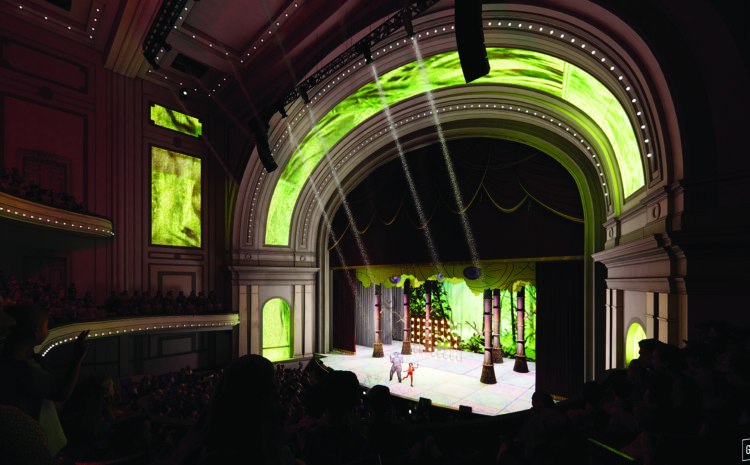
“When we are done, this will be the most technologically advanced theater in the country,” says Kern. The theater will utilize turntables and an impressive lift that is the first of its kind in the U.S.
What’s more, the theater will make use of projection mapping and video walls, allowing the theater to not only swap out backdrops but also create an immersive experience throughout the house. “When we’re doing Disney’s The Little Mermaid, the audience will feel like they’re sitting under the sea. Tinker Bell can literally flit around the walls of the auditorium,” Kern says. “And then, the beautiful thing is, when you turn it all off, it’s just a beautifully restored historic theater.”
While the new theater will allow the Children’s Theater to perform technologically advanced shows, it will also allow it to put on more programming than it was able to offer before. At the Taft, the production company was restricted to a 40-day season. Now, with its own theater, the Children’s Theater has all 12 months of the year to put on its original offerings at a higher capacity and expand its programming.
“The demand [for our productions] is increasing, so our ability to provide more programming will impact schools’ ability to come at an affordable rate,” Kern says. “We’re doing three weekends for public shows instead of two, and we’re still doing five days of school shows, but we’re doing Friday and Thursday, because those are the best attended days for schools.”
The new theater also comes with a five-year plan, according to Kern, who wants to expand not only the type of productions that are produced in Cincinnati but also the age that the theater targets. In the coming years, Kern and The Children’s Theater hope to be able to host middle schoolers and teenagers at the Emery.
All of this is in hopes of reaching more children and spreading education—the main missions of the theater’s namesake. Not only will the increased programming help the theater reach more students, but it will also help schools offer the arts affordably. According to Kern, no school pays more than $10 a ticket, while Title I schools pay $5 or less. “In terms of ticket subsidy [for schools], pre-pandemic, we were providing about $228,000 a year—last year it was over a million.”
While at the Taft, the Children’s Theater would bring in $300,000 in local impact with each production. But the hope is that with the new location in the Emery and a longer season, this number will give OTR an economic boost. Additionally, partnerships with local businesses are looking to support small businesses even more.
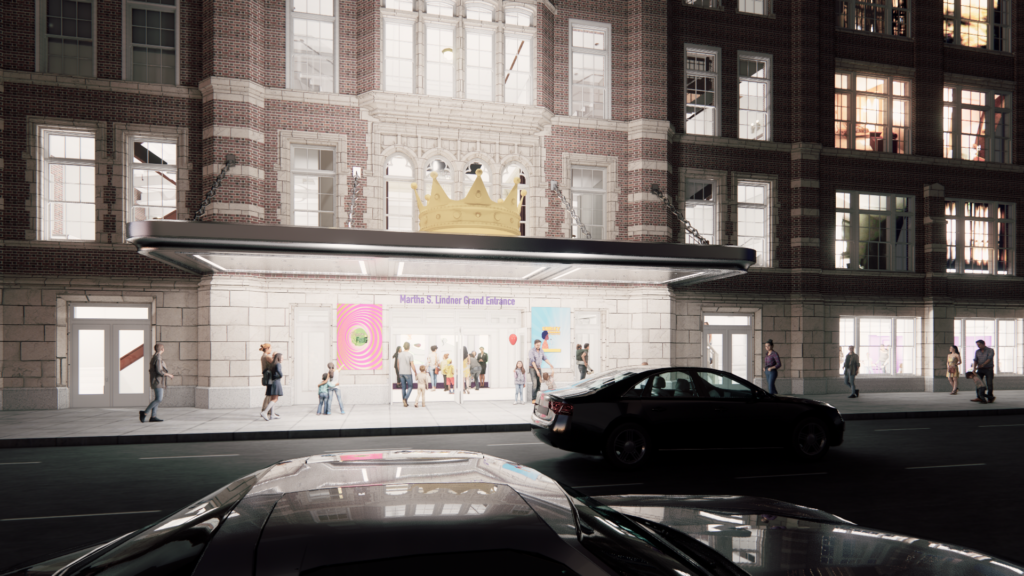
“We’re really excited to have [the theater] call OTR home,” says Julie Clayton, executive director of the OTR Chamber of Commerce. “We’re excited for the dollars that they’re going to put into our restaurants, all of our retail before and after shows, even our parking garages.” What’s more, for example, the Crown Program is an initiative with local restaurants to offer kids’ meals. “It’s a way to get [ticket holders] to come down and do brunch before, go to lunch before or go to dinner after,” Clayton says.
While the country’s most technologically advanced theater may first and foremost be a place for younger generations to come and enjoy some entertainment, the mission of the theater is much bigger. The Broadway-quality shows are sure to get a boost with the help of impressive projection mapping and expensive lifts. And Kern says that the benefit to the community is something that everyone in the city can celebrate, whether or not they have tickets to the shows.
“One of the reasons we wanted to be downtown is that it feels like the right place to be,” Kern says. “Mary Emery’s wish was to keep this building a place of gathering and education and that’s exactly what we’re doing.”
