

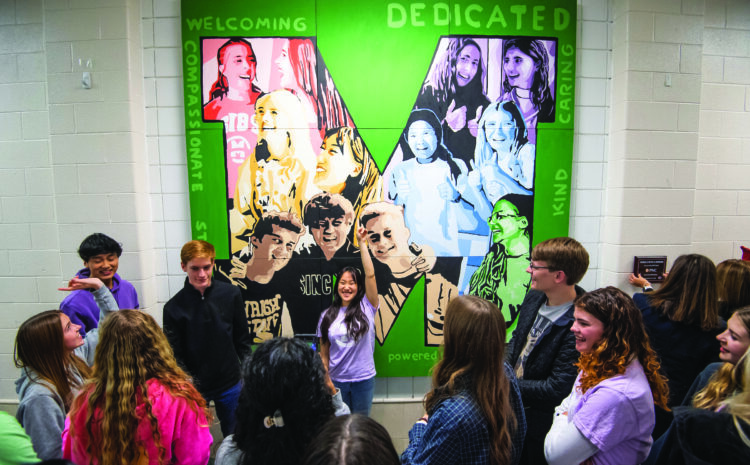
Best Schools 2023: Mason High School invites students and teachers to connect with their passions during connect time
It’s 10:15 a.m. on a Wednesday at Mason High School, the bell rings and 3,600 students scatter to go to their class of choice for 70 minutes. Mark Wyatt, the mathematics teacher, has a steady flow of around 20 students coming into his classroom, not for math, but to sit and watch Formula One racing together. TJ Wilson, the language arts teacher, is located behind a drum set while five other students have microphones, tambourines and guitars in their hands, cranking out a wide variety of Bruce Springsteen songs. Down the hall, Charity Distel, the biology teacher, has a karaoke machine and lights set up so students can sing their favorite tunes to their heart’s content. What may seem like some after-school recreational activities are weekly occurrences at Mason High School for students to express themselves. It’s called connect time.
Implemented in 2019, the initial focus of connect time was to prioritize the mental health of students. Since then, it has evolved into creating opportunities and relationships among students and staff. There are three big pockets of things that happen during connect: There’s intervention so teachers can reteach or speak to a student if need be, there are clubs and activities that meet that are more official and then thirdly is kids just following some passion project or some kind of interest that they have.
Before Mason transitioned to a modified block schedule from a seven-bell schedule, “It purely devastated some of our staff around the amount of time they had with kids. So, when we got an opportunity to relook at our bell schedule and increase some of that instructional time, we were able to create an outgrowth of the bell change,” says Mason High School Principal Bobby Dodd.
Dodd realized that if they had connect time in the morning or after school, kids would not come. Among Tuesday, Wednesday and Thursday, Mason is at 15 blocks of time, and they had to figure out how to fill only 14 classes. “It became about creating opportunities for us to press pause during our week, and you’ll see that it’s not completely academic. It’s purely relational,” says Assistant Principal Dan Distel, whose role in supporting connect time grew out of being the administrator that worked alongside teachers who developed the bell schedule as well as supporting the week-to-week communication around the high school calendar committee.
Scheduling and signing up for connect time have been made easy for both students and staff due to the program, FlexiSCHED. “FlexiSCHED is a simple product. It is purely a place where teachers create sessions. They post those about four or five days ahead of each connect session. Kids can just go on and just peruse what’s there. It is very simple for both teachers and kids to use,” says Dan Distel. If a student does not make a choice, they get defaulted to a teacher that they already have.
Students have been able to find their home during connect time and once they find that, that’s where they end up going every time. It becomes part of a routine but, at the same time, students have opportunities to explore things that they may have never done before, Dan Distel explains.
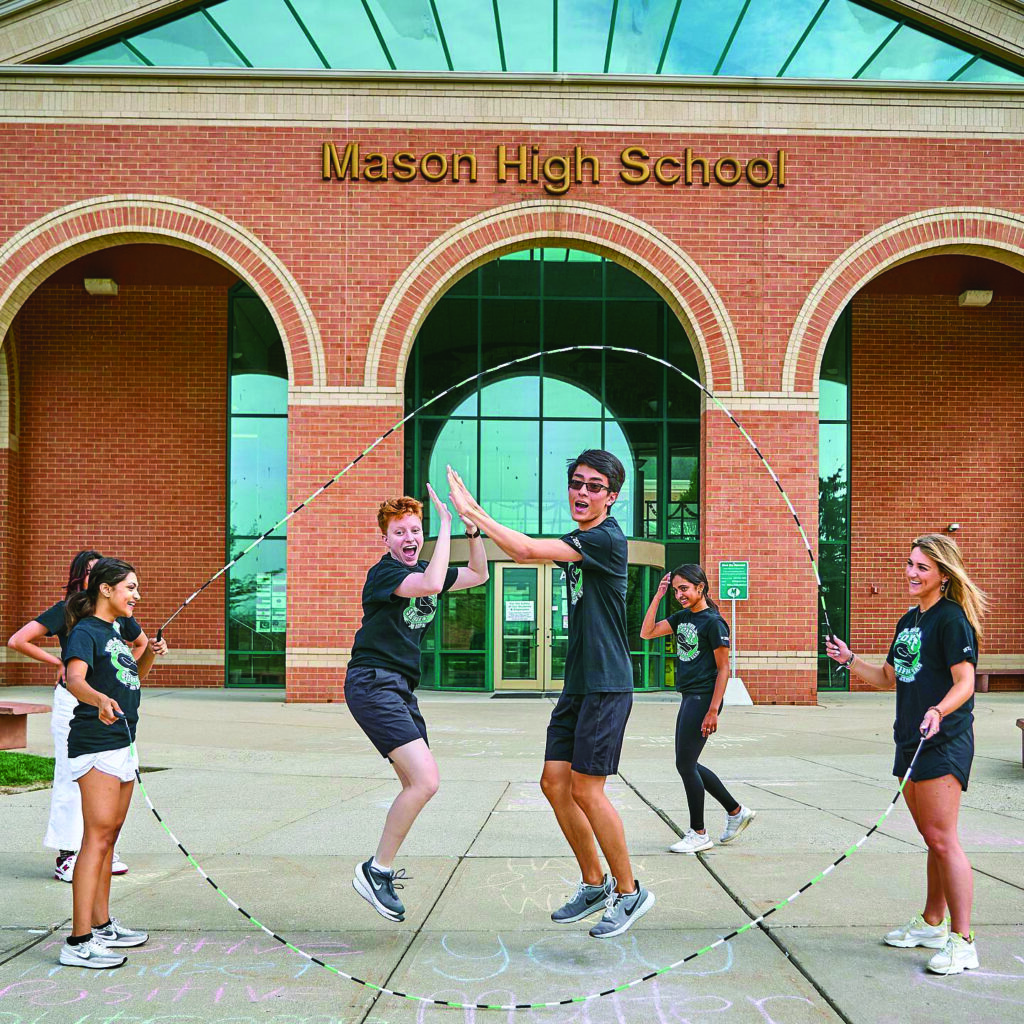
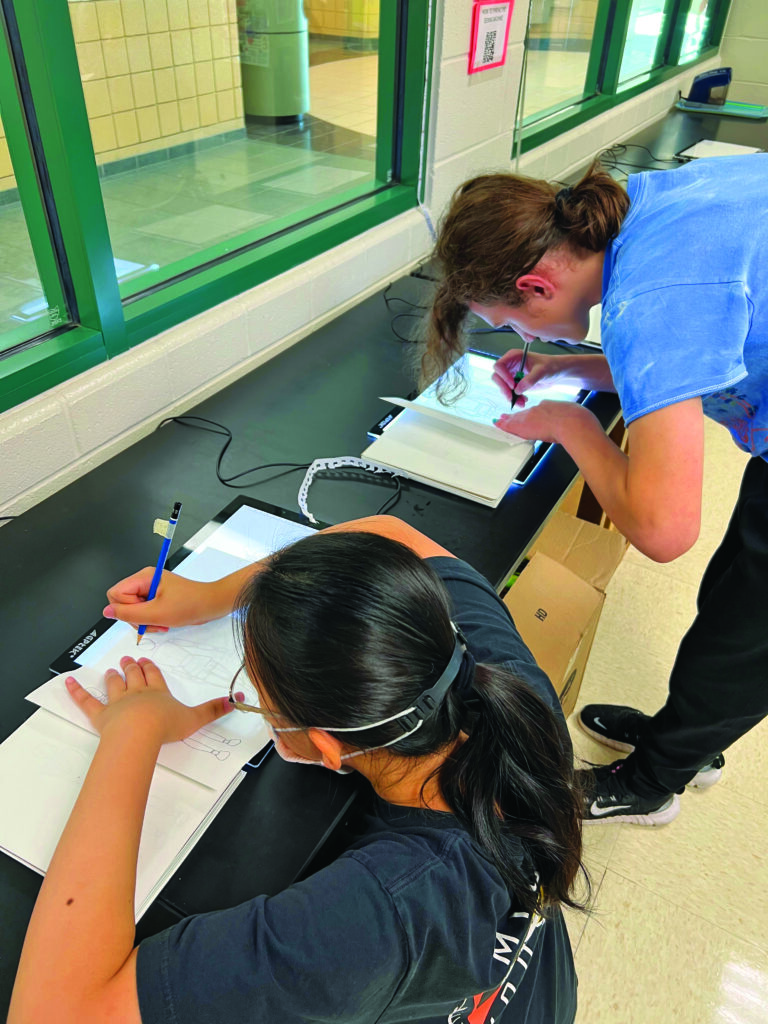
Even though connect time was meant to prioritize a student’s well-being, it has grown into a space for both students and faculty to take a break from school and focus on things that they are passionate about and establish connections that may have never been made before. “For teachers that need to reteach students or help students that are struggling, they would be devastated if they lost those 70 minutes. They do rely on it. Taking it off the teacher’s plate, and giving the time to get that done, reduces the stress level of faculty and staff,” Dan Distel says.
Sometimes, teachers will make connect sessions for other teachers. They range from professional development connect sessions to a staff chili cooking competition. “We’ve always been looking for some kind of opportunity to do interventions. Teachers are always concerned about us taking more time from them in terms of instructional minutes, and so when we have whole class assemblies or a speaker coming to talk about prom safety, connect time allows us to build that stuff into our school week without taking the instructional minutes away from the classroom,” Dan Distel says.
As connect time has evolved, the administration has asked for feedback on connect time from students and staff to figure out what works for them the best. As students and staff got more comfortable with connect time, there became an option for students to create their sessions with the help of a teacher to host that connect session. “Every year there’s a handful of a dozen kids that want to make a session, and the staff tries to find a teacher who has a similar interest and can help create a session,” Dan Distel explains.
For example, the F1 racing team was made by a student. “Motorsports are pretty popular but now there’s not a lot of people talking about it, so I know a few people, but I was trying to bring people together, and more and more people became interested in it,” the student says. The layout of this 70-minute connect session is that “…we usually watch the beginning of the race. It’s a two-hour race so we’ll watch the first 25-30 minutes and then fast forward to the last 10-15 minutes,” Wyatt, the teacher who oversees this session, says.
The reactions from students and staff were nothing but positive, Dan Distel says. “We can tell that students have found their groups through connect time and have become a lot more comfortable with each other.”
Known around Mason High School for having the karaoke connect session, biology teacher Charity Distel maintains a balance of switching between a help week and a karaoke week for students. In her classroom, she has about 20 students hanging out with a group of five enthusiastically singing “Double Take” by Dhruv with a full sign-up list behind them that indicates the students who are next up.
“Sometimes, kids will come in and see or just walk to listen and hang out. It’s great to get kids from all like all different walks of life together,” she says. With just the flick of a light switch, a spinning disco ball with lights and a karaoke machine, Charity Distel was able to transform a high school biology classroom into a space safe where students can express themselves, and for that moment, forget about their stresses of school and beyond.
