

The Kids Issue: The pandemic changed college admissions in more ways than one
The college application process received a massive shakeup at the end of June, with the Supreme Court ruling to end affirmative action in college admissions. The ruling found that race-conscious admissions programs at the University of North Carolina and Harvard University violated the Equal Protection Clause of the 14th Amendment.
Many universities are still examining the ruling to determine what it means for their admissions programs, with a number of local schools—like the University of Cincinnati—releasing statements saying they expect the court’s opinion to have little effect on their admissions practices.
For high school students preparing to apply to colleges in the next few years, the ruling may introduce further uncertainty into a process that has always been complex and stressful—and which has changed a great deal in recent years due to the pandemic.
But despite the changing landscape, high schools in the Cincinnati area continue to offer their students resources as they navigate college applications. Both public and private high schools in the Cincinnati area have robust counseling teams to support students through the college admissions process.
Some schools, like Cincinnati Country Day School, sent out messages in the wake of the decision assuring parents that whatever changes may result from the court’s ruling, the school will continue to support students through the application process to ensure they have a satisfactory outcome.
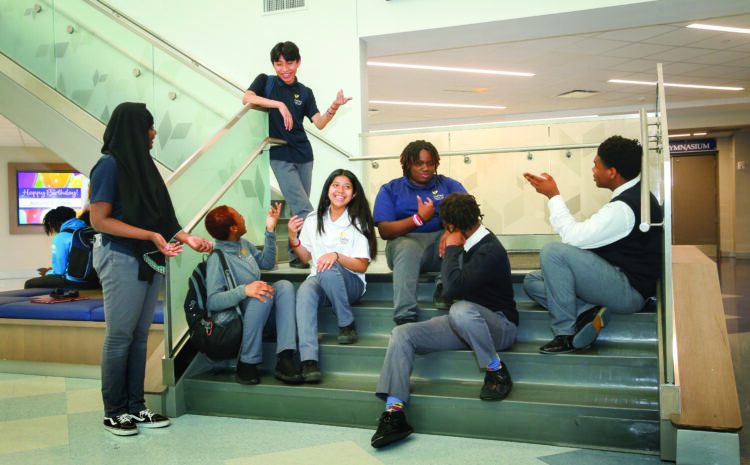
Bernard Caldwell, the director of college advising at the Catholic college preparatory school DePaul Cristo Rey High School, says that having a staff dedicated to supporting students through college applications is hugely beneficial—especially at a school like DPCR, where the overwhelming majority of students will be the first in their family to go to college.
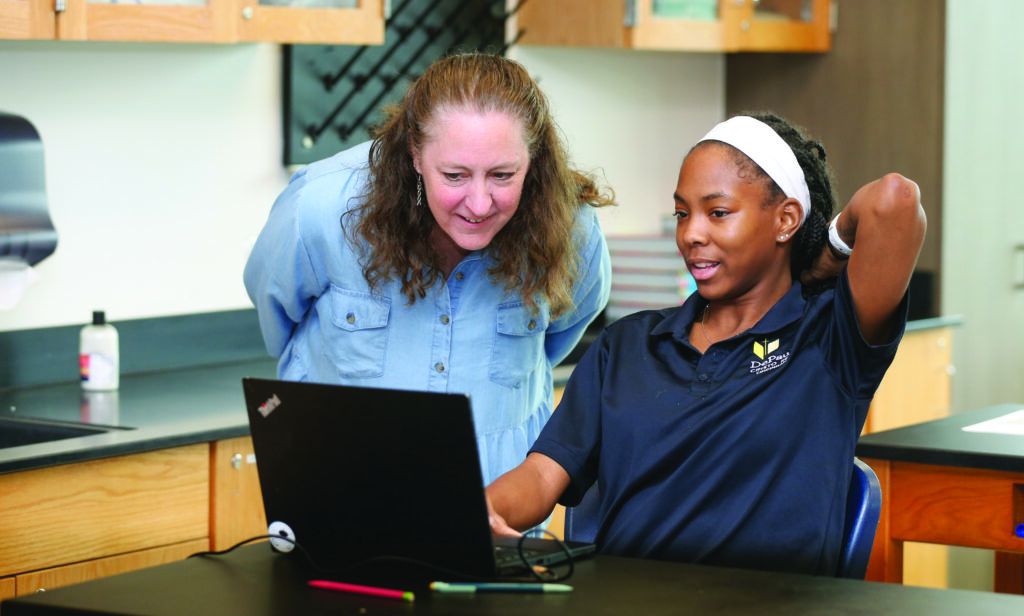
“It feels very fortunate that we have dedicated staff to the college acceptance process,” Caldwell says. “We literally take them step by step through the application process and what that looks like. We try to take away some of the fear and trepidation that they may have.”
Test Scores May Be History
An increasing number of universities no longer require students to submit ACT or SAT test scores as part of their application, focusing instead on personal essays, letters of recommendation and high school transcripts.
Some schools were beginning to go test-optional before the COVID-19 pandemic due to the tests’ perceived perpetuation of socioeconomic disparities. In 2020, when many SAT or ACT testing sessions had to be canceled due to the pandemic, nearly all universities made standardized test scores an optional part of their application.
That effect has lingered past the pandemic. According to the National Center for Free and Open Testing, approximately 1,900 four-year colleges and universities have test-free or test-optional policies for students applying in fall 2023. (Before the start of the pandemic, that number was just over 1,000.)
With the change to test-optional admissions, applications skyrocketed at Ivy League schools and other top universities. Some, like Columbia University, saw a 51% surge of applications for fall 2021 as compared to fall 2020, and has received similar numbers of applications in the admissions seasons since.
Caldwell says he sees the shift to test-optional admissions as beneficial for students.
“The focus now isn’t so much on them getting the right test score, but more about them as a student and an individual and other things they did outside of standardized tests,” Caldwell says.
Many students are still opting to take the SAT or ACT during their junior or senior year. DPCR continues to offer SAT prep classes and test vouchers to students, and Caldwell encourages his students to take them. In a test-optional system, taking the test can only help students, not hinder them, since they can choose not to submit their test scores after receiving their results.
A Post-Pandemic System
Test scores weren’t the only way COVID shook up college admissions. Students who are preparing to apply to colleges now may have transcripts that reflect the uncertainties of school in 2020 or 2021—and the mental health struggles that came along with them.
Caldwell says students struggled to stay excited about attending college when their first semester or year was likely to be virtual.
“COVID had an impact on everybody,” he says. “Starting their first year online was a challenge.”
A couple of years later, students are far less likely to start their college experience off with an online semester. College admissions experts are hopeful that the lingering effects of the pandemic in the process will be more positive than negative—with universities considering a student’s holistic situation.
Staying Focused
Despite these changes, the overall process of college admissions remains the same. From their first year of high school, students should work to stay on track for success when they apply to college.
“Every year, there’s another step,” Caldwell says. “It starts at the freshman year. They need to start focusing on academics as early as ninth graders, because that’s when the GPA starts to have an impact. Sophomore year is when they want to start researching colleges, visiting colleges, preparing to take standardized tests. By the time they’re a senior, they’re ready to write that college application essay and actually apply to colleges.”
The process can be stressful or anxiety-inducing for many students, so an important part of the advising staff’s work is to ensure that no student feels like they’re on their own when it comes to college applications.
“Because we do it as a class, as a team, I think it takes a lot of the pressure off,” Caldwell adds. “They really support each other as they start receiving letters of acceptance, they really uplift each other through the process.”
