

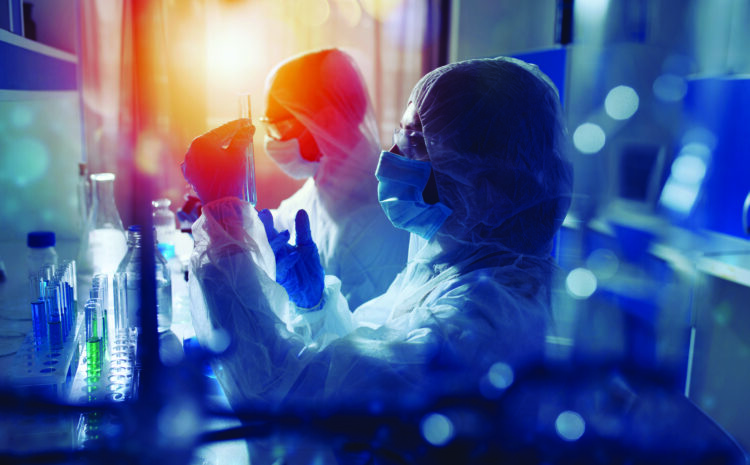
Are bio-health companies leading the way out of COVID?
Identified as one of our core industry sectors, there can be no doubt about bio-health’s importance to the Greater Cincinnati regional economy. But are these companies leading our way out of COVID and into a brand-new future? That depends on who you ask.
While the above question can be used in a literal sense, addressing contributions to both treatments and prevention of the dreaded virus, it is perhaps even more accurately used to talk about the growth of business and commerce—especially with the recent proliferation and success of bio-health companies in the Greater Cincinnati region.
“I’d first like to stress that our region is extremely diverse in terms of our business environment,” says Bryan McEldowney, director of marketing and communications for REDI Cincinnati. “So we are not relying on just one industry to get us out of COVID. It is really a combination of all of them. Bio-health is contributing heavily, but it is not the sole reason for our growth.”
Much of our region’s recent economic success can be attributed to REDI’s identified core industry sectors, which also include advanced manufacturing, business and professional services, and technology—each with its own market dynamics. However, there is no question that the bio-health sector (which includes categories such as biomedical research, health tech and medical devices) is emerging as a leading driver. And some of its growth is a direct result of the pandemic.
Gravity Diagnostics is a good case in point. In the earliest days of the pandemic, the company’s leadership team focused its attention on developing a method of testing for the COVID virus. Virtually overnight the company went from a small quiet lab in Covington, Kentucky, to a national player in the fight against the virus. Between March and November of 2020, the company realized a 10-fold increase in its growth from 35 associates to 400 employees, expanding its footprint from 4,000 square feet to 50,000, investing $3.7 million. And that is but a single example of the explosive growth in bio-health.
“What is really amazing is that the number of jobs continues to grow,” says Andrea Enders, director of business development at REDI. “Based on our data, from 2018 to 2022, we have seen a 21% increase in jobs.”
The better news is that many of these jobs require workers to be onsite, whether that means in an office or in the lab, which also helps to build ancillary job growth in the regional economy—much more so than jobs that can be performed remotely.
“Another important data point is that in 2022, our gross regional product total was $23.2 billion,” adds Enders. “The bio-health contribution to that total is $5.17 billion, a little over 20%. In the past, our region was known for manufacturing, aerospace and consumer packaged goods, as well as other industries. This shows that a very significant portion of our region is now in the bio-health sector. And we believe bio-health is growing at a faster rate than other industries.”

And the news seems to get better every day, especially for those who track the industry. Headquartered in Cincinnati, Medpace is a clinical contract research organization that provides Phase I-IV clinical development services to biotechnology, pharmaceutical and medical device industries. Truly a global company, it employs 5,000 people across 40 countries.
At the end of 2022, the company announced a major expansion in our area, committing to the addition of 1,500 new jobs and an associated payroll of $90 million over the next six years.
“On our 30th anniversary, we are proud to continue our growth here in Cincinnati where we established Medpace with a vision of helping patients, families and communities by advancing new and better medical treatments,” says Jesse Geiger, president of Medpace.
“As part of our expansion, Medpace will be hiring aggressively and plans to provide 1,500 new jobs in Cincinnati that will encompass a broad spectrum of professional opportunities. The talent and corroboration we find here and throughout all of Ohio has made an incredibly positive impact on our successful operations and our clinical trials that are strengthening health care and changing lives.”
Medpace also has committed to investing $150 million to expand operations and office capacity at its headquarters in Cincinnati by constructing a new building and parking garage. The construction includes 250,000 square feet of office and 1,000-stall parking spaces. The investment in infrastructure will allow Medpace to grow its employment in Ohio by nearly 80% and expand operations as a clinical contract research organization.
It also marks the second Medpace expansion within the city of Cincinnati since 2016, adding a combined 2,150 new jobs, $125.7 million in new payroll, and $157 million in fixed assets.
But why do companies like Medpace want to expand here, as opposed to other cities in the Midwest? It appears to be a combination of incentives, connecting companies with the proper resources and momentum, which can in part be attributed to the research sources and talent in the Greater Cincinnati area.
“From an attraction perspective, we work hand-in-hand with our partners with JobsOhio,” says Enders. “We travel across the country and the world to meet with companies and attend conferences. We meet industry leaders and identify companies that could be a good fit for our area—making sure they know all of the benefits and assets that are here.”
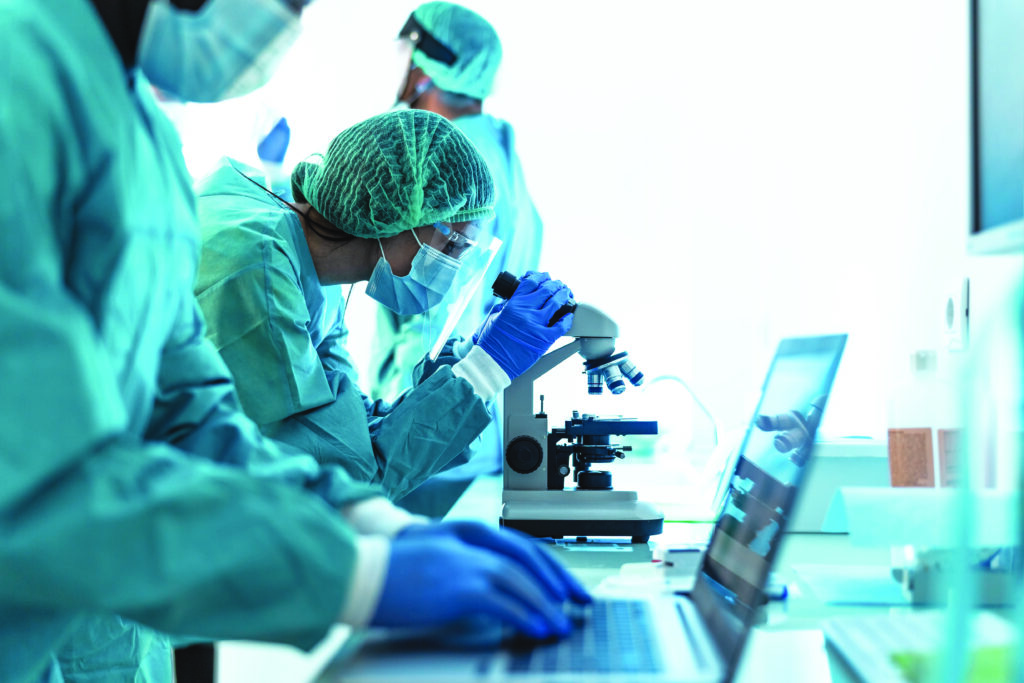
From a program standpoint, many startup companies can also take advantage of the JobsOhio Growth Capital Fund. Launched in 2020, the fund allows organizations like REDI to support early-stage companies with Series A and Series B rounds of funding.
“In the past, our traditional incentives programs haven’t been able to support those companies,” says Enders. “That gives us a lot more flexibility in terms of supporting them as they build, while keeping the companies that are already here growing.
“Cincinnati, our business leaders and our health care leaders are extremely excited and motivated to move our region forward,” adds Enders. “We are at a tipping point. We are starting to get national recognition, especially in reference to the investments being made in our Innovation District.”
The Cincinnati Innovation District, headquartered within the 1819 Innovation Hub, is a thriving ecosystem that attracts, produces, retains and develops talent by co-locating and collaborating with organizations. The district envelops myriad innovation assets as well as access to some of our region’s world-class academic and research centers, organizations and talent pools.
Certainly, the University of Cincinnati, as well as the world-renowned Cincinnati Children’s Hospital Medical Center and other national research centers, have enhanced our region’s reputation as a location for world class bio-health companies and institutions. However, they are also attracting a fair number of health care executives and professionals to our region. There’s plenty of home-grown talent as well.
“The number of STEM graduates, which is about 8,000 annually, is also key,” says Enders. “Having that kind of talent available is one of the key features of our region. Another important piece of the equation is the federal research dollars that our local institutions are able to win. If you just look at the NIH (National Institute of Health) dollars and other contributions, between the University of Cincinnati and Children’s Hospital, they receive almost $250 million annually.”
A recent $1.25 million gift from PESI will allow researchers at the UC College of Medicine to explore therapies used for the treatment of posttraumatic stress disorder (PTSD).
Thanks to this donation from one of the world’s largest providers of mental health continuing education, a three-year comparative study examining the effectiveness of Eye Movement Desensitization and Reprocessing (EMDR) to Cognitive Processing Therapy (CPT) began this year.
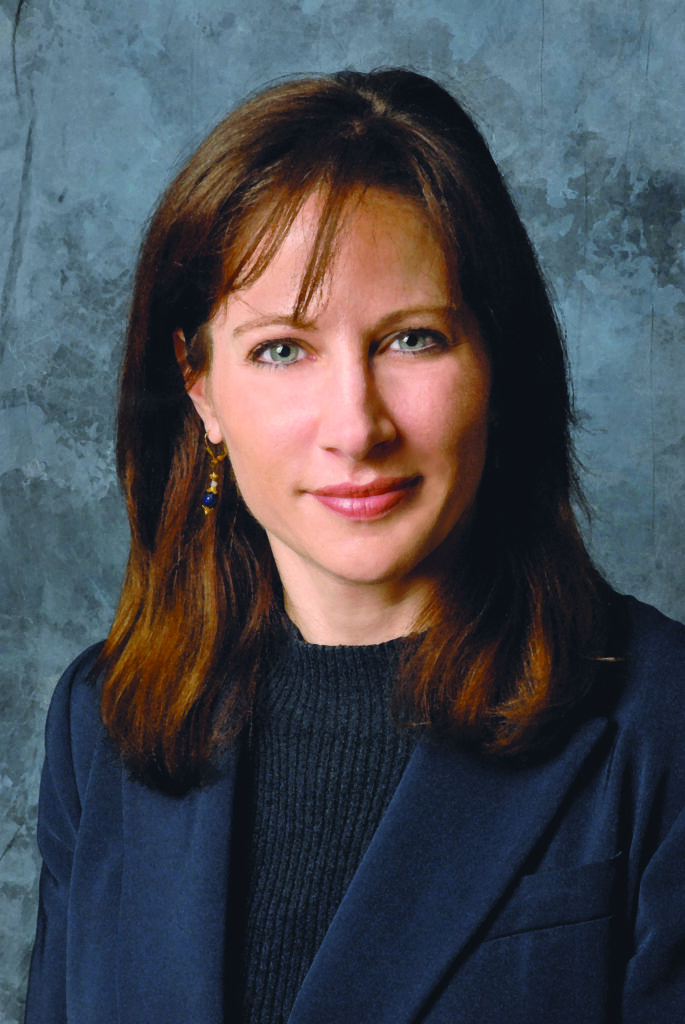
Kate Chard, UC professor of psychiatry and behavioral neuroscience and director of PTSD programs at the Cincinnati Department of Veterans Affairs Medical Center, is leading the study involving civilians, first responders, veterans and those on active duty.
“I’m incredibly grateful to PESI for allowing me to make an important and valuable contribution to the science,” Chard says. “People are looking for answers and want to trust that the therapy they are offered will work. This study offers a significant step forward in helping us understand how many viable treatment options there are for people suffering from stress responses.”
PTSD is a mental health condition triggered by trauma that impacts many professions, but especially our nation’s veterans. According to Chard, 7% of civilians globally have PTSD, the fifth most common psychiatric disorder. Typically, 20% of individuals experiencing trauma will experience PTSD. However, these numbers are often higher for first responders and service members.
“Our mission is to connect knowledge with the needs of mental health clinicians,” says Mike Conner, executive director of PESI. “Effective and safe treatment of PTSD and trauma is essential to help ensure clinicians are equipped to handle a mental health crisis. Chard’s treatment approach, Cognitive Processing Therapy (CPT), is proving to become one of the most effective methods to facilitate healing for so many who are suffering. We admire her commitment to research and her ability to communicate her work and make it accessible.”
Chard says EMDR has yet to be tested against other evidence-based treatments. For example, CPT and Prolonged Exposure work quickly, have significant results and last up to 10 years. The study will provide data on these same variables for EMDR by comparing it to CPT.
“This is an opportunity to see if EMDR is as effective as one of the leading evidence-based treatments and how well it works for veterans and first responders,” she says.
“I’m thankful that PESI has given us the opportunity to apply research and innovation to benefit our global community, particularly those who have served our nation,” says Neville G. Pinto, UC president. “This gift will allow us to advance treatments and assist those experiencing PTSD.”
“People can recover from PTSD,” adds Chard. “There is misinformation out there that you will suffer forever. People have trauma, and most of us naturally recover. PTSD is interrupted recovery, but there is help.”
