

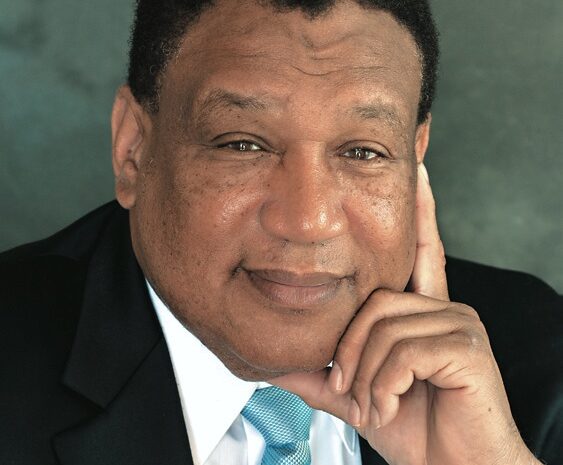
The Queen City will never forget the legacy of O’dell Owens
As a child, he didn’t realize that he was being raised in poverty until it became overly apparent. As a young man, he was forced to face down racism and adversity. During his life, he accepted challenge easily, consistently overcoming defeat. He mentored many, taught even more and saved a multitude of lives. Yet he never forgot his humble roots, nor the street wisdom forged by his hard scrabble youth. Ultimately, he became one of our city’s most cherished sons.
The loss of Dr. O’dell Owens in November was a blow to the psyche of the city that he called home. Yet he lives on, not only on the pages of history, but in the shining example he set for our youth.
In that way, he will never really leave us.
“He used his brilliant medical knowledge to assist those from the birth to the grave,” says Stephanie Summerow Dumas, president, Hamilton County Commission. “The multitude of gifts that he possessed allowed Dr. Owens to ‘Live full and die empty.’”
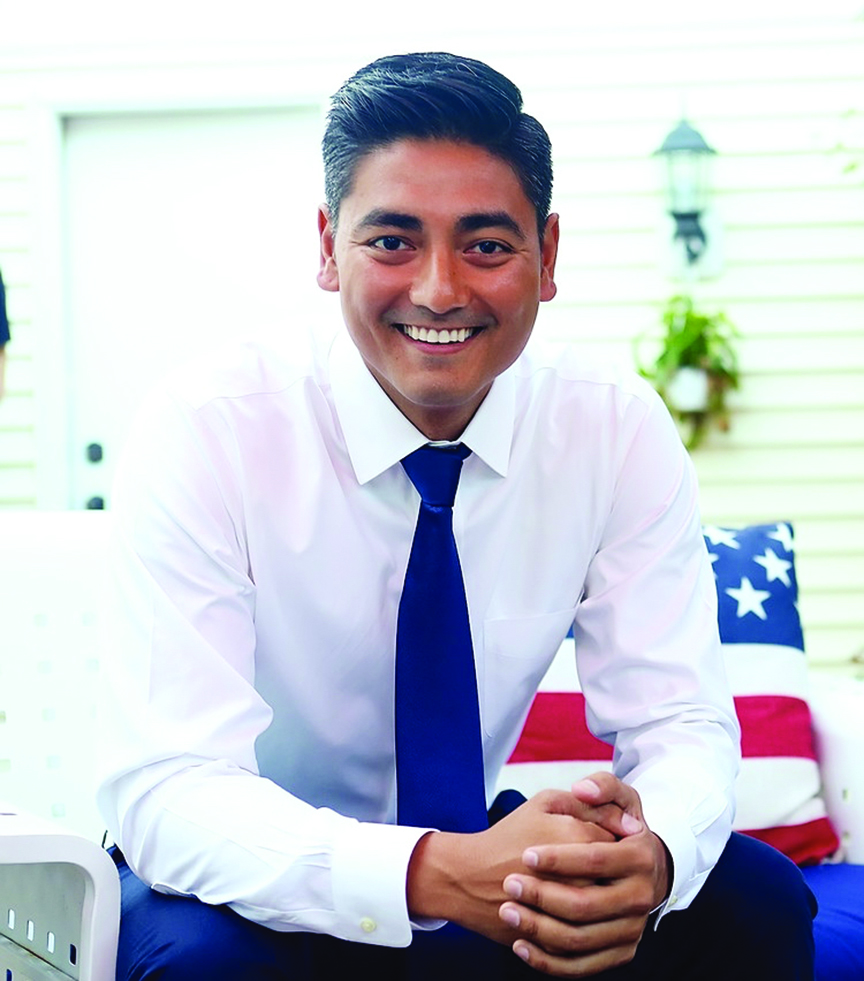
“Dr. Owens is inseparable from what makes Greater Cincinnati such a special place,” adds Mayor Aftab Pureval. “In a lifetime dedicated to the health and education of our residents, he made the kind of imprint that will never go away.”
So it really came as no surprise in December when the Hamilton County Commissioners unanimously decided to name the newly renovated Hamilton County Coroner facility after him. In the two terms he served as Hamilton County coroner, he consistently used his office as a platform to save lives.
“Putting Dr. Owens’ name on the building had nothing to do with a structure,” say Summerow Dumas. “Where else can you display the name of a giant of a man but on the county’s largest structure? His deeds are far beyond this county but international. This honor was being discussed long before his passing.”
“There is no display of our appreciation that could ever measure up to what he gave us,” adds Pureval. “But through this honor, I hope that our community will always remember to carry forward his amazing legacy of compassion and service.”
Born in 1947, Owens grew up in Cincinnati’s West End, the second oldest of seven children. His family lived in poverty in a house owned by his grandmother. But the young Owens didn’t realize that he was living in poverty until one Thanksgiving when charitable volunteers brought a food basket to his family’s home.
His mother died of a stroke when Owens was 12 years old. With the weight of the world on his young shoulders, the young Owens took on odd jobs and cared for his younger siblings. Due to repeated absences, Owens flunked out of his eighth-grade year at Walnut Hills High School.
In 1963, his father, struggling with the demons of gambling and drinking, moved the family to Detroit due to the difficulty of raising seven children while unemployed. Owens was left in the care of Clinton and Cathryn Buford, whose two sons he had babysat.
While that kind of a childhood and early adolescence would be more than enough to break any fully grown man, it only served to forge young Owens’ character. Despite the belief of his high school guidance counselors to the contrary, Owens graduated from Woodward High School and went on to attend Antioch College in Yellow Springs. In 1969, he spent a year as an exchange student at Makerere University in Kampala, Uganda.
He earned a bachelor’s degree from Antioch in 1971 and later went on to earn a medical degree and Master of Public Health from the Yale School of Medicine. He began his residency in obstetrics and gynecology in 1976 and served as chief resident at Yale from 1979 to 1980, He followed that up with a two-year fellowship in reproductive endocrinology and infertility at Harvard Medical School.
In 1982, Owens came back home to head the reproductive division at the University of Cincinnati. He is credited with founding its fertility clinic in 1985. He performed our city’s first in vitro fertilization and the first pregnancy from a frozen embryo. He also helped doctors at the Cincinnati Zoo and Botanical Garden conceive the first gorilla in vitro.
He later served as director of endocrinology and infertility at The Christ Hospital, later leaving medical practice to become medical director of United Healthcare of Ohio. He helped to found RISE Learning Solutions, a nonprofit that focuses on early childhood education training technology.
Owens won election as Hamilton County coroner in 2004, becoming the first African American to serve in an executive capacity in the county’s history. There, he made significant changes, adopting a policy of visiting any police investigation involving a homicide. He won reelection as Hamilton County coroner in 2008, garnering the most votes for any candidate in Hamilton County history.
Later in his career, he was hired by the Cincinnati Health Department as its medical director. He went on to become president and CEO of Interact for Health, a Norwood-based nonprofit that promotes public health, as well as its sister organization Interact for Change, until his eventual retirement in 2021. During the pandemic, he advised Governor Mike DeWine on equitable vaccine distribution.
But Owens’ legacy is not confined to medicine. In 2010, he became president of Cincinnati State Technical College, overseeing the opening of its satellite campus in Middletown. He was the first African American to sit on the board of the University of Cincinnati. He also sat on the boards of U.S. Bancorp, the Cincinnati/Northern Kentucky International Airport, National Underground Railroad Freedom Center and the Cincinnati Zoo and Botanical Garden’s Lindner Center for Conservation and Research of Endangered Wildlife.
With that kind of a professional resume, it’s easy to see why he is considered a pillar of the community, and worthy of the many accolades he received over the years. But, more importantly, for those who knew him best, it was his compassion and understanding of basic human emotional needs that really set him apart. He was, and always will be, an example of the very best of those who have ever called our city home.
