

Warm, humid, wet summer, followed by cool, dry fall brings out the best in trees
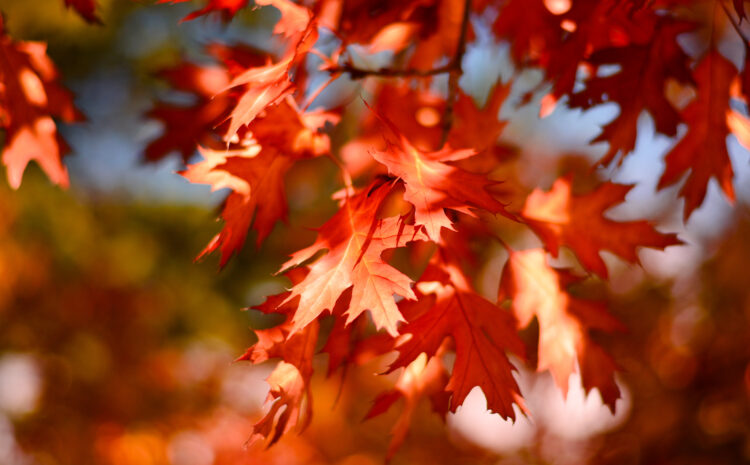
Greater Cincinnati is in the midst of the leaves changing colors — and this year, the colors appear to be as brilliant as ever. Tree canopies sporting reds, yellows and oranges are approaching a peak exhibition of fall’s annual leaf showtime.
“We had a really warm, humid summer,” Ron Rothhaas, principal owner of Arbor Doctor LLC in Green Township, says. “The first part of September was warm and wet, and we rather abruptly turned quite cool. Mild days and cool nights really signal trees to turn, plus it turned super-dry in mid-September.”
All of that has contributed to a spectacular color-changing this year, he says.
Rothhaas, who has been involved in the industry for 40 years (since high school) and founded his company in 2005, is a board-certified master arborist with the International Society of Arboriculture. The ISA says fewer than 2 percent of its certified arborists hold that distinction.
Rothhaas says August rainfall was a record this year, as recorded at Cincinnati/Northern Kentucky International Airport, although he noted that the rain wasn’t uniform across the area. As a co-op observer with the National Weather Service, he measured less rain than what the airport measured. Then in the first week of September, he measured rainfall that should’ve been the total for the whole month. After that, it rained very little. With the warmth and humidity followed by the cooler, drier mid-to-late September and early-to-mid October, the changing colors of the leaves accelerated, he says.
“Things have come together just right this year,” he says. “The fact that we haven’t had any big storm systems has allowed the leaves to stay on longer, too.”
Usually, the ash trees are the first wave of color in late September, then you get a lull until the maples and the oaks start changing later in October, he says. Rothhaas, who appears at times with Ron Wilson on the program In the Garden on WKRC-AM, says they are all changing now, at the same time, which also creates the brilliance of colors.
The local Great Parks of Hamilton County and the city-operated Cincinnati Parks, offer great venues to see and explore nature’s tree palette.
Great Parks manages 17,769 acres of parks and natural habitats across 22 parks and preserves. Cincinnati Parks consist of 5,000-plus acres of city parklands — five regional parks, 70 neighborhood parks, 34 natural areas, six neighborhood nature centers, 30 Cincinnati Recreation Commission sites, five parkways, 16 scenic overlooks, two arboretums and 65 miles of hiking and bridle trails.
If you’re looking for a statewide perspective, the Ohio Department of Natural Resources maintains a website with videos, maps and regular updates on the fall colors.
“I would rank this, at least statewide, as one of the best fall color seasons we’ve had,” David Parrott, Ohio Department of Natural Resources fall color forester, says. “A big trigger for that is the amount of daylight — how long the days are. In general, there’s going to be a window of opportunity, which occurs about mid-October. Then you get into the environmental conditions, and there are models with tons and tons of factors that go into predicting these things,” such as when leaves develop in the spring, the quality of the growing season and fall weather. “Any huge rain or wind events can cause problems.”
Parrott also noted that much of the state — except extreme northern Ohio — was in drought conditions after the first week in September, which caused leaves to turn earlier. In central Ohio, for instance, tree leaves started changing before leaves up north, he says.
Last year, overall, warmer temperatures continued until November, “so we didn’t have many cool nights or cool days — a lot of the leaves kept their chlorophyll until November and just died off. This year, we had the ideal fall weather — nice sunny days and cool nights.”
Every tree species is turning this year, he says. “Typically, oaks species are not that impressive when it comes to the fall foliage. I’ve been seeing a lot of oaks turning reds and yellows and different colors, which is a sign of it being such a good year. Every different tree species is bringing its A-game and playing its part.”
The state of Ohio is home to 24 state forests covering more than 200,000 acres and 75 state parks covering more than 170,000 acres. Cabins, lodges, hiking/biking trails, campgrounds, picnic areas and boating/canoeing/kayaking offer ample places to view the changing of the colors.
In the region, Ohio state parks include Hueston Woods in College Corner, Caesar Creek in Waynesville, Stonelick in Pleasant Plain and East Fork in Bethel. The nearest state forests are Shawnee (Portsmouth), Brush Creek (Rarden), Pike (Latham) and Scioto Trail (Chillicothe).
Parrott says residents should get now and view the leaves because it could be years before such another spectacular leaf-color changing.