

Can Ohio Democrats survive the red tide in 2022?
It seems not long ago when I celebrated Barack Obama’s 2008 Ohio victory. Obama repeated his Ohio victory over John McCain, by a narrower margin in 2012.
Was that the high watermark for Ohio Democrats? Donald Trump won the state by about 8% in both 2016 and 2020. Despite losing traditionally red Hamilton County, Trump rolled up big majorities in places like Warren, Butler and Clermont counties. While many formerly deep red states like Arizona and Georgia became more racially diverse, Ohio has become comparatively whiter and “reder.” In 2018, Ohio bucked a national anti-Trump wave by electing Mike DeWine as governor while states like Michigan, Wisconsin, New Mexico and even deep red Kansas replaced GOP governors with Democrats.
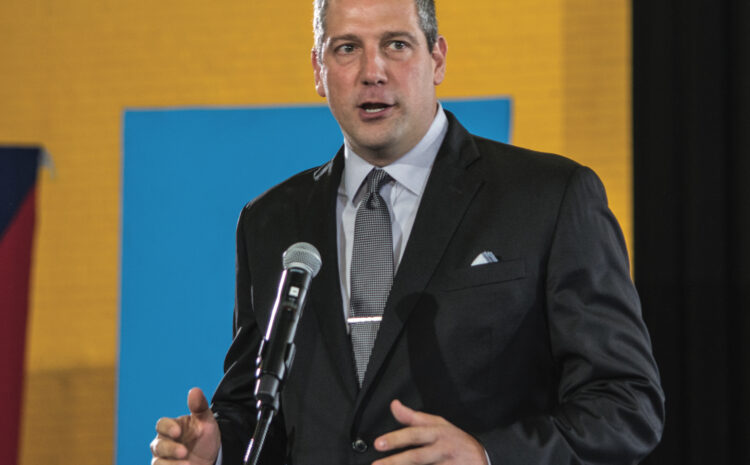
Can the Democrats’ U.S. Senate candidate Tim Ryan and governor candidate Nan Whaley reverse Ohio’s red tide in November?
They hope to follow Senator Sherrod Brown’s proven game plan. Brown has won three consecutive Senate terms, beating (then senator, now governor) Mike DeWine in 2006 by 13%; former State Treasurer Josh Mandel by 6% in 2012 (a larger margin than President Obama’s over Mitt Romney that year) and former Congressman Jim Renacci by 10% in 2018. That same year the Democrats’ Richard Cordray lost the governor’s race to DeWine by about 4%. Brown put his winning streak together by relentlessly focusing on Ohio’s working families, an “economic populism” that runs contrary to the more free-trade impulses of the Clintons, Obama and pre-Trump Republicans.
Democratic Senate candidate Tim Ryan walks that same road, representing Northeast Ohio’s fading industrial heartland in Congress since 2003. Ryan’s taken a “crackdown on China” tact on trade issues that seems almost Trumpian. While Ryan’s failed 2020 presidential campaign was squeezed out by better known economic populists like senators Bernie Sanders and Elizabeth Warren, it raised his profile outside of his Ohio district.
Likewise, Nan Whaley, the former mayor of Dayton, has emphasized her working-class roots. Her landslide primary victory over Cincinnati Mayor John Cranley shows the work she has done to build her brand around the state.
Of course, their fate will depend as much on the strength of their opponents and the direction of the political winds when voting begins.
Ryan drew a wild card in first time candidate J.D. Vance, the Hillbilly Elegy author who called Trump an “idiot” in 2016, but, with an assist from Fox pundit Tucker Carlson, won Trump’s endorsement in the GOP primary. Vance’s dizzying MAGA conversion is reflected in seemingly Pro-Putin statements on the Ukraine war and his enthusiastic embrace of Carlson’s “white replacement” rhetoric. It’s a drift that may seem too radical for Ohio voters, who have historically elected more centrist Republicans like Rob Portman, DeWine and George Voinovich. On the other hand, Vance’s full-throated embrace of white resentment targeting racial minorities and immigrants may be exactly what some Ohio Trump voters want to hear.
In contrast, everyone knows what they will get from Whaley’s opponent. At 74, Mike DeWine may be too familiar a face, serving in elective office for 46 years. He’s been a state senator, congressman, lieutenant governor, U.S. senator, attorney general and now governor. By taking COVID seriously, DeWine offended many in the GOP base. In recent decades it has taken a major scandal to give a Democrat keys to the governor’s mansion. The ongoing FirstEnergy pay-to-scandal roiling Columbus, adding monthly to every Ohioan’s utility bill, will be Whaley’s key talking point.
The biggest challenge for Whaley and Ryan may be the political winds. The party that wins the White House typically tanks in the following mid-term. Concerns about inflation and the economy are a drag on Joe Biden’s approval ratings. But the GOP’s ongoing efforts to crack down on women’s reproductive rights may energize Democratic voters in ways that shift those winds, giving both Ryan and Whaley a fighting chance to reverse Ohio’s red tide.
Don Mooney is an attorney, a past member of the Cincinnati Planning Commission and is active in local politics.
