
In our 16th annual Rating the Burbs feature, we look at our local communities to see how they stack up against one another. Where did your community fall in this year’s list?
Compiled by Bill Ferguson Jr.
1 Union Township
(Warren County)
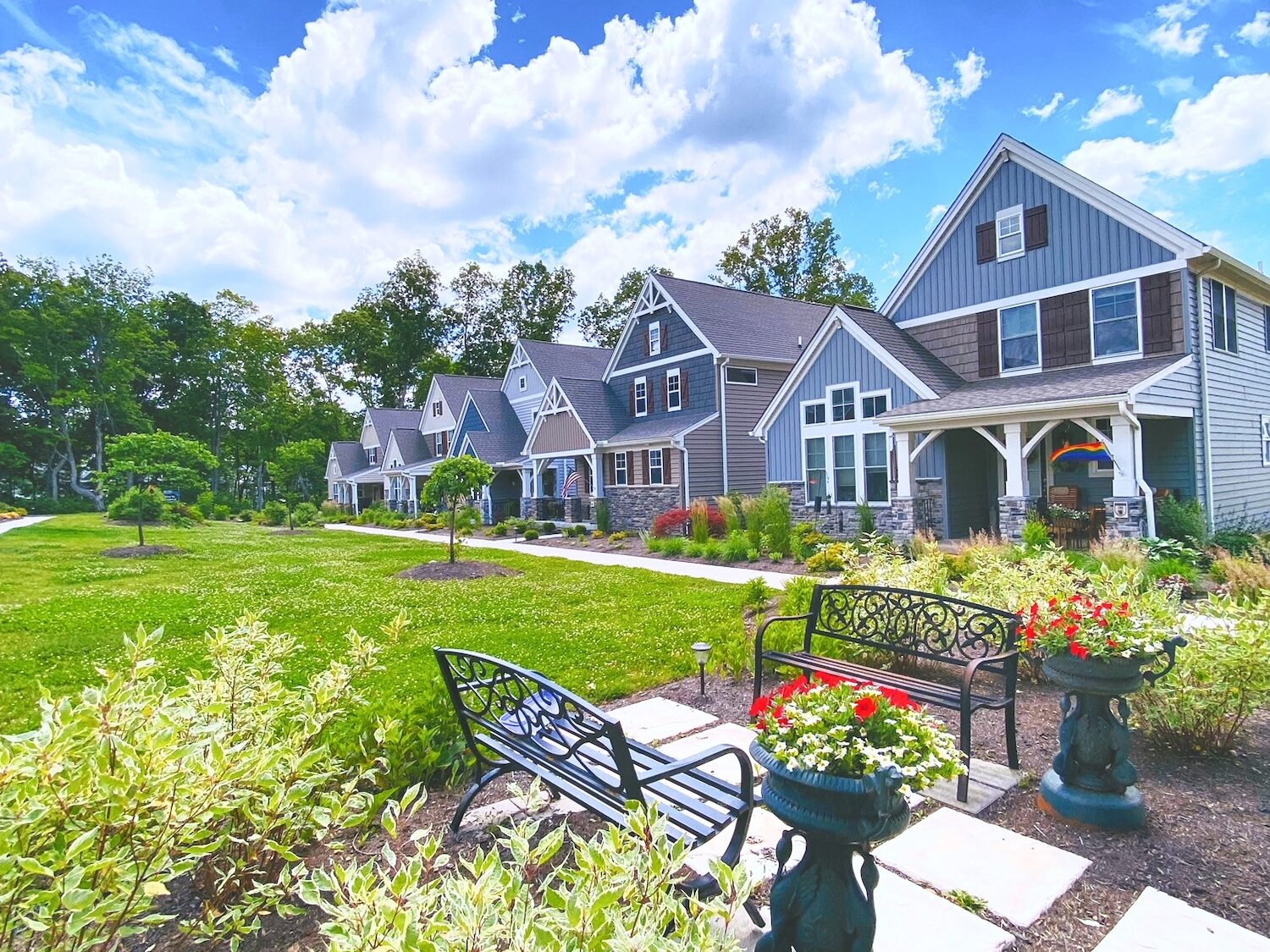
Good schools, low crime and a strong housing market propelled Union Township to No. 1 this year. The township has placed in the Top 5 communities six times in the past 10 years and in the Top 25 nine times during that period. With 6,251 residents, it has grown by one-third in population since 2010. Union’s 2021 median home-sale price of $510,000 ranks fifth overall in Greater Cincinnati—more than double its median price five years earlier. The township was formed Jan. 3, 1815, from parts of Deerfield and Turtlecreek townships in the central part of Warren County. It operates two parks—William H. Hackman Park and Willard E. Spicer Park—and is served by four school districts.
2 Madeira
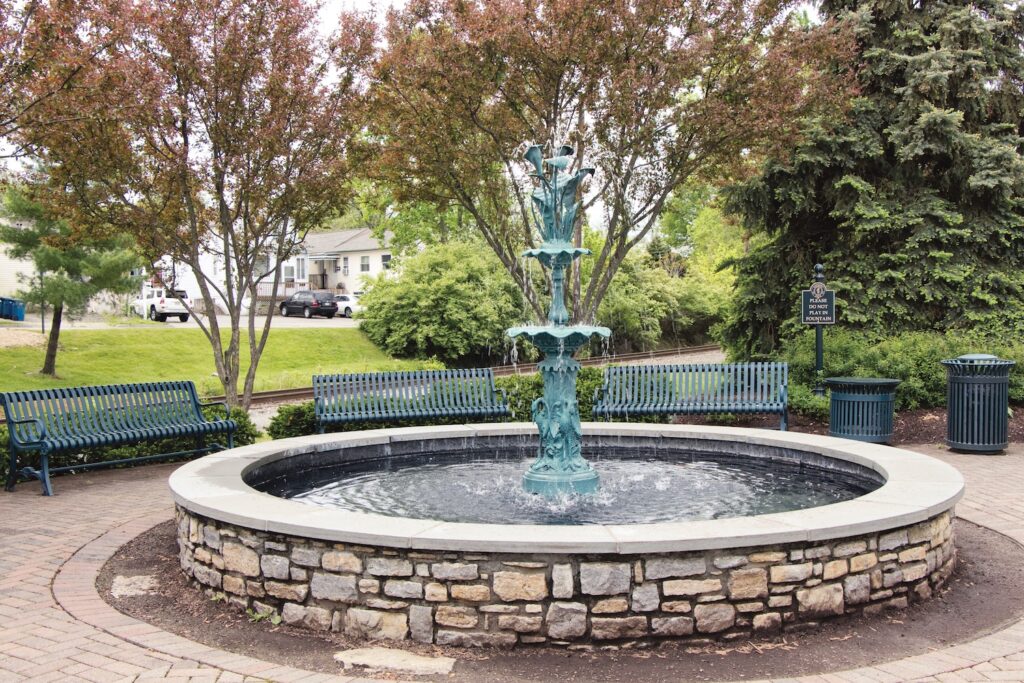
Madeira ranks No. 2 for the third year in a row—and four of the past five years. Since 2010, the city of 9,487 residents has placed in the top three spots every year, including six times at No. 1. Madeira City Schools provides a strong education for the city’s children, and crime remains relatively low. The city’s 2021 median home-sale price of $402,925 was up 45% since 2016. With more than 90% of the city zoned for residential housing, about 88% of homes are owner-occupied. The city, incorporated in 1910, offers plenty of recreation in three parks: Sellman Park, McDonald Commons Park and Nelle V. Hosbrook Bird Sanctuary. With Kenwood Towne Centre and many other stores located nearby, shopping is convenient for residents in the 3.4-square-mile city.
3 Villa Hills, Ky.
No. 3 Villa Hills sits along the Ohio River on what was once farmland. It was incorporated June 7, 1962, partly with a $300 loan from the Villa Hills Civic Club. Low crime, a homeownership rate of more than 93% (No. 7 in the eight-county area) and a 77% increase in its median home-sale price from 2016 to 2021 (now $333,500) gives residents in the city of more than 7,300 a good place to live. The first known permanent settlers arrived about 1785 from Virginia. Landmarks include River Ridge Elementary School, Villa Madonna Academy and Sisters of St. Walburg Monastery. Six parks and fields provide residents with recreational opportunities.
4 Oxford Township
(Butler County)
Oxford Township placed well in almost all categories, with the exception of owner-occupied homes, with Oxford and Miami University located there. Low crime and low commute-to-work times especially lifted the township, located in the far northwest corner of Butler County, to No. 4 this year. It has appeared in the Top 20 in each of the past three years. A Wikipedia entry says Congress in 1792 required the land purchaser, John Cleves Symmes, to allocate a township of land to support a university; Symmes never fulfilled the promise, but eventually, Miami was established in the area. For K-12 education, Talawanda City School District serves the township. The 2020 census reports population of the township at 25,469, with the unincorporated areas (which exclude Oxford and College Corner) comprising about 2,000 residents.
5 Terrace Park
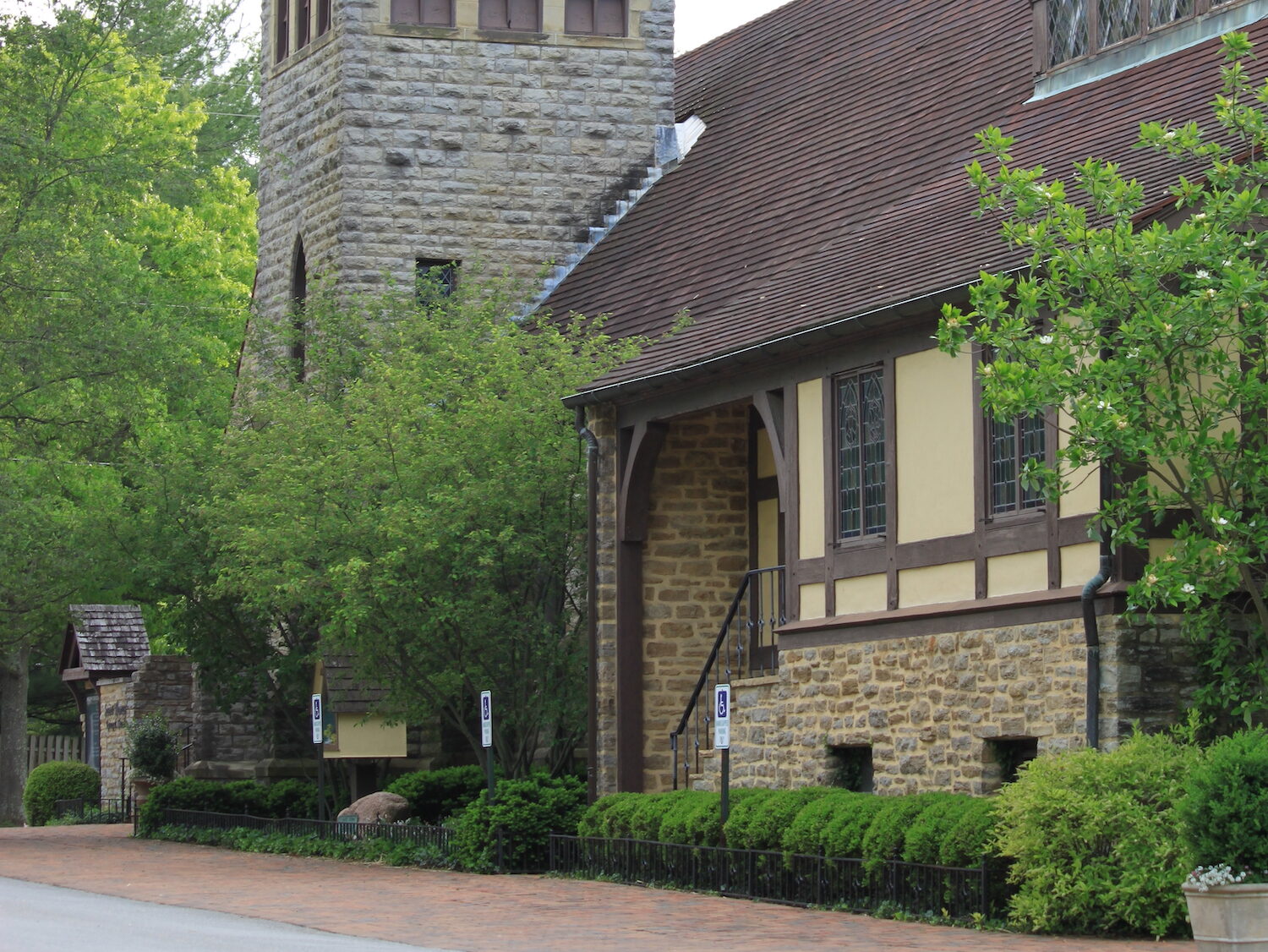
After two years in the top spot of “Rating the Burbs,” Terrace Park places No. 5 this year. The village of 2,355 residents has placed in the Top 5 nine times in the past 12 years and the Top 20 all 12 years. The village experienced no crime among the eight key categories under the FBI’s Uniform Crime Reporting system, has a high homeownership rate (No. 5 at 96%) and is served by a top-rated school district (Mariemont City Schools). Settlers began arriving in the area in the late 1700s, but it wasn’t until 1893 that the village incorporated. Terrace Park was the winter home of the popular touring John Robinson Circus until 1917; it became part of the American Circus Corp., which was bought by John Ringling in 1929.
6 Reily Township
(Butler County)
Reily Township moves up a couple of notches from No. 8 last year on the strength of high homeownership (No. 9 at 92%), relatively low crime and a good school district (Talawanda City Schools). It also registered a 60% gain in its median home-sale price, to $233,400 from $146,250 in 2016. The township was carved out of St. Clair Township on Dec. 7, 1807, and says it was named in honor of John Reily, a Revolutionary War veteran who also helped write the Ohio Constitution. Many historical buildings and sites, including the original inn and cemeteries where veterans from the Revolutionary War and the Civil War are buried, are located in the township. Reily Township is still rural and peaceful, with many rolling hills, woodlands and agricultural fields.
7 Clearcreek Township (Warren County)
No. 7 Clearcreek Township appears among the Top 15 for a 13th straight year, including 10 times in the Top 10. The 36,238 residents experience low crime (No. 4 overall in Greater Cincinnati), and its K-12 schools (Springboro Community City, Lebanon City and Wayne Local districts) are highly rated. It also has a 91% homeownership rate. Clearcreek Township, established in October 1815, had one of the best unpaved road systems in the state by 1840, a local history account says. The township’s Clearcreek Baptist Church, founded in 1797, is reported to be the oldest church in Warren County. The township operates several parks: Patricia Allyn Park, The Hoffman Reserve and Diane’s Sycamore Reserve. Another in the works, Harbaugh Park, is in the planning/design phase.
8 Carlisle
Carlisle makes its first appearance in the Top 10 of “Rating the Burbs,” primarily on the strength of an 88% gain in its median home-sale price of $238,000 in 2021. The city of 5,501 often makes the list of top communities, with its rankings being better than average across all categories. The area’s earliest settlers began arriving in the early 1800s. James Tapscott donated land to area Baptists, and Tapscott Church, built in the early 1800s, still stands and is owned and maintained by the city, along with an adjoining cemetery, according to the city’s website. Carlisle became a railroad stopping point in the mid-1800s. A prominent figure in the railroad community, George B. Carlisle, donated a parcel of land to be used for the benefit of the entire community, and the town was named after him.
9 Maineville
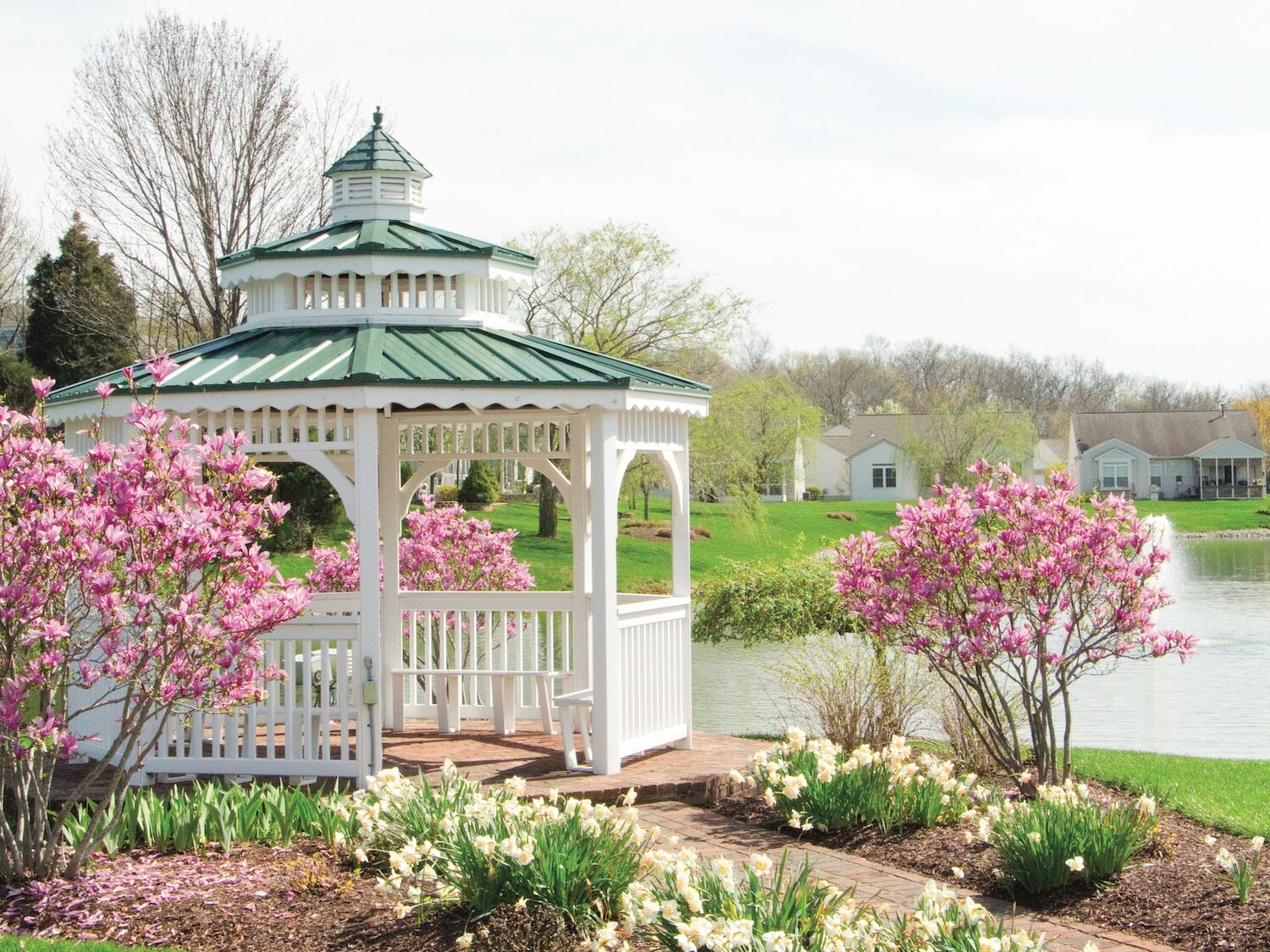
The village of Maineville has steadily moved up the list for the past four years, reaching the Top 10 for the first time. Like Terrace Park, it had no incidences of the eight categories of crime under the FBI’s Uniform Crime Reporting program. Little Miami Local Schools also provides a strong K-12 education system for the residents of Maineville. The village barely made the 1,000-population cutoff for “Rating the Burbs” for several years, and the 2020 Census reported growth to 1,405 residents. The village was incorporated March 23, 1850.
10 Deer Park
The city of 5,432 makes its first Top 10 “Rating the Burbs” appearance with a relatively low crime rate and strong home sales (its 2021 median price climbed 71% to $210,000). Deer Park, about one square mile, also ranked well in commute-to-work time at an average 21.61 minutes. The 13.5-acre Chamberlin Park, in the heart of the city, provides a place for recreational activity and entertainment throughout the year. Deer Park’s founders gathered in the back room of a tavern in 1886 and laid out a suburb of residences, the city’s website says. It was still mostly rural when Deer Park was incorporated as a village in 1912 with 327 residents. Growth eventually came and by 1950, there were 7,247 residents. Deer Park became a city in 1952.
Honorable Mentions
The Honorable Mentions category shows communities that did not place among the Top 75 Communities but did place in the top 25 in at least two categories among the 136 communities of 1,000 or more population. This year, those communities are:
Columbia Township
Evendale
Lockland
Oxford
Silverton
Taylor Mill, Ky
How We Did It
By Bill Ferguson Jr.
The collection of thousands of points of data—from websites, government agencies and real-estate professionals—is the backbone of Cincy’s annual “Rating the Burbs” cover story/project.
This 16th year of “Rating the Burbs” covers 136 communities of 1,000 or more population in Boone, Butler, Campbell, Clermont, Dearborn, Hamilton, Kenton and Warren counties—two fewer than previously because Amelia voted to dissolve itself as a village in 2019 and the population of Ryland Heights, Ky., fell to 922 in 2020.
Hundreds of spreadsheets and websites on various topics were examined to determine the Top 75 Communities, Top Public School Systems and 50 Safest Neighborhoods in the eight-county metro region. The COVID-19 coronavirus pandemic again had little effect on data availability this year, with the exception of education statistics.
The 2020 decennial census breakdown of all communities was available for the first time. Additionally, the U.S. Census Bureau’s American Community Survey and Population Estimates Program, which will update the 2020 census each year, provided data other than population through 2020.
More than 270 villages, cities, townships, Census County Divisions and Census Designated Places are located in the eight counties, and Cincy collects data on those with populations of 1,000 or more.
The Multiple Listing Service of Greater Cincinnati, the Northern Kentucky Association of Realtors and the Southeastern Indiana Board of Realtors provide median home-sale prices each year. A few communities are unavailable through those three organizations, so sales data are gathered from county auditor websites.
The FBI’s Uniform Crime Reporting program, now available through the agency’s Crime Data Explorer, lists four categories of property crime and four categories of violent crime; the latest breakdown of numbers is from 2020. Because reporting to the FBI is voluntary, not all jurisdictions report their statistics. For those, we check community and state websites, and contact our county sheriffs’ offices and township, city and village police departments.
County auditors, treasurers and property valuation administrators in the three states provide property-tax rates, and we break down the tax charts for all localities and compare taxes in each area for $100,000 of house value.
For education, we scour state report cards, state education department websites and school district websites for data on the 69 school districts that serve students in at least some part of the eight-county area. We also make public-records requests to the state departments of education themselves. COVID-19 reduced some data availability, so some 2020-21 academic year categories were eliminated, while others were added to be able to compare the districts across the three states.
Township Tops Ratings for First Time
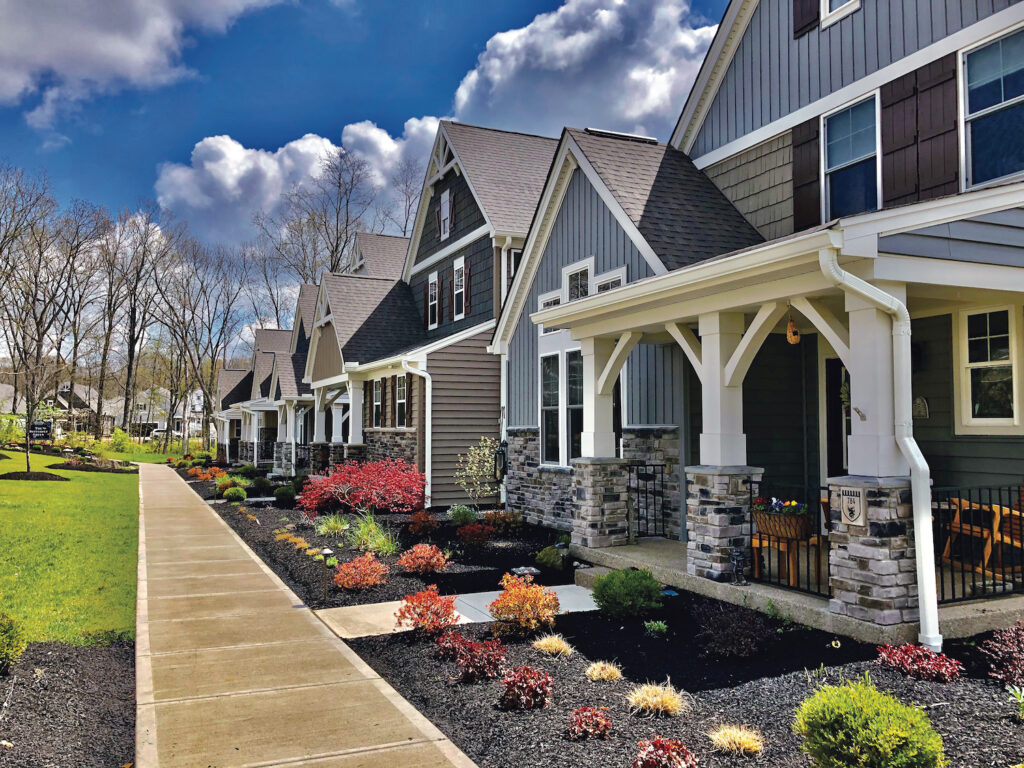
Booming Union Township in Warren County provides some unique living
By Bill Ferguson Jr.
For the first time in 16 years of “Rating the Burbs,” a suburban township finished first.
Union Township in Warren County, which is divided almost in half by Interstate 71 near Mason, Lebanon and South Lebanon, brings many attributes that are drawing more residents to the area. The township grew 33% in population from the 2010 Census to the 2020 Census, to 6,251—eighth highest in percentage terms among 136 communities of 1,000 or more population in Greater Cincinnati.
“It’s a great area,” Chris Koch, Union Township trustee, who’s now in his fourth term after two years off, says. “The rural character of the township, combined with good school districts and the location in terms of its triangulation between Cincinnati and Dayton makes it a great place.”
The township was the site of the 55th Homearama neighborhood in 2018—Highlands at Heritage Hill. Lots range from 1.25 to almost 4 acres. At that time, the 43 homes were all priced above $1 million, and marketing materials noted that more than 40 acres of green space and active agriculture, wooded hiking trails, a pool/community area, a playground, a sports field and a fishing pond were among the amenities.
The 141-acre Aberlin Springs, described as a conservation community, an agri-community or farm-to-table living, is another high-end neighborhood in Union Township. All residents are part of the Community Supported Agriculture, in which they pay a yearly fee and share in the crops, meat and eggs produced on the on-site farm. Developed by Leslie Aberlin on her family’s farm, homes became available four years ago and continue to be built. It is Ohio’s first such community.
“It’s a really unique concept—kind of like a country club, but instead of being built around a golf course, it’s built around a farm,” Koch says.
Union Township’s 2015 Comprehensive Plan, facilitated by the Warren County Regional Planning Commission, showed that the township’s land usage was 62.3% agriculture, 29.5% residential, 6.7% commercial-industrial and 1.6% institutional. Koch says the mix has changed a little, but it’s still primarily agricultural. The township contains little commercial industrial property, partly because the township does not provide utilities such as water and sewer.
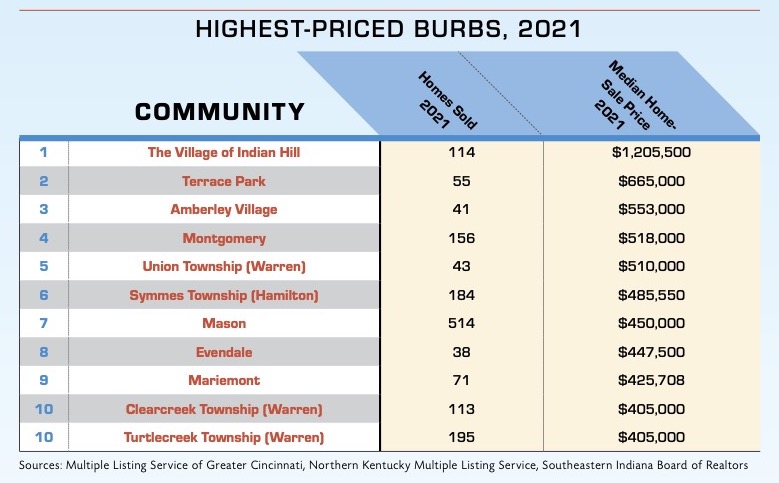
Union Township’s median home-sale price in 2021 was $510,000, up 128% from five years earlier (sixth-largest gain overall in Greater Cincinnati)).
“We can’t really control development because it’s going to come; people are going to build new homes, developments are going to come your way,” Koch says. “But we really need to strive to make it good development. I think Aberlin Springs and Highlands at Heritage Hill are really good developments in our area.”
Fred Vonderhaar, another fourth-term township trustee who has lived all of his 66 years in the township, grows corn, soybeans and wheat on 1,200 rented acres. “The key is if you are going to farm for other people, you have to know that this [development] is coming and that it’s part of the deal.” He farmed one large piece of ground a few years ago, and the owners passed away. The daughters sold it within two or three years, and it is now full of houses.
“With what the price is for ground that can be developed into housing or commercial, you really can’t afford to own it” as unused farmland, he says.
Gains in Prices of City Homes Continue Strong Pace in ’21
By Bill Ferguson Jr.
For the fourth consecutive year, residents in at least 10 city of Cincinnati areas saw their home prices rise by double or more compared with five years earlier.
All but one of 38 city areas tracked by the Multiple Listing Service of Greater Cincinnati experienced a five-year gain in median prices. California was the exception, but fewer than 10 homes are sold there year to year, causing price comparisons to be volatile.
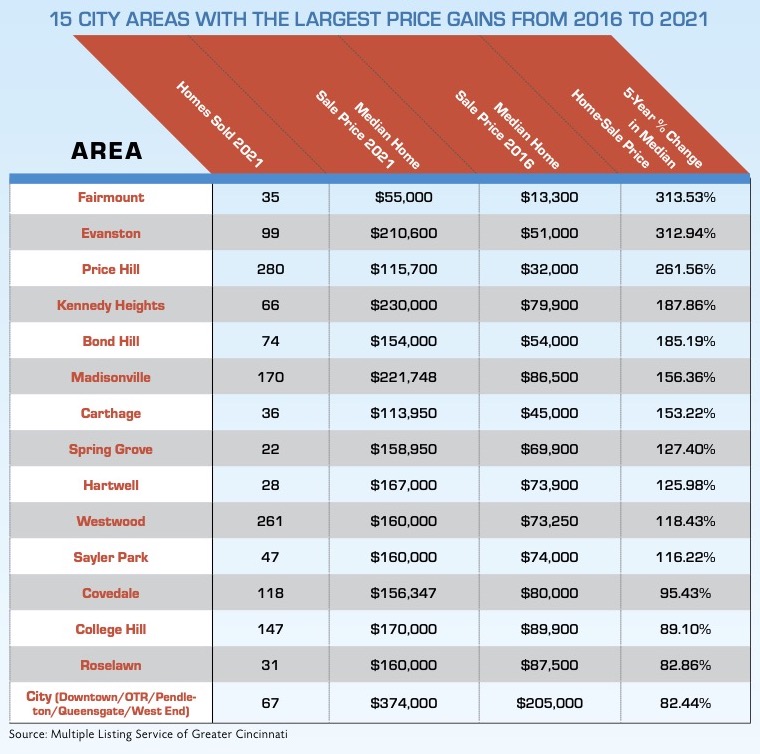
Some neighborhoods’ prices have doubled, tripled and more in the past few years. In 2021, 11 city neighborhoods at least doubled, with Fairmount (314%) and Evanston (313%) leading the pack on a quadrupling of prices. Evanston was No. 1 on the five-year price-appreciation chart for the past five years. Its median price bottomed at $13,400 in 2011 and has since rocketed to $210,600 on 99 sales in 2021.
The Price Hill area had the third-highest gain in 2021—up 262% to $115,700 from $32,000 on 280 sales. Price Hill is three distinct neighborhoods: East Price Hill, Lower Price Hill and West Price Hill. The MLS breakdown covers 38 areas, which do not correspond exactly to the 52 Cincinnati neighborhoods.
The neighborhood with the highest median price was Mount Adams.
Below are the 15 city areas with at least 10 sales that experienced the largest price gains from 2016 to 2021: