

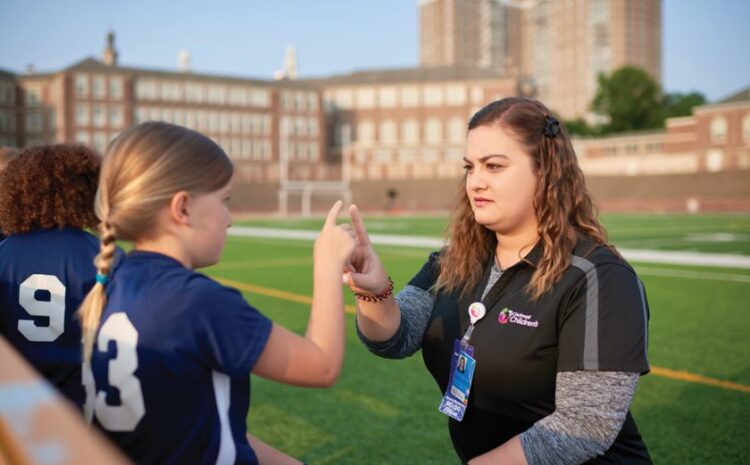
Great outdoors a great place for working out as warm weather hits
A combination of warm weather and longer days leads many Americans to get outside and get active in the summer—providing a positive psyche as well as a healthier body.
But that extra activity can also put people on the path to an unexpected visit to urgent care or an emergency room. Anterior cruciate ligament (ACL) tears. Overuse injuries. Repetitive-motion pains. Bone fractures. Bursitis. Tennis elbow. Rotator cuff tears. Sprains and strains. Concussions. Tendonitis. Shin splints. You name it.
Medical experts say you shouldn’t let fear deter you from the benefits of exercise in the great outdoors. Just take some precautions, and listen to your body. Let your physical shape and your age guide you in deciding what activities to pursue.
It could be training for your first marathon or triathlon, which requires weeks of advanced preparation. Or it could be simply starting a garden, which provides outdoor exposure and minimal physical activity, depending on how elaborate you want to get with your gardening and landscaping.
What’s the best way to avoid injuries?
“Slowly build yourself up,” Dr. Brian Chilelli, a Mercy Health sports medicine and orthopedic physician, says. He says some people who visit his office “go from doing nothing for years and then, all of a sudden, they’re joining Orangetheory and doing five Orangetheory classes a week. Gradually build, whether it’s running or biking—for distance or speed—or lifting weights.”
Also, don’t smoke (“cigarettes are bad for the joints, tendons and muscles,” limiting the body’s ability to heal), maintain the appropriate BMI (body mass index) and keep up an age-appropriate regimen of exercise that your body can tolerate—which might be your physiological age and not necessarily your chronological age, Chilelli says.

What are the most common injuries that Chilelli sees in the summer?
“The biggest problems we see, as people become more active outside, are conditions with the shoulder, hip, knees and ankles,” Chilelli, also the orthopedic team physician at Miami University, says. Specifically:
• With overhead sports action, such as in volleyball or tennis, tendonitis can cause pain in the shoulders.
• In the hip, bursitis can become a problem, mostly when going from a sedentary to active lifestyle.
• For knees, patellar tendonitis or patellofemoral pain can result from overuse—“doing too much too fast,” Chilelli says—such as adding miles to a run too quickly or going from no golf to walking 18 or 36 holes immediately.
• Sprained ankles also are prevalent.
Chilelli says more severe injuries include rotator cuff tears in the shoulder (younger people suffer more dislocations, which often occur in contact sports and are rare in the average adult); a labral tear with impingement in the hip; an ACL, meniscus or quadriceps tendon tear in the knee; and a fracture or Achilles tendon rupture in the ankle.
“I’m a very conservative surgeon,” he says. “A lot of things can be treated without surgery. However, if I firmly feel that the patient’s outcome or their long-term prognosis will be better with surgery, then I will advocate for that.”
Children and young adults also experience increased injuries during high periods of activity.
A 2019 National Health Statistics report estimated that 2.7 million emergency-room visits annually in the U.S. were made by patients ages 5 to 24 in 2010-16 during sports and recreational activities. The top five most frequent: football (14.1%), basketball (12.5%), pedal cycling (9.9%), soccer (7.1%) and ice/roller skating or skateboarding (6.9%). Males accounted for two-thirds of visits.
Dr. Alissa Conde, a pediatric sports medicine physician at Cincinnati Children’s Hospital Medical Center, sees her share of injuries in the younger set. She’s also a team physician with Miami University and Woodward Career Technical High School in Cincinnati.
Conde was a regionally recognized competitive gymnast while growing up in south Florida and decided to leave the sport in high school after recovering from a patella injury (kneecap dislocation). She says she recovered physically but felt that she had a mental roadblock to advancing to the next level.
She can relate to athletes who face similar situations.
“My experience and exposure as a competitive gymnast did lead me to want to become a sports medicine physician,” she says, adding that she took a different avenue to get there. She started training as an orthopedic doctor, but she didn’t care much for the surgical part of it. Sports medicine had been developing more as a specialty in the past two decades, and Conde enjoyed working with pediatricians and with children. So she was able to combine two things she enjoys—sports medicine and children—into a career.
“We’re big into injury prevention,” she says. For example, “ACL injuries are a big topic. How do we best prevent athletes from getting injuries? We know that teenage girls have this higher propensity to get injured—so why? How can we provide some prevention strategies for the community for these athletes?” Girls might suffer more knee injuries because their pelvis area is completely changing, sometimes causing overuse of the front portion of their knees and more injuries, she says.
When injuries do happen, Conde says the youngest children’s soft tissues—ligaments, tendons and muscles—”are a lot stretchier than some of us who are a little bit older, so they do not get as many soft-tissue injuries. Younger kids tend to get more fractures or tend to injure their growth plates. As they get older, more into the teenage years, they’re playing more high-level, focused types of sports, and we’ll start to notice more soft-tissue injuries—ligament tears, tendon strains or partial tears or avulsion fractures (when small pieces of bone break off).”
When it comes to high-level athletics, in which teens are beginning to look at playing sports beyond high school and hoping to eventually go pro, national sports governing bodies provide rules and guidelines on youths’ limitations to avoid injuries, Conde says.
For instance, in baseball, there’s a pitch-count limit, depending on age. A pitcher might be told to rest a certain number of days. And if there’s evidence of an injury beginning, the player might need to sit out a number of months or change positions in the sport to one that is less active for a while.
Conde says the problem is when youths play in multiple sports or multiple leagues with multiple coaches, and the coaches don’t know how much a player is playing. It should be up to the player—and parents—to track playing time, pitch counts, jumps, etc., but they often ignore the advice and end up injuring themselves.
When boys or girls, or parents, seem skeptical about whether there’s an injury, Conde can show a visual of, say, the player’s normal left elbow, then of the player’s inflamed right elbow, and the conversation can change. Further, a player can have something like a shoulder injury, and Conde says she can ask him or her to do a wall pushup, and parents can see how the shoulder blades are not lined up the same.
“Everybody gets on board” for treatment, she says.
“As pediatricians, we like to explain our thought process,” she says. “I always tell families when they come to visit me, this is a discussion. You’re bringing me into your world. What makes sense for you, and how can I help get you to the goals you have?”
Whether you are older or younger, doctors agree that getting out and exercising is of great benefit. You just have to develop a plan for yourself or for your children to smartly reach your goals while limiting the chance for injuries.
