

No one knew at the start how coronavirus would cause such chaos in day-to-day living
One year ago, Gov. Mike DeWine and his then director of the Ohio Department of Health, Amy Acton, began issuing orders that virtually shut down the state because of the rise of the COVID-19 coronavirus pandemic.
It was Sunday, March 15, in his afternoon news conference, where DeWine announced that restaurants and bars would be closed at 9 p.m. that evening until further notice, except for carryout and delivery. Just two days earlier, DeWine had announced an order to close all K-12 schools in Ohio.
Then, March 16, Acton issued an order to close the polls for the state’s primary election the following day. By the following Sunday, Ohio residents were ordered to stay at home, except for essential activities such as obtaining food or for medical supplies.
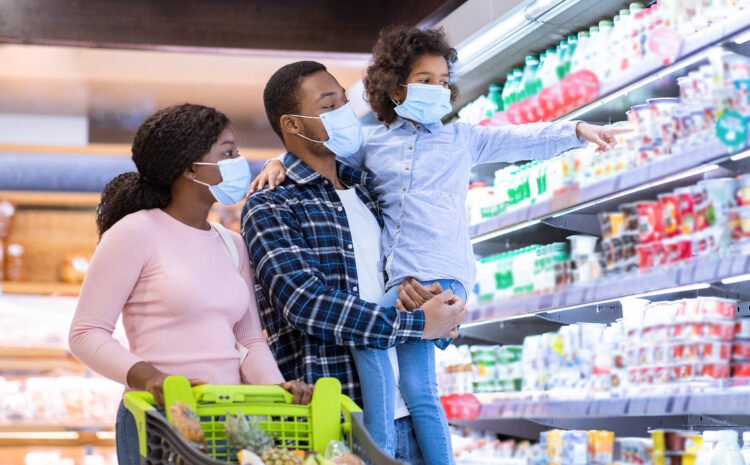
While the orders were gradually relaxed, many remnants remain, affecting life as we knew it. One of the biggest remaining requirements is that facial coverings must be worn in almost any building.
Monday, the Department of Health’s COVID-19 dashboard reported 843,289 confirmed and 145,902 probable coronavirus cases in Ohio in the past year, with 17,871 deaths of Ohio residents. More than half of deaths have occurred in the 80-and-older group, and 98% have been among those 50 and older.
Where we stand a year later:
Sports and entertainment events: The state says venues can reopen with 25 percent maximum indoor capacity and 30 percent maximum outdoor capacity, provided that they follow established precautions such as mandatory mask wearing for employees and customers.
Bars and restaurants: As one of the hardest-hit industries during the pandemic, restaurants and bars are fully open, with limitations. Social distancing of at least six feet among customers, workers and any others in the establishment must be maintained. Even though they are fully open, they still are below capacity in most cases. Masks are required, except when sitting at your table. Many restaurants put up partitions between booths or have closed off certain tables.
The Ohio Restaurant Association says about 20% of 23,500 food-service and bar locations in Ohio closed either temporarily or permanently in 2020. The unemployment rate for an industry that provides 585,000 jobs in the state topped 20% as well.
“It has been such a volatile situation,” Homa Moheimani, manager of media & communications for the association, said Monday. The $1.9 trillion federal COVID-19 relief bill just approved by Congress will provide a $28.6 billion Restaurant Revitalization Fund to help restaurants and bars get to warmer weather, when they will have more outdoor seating, she said. Plus, as more people are vaccinated, customers will feel safer about going out.
It becomes a question of whether restaurant owners can outlast the decline in demand.
“It’s a tale of three tales,” Moheimani said. “There has always been a group where it doesn’t matter—if it’s tornado or a pandemic, they’re going to go out to eat. There are those that feel relatively comfortable with masks and social distancing. And there are folks who say, ‘Absolutely not—until I get a vaccine, I’m not going anywhere.’ There are more people becoming more comfortable about going out to eat—with warmer weather and more people vaccinated, that middle group is growing.”
Schools: DeWine offered school districts vaccinations for employees if they would agree to provide at least some form of in-person learning by March 1. All but one school district in the state—Jefferson Township Local Schools in Montgomery County—signed the document. In February, Ohio vaccinated more than 200,000 educators to allow students to return to in-person learning. As of last week, all but two of the 609 traditional, public districts in the state—Jefferson Township and Youngstown City—offered either five-day in-person or hybrid learning.
Nursing home visitation: Certain restrictions still apply, such as no new onset of COVID-19 cases within the past 14 days. Compassionate-care visits, for comfort, support or assistance to a resident whose well-being is at risk, are allowed.
Vaccinations: As of Sunday, 2.364 million Ohioans—one-fifth of the state’s population—had at least one COVID-19 shot, including 164,933 (20.18%) in Hamilton County, 65,674 (17.14%) in Butler, 47,948 (20.44%) in Warren and 37,851 (18.34%) in Clermont. Ohioans 50 and older are now eligible for COVID-19 vaccinations.
DeWine announced earlier this month that when Ohio reaches 50 or fewer new COVID-19 cases for every 100,000 people for two consecutive weeks, all health orders will be lifted. The latest statistics show that Ohio is at 155 cases for every 100,000 people.
Locally, Butler County is averaging 171.7; Clermont, 160.3; Hamilton, 158.4; and Warren, 150.9.