

St. Ursula Academy shifts away from the familiar rhythm of semesters
Come December, classrooms at Saint Ursula Academy will look a little different.
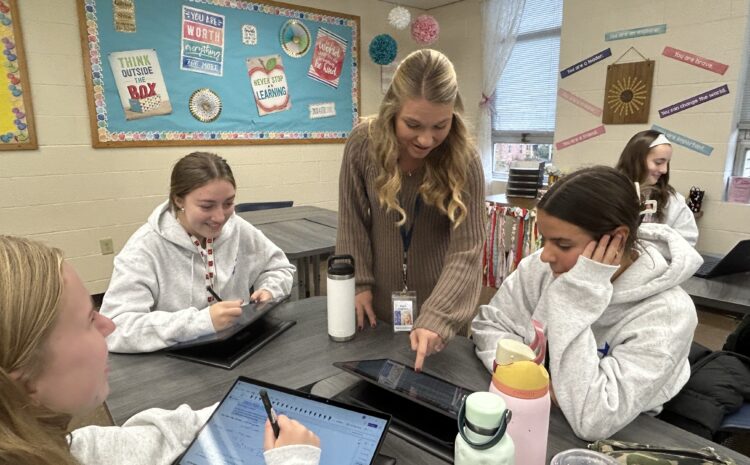
Instead of rows of desks and textbooks, students might find themselves touring an engineering plant, standing in a hospital operating room or cooking traditional Mexican dishes in the school’s experiential learning lab. It’s all part of the school’s new minimesters program, a 12-day program featuring hands-on courses designed to connect what is learned in the classroom to the outside world and students’ future careers. For the all-girls academy, it’s a shift away from the familiar rhythm of semesters.
“When minimesters came about, we all saw it as the perfect opportunity to teach those ‘dream classes’ that never fit into a normal semester,” says Sami Charters, math teacher and new schedule development committee member. “A lot of students love those subjects but don’t know what to do with them beyond teaching or research. We wanted to show the huge range of possibilities—from engineering to actuarial science to medical research—and emphasize that women belong in those spaces.”
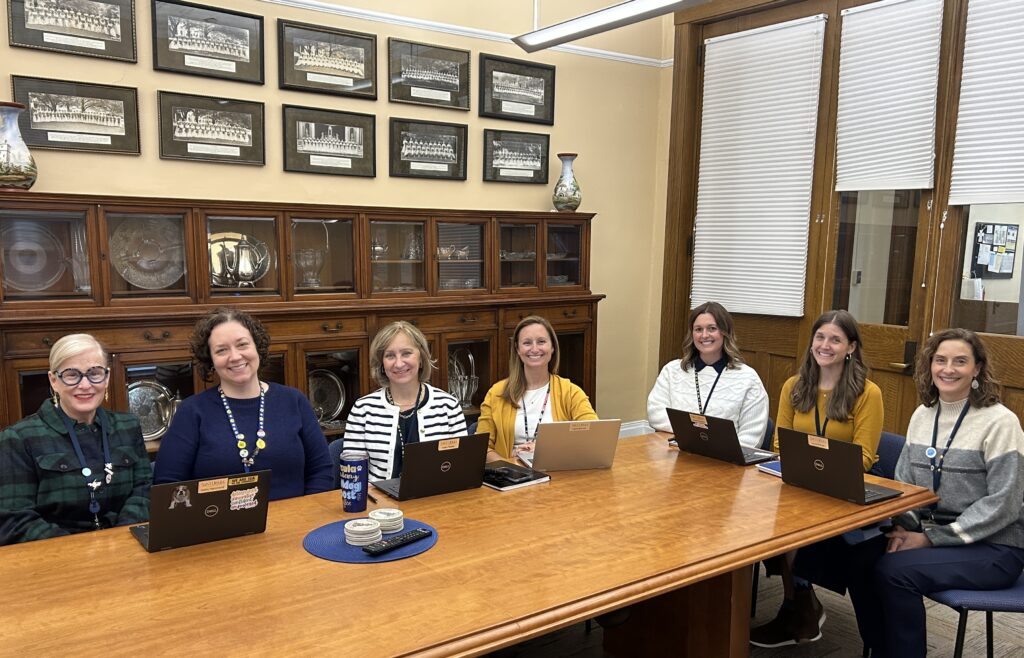
With the program, St. Ursula Academy is redefining what a high school schedule can look like. Through its new program, the East Walnut Hills school has replaced a stretch of the traditional semester with immersive, 12-day courses designed to connect academic learning with real-world experience. “This process actually started about [several] ago. We knew our schedule needed a refresh—some classes were too short,” Charters says. “The school just felt too busy. Students were overloaded with nightly homework and we wanted more experiential learning opportunities.”
When St. Ursula Academy began reimagining its daily schedule, Charters was one of the first to volunteer. After years of conversation about how to balance workload and creativity, she joined the school’s scheduling committee, determined to help build a better schedule.
Within the minimesters program, these 12-day terms will allow teachers to design new, immersive courses from the ground up. From religion and social studies to science, math and world languages, each course focused on connecting classroom lessons with lived experience. Roughly 40 of those courses will launch this year between December and May, ranging from Holocaust history to cooking as cultural study.
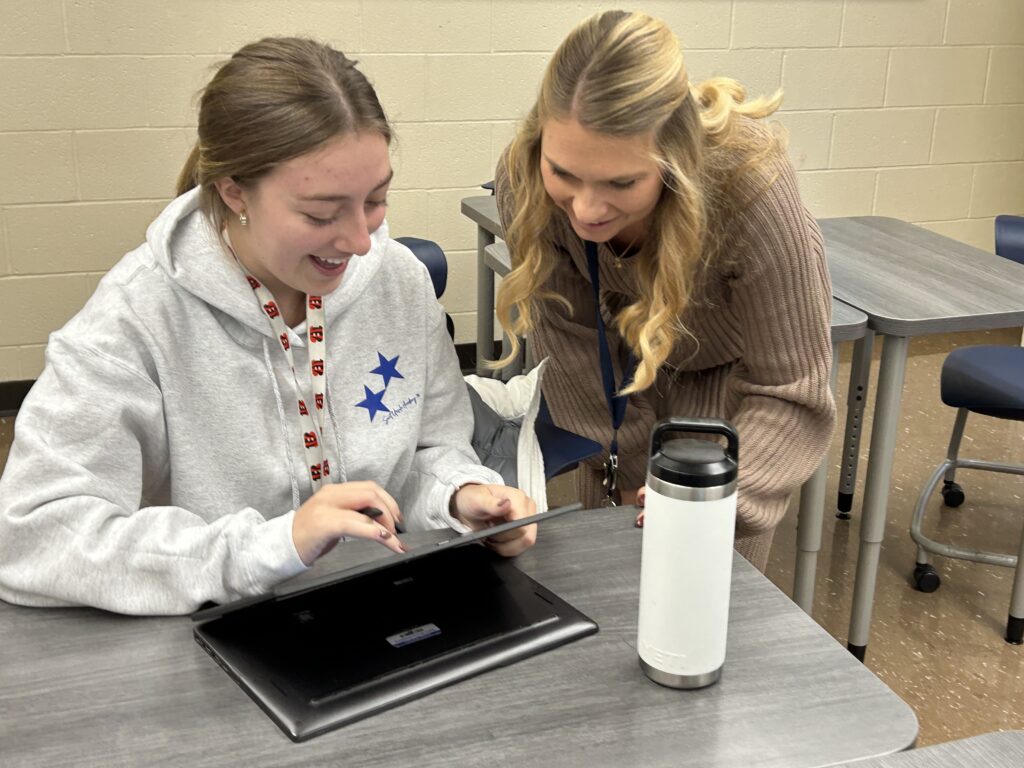
“When we designed these, we had to strip away the traditional idea of class periods,” says Kathy Restle, principal of SUA. “Minimesters allow full-day learning, so students can go off campus, work with community partners and learn by doing.”
For Charters, who has spent eight years teaching, the project was a chance to bring fresh energy to both students and faculty. For her first minimester, Charters teamed up with fellow math teacher Sarah Bergman to design “Careers in STEM.”
The goal, Charters says, was to show young women how math and science unfold in the real world and how many places those skills can lead. The course packs multiple guest speakers and several field trips. For Charters’ course in particular, students tour the L’Oréal engineering plant in Kentucky, study accessibility design at St. Ignatius, watch a live surgery at UC Medical Center and visit Fifth Third Bank to learn how data and analytics drive finance.
“As math teachers in an all-girls school, we saw how few women pursue STEM majors compared to men. In college, I was often one of only a few women in advanced math classes,” Charters says. “So, we designed the course to give students role models and real-world examples of women thriving in STEM careers.”
Each experience builds toward three learning outcomes: discovering the range of STEM careers, developing professional confidence through presentation and dress, and thinking about global responsibility. Running once for juniors and seniors in December and again for freshmen in May, the class also confronts this gender gap head-on.
“We wanted them to see women thriving in these spaces,” Charters says. “To understand that if they love math or science, there’s a place for them in the world.”
The innovation isn’t limited to STEM. This year, SUA students might analyze Catholic social justice themes through film, trace the stories of women in the early Church or walk through Cincinnati’s history block by block. Others will cook traditional dishes in Beyond Tacos: Cokking with Culture, Exploring Diverse Latin/Hispanic Recipes and Culture, or interview a local news anchor in a new journalism minimester.
Some of these 12-day classes satisfy graduation credits while others are designed purely for curiosity. But all of them serve the same purpose: giving students permission to expose themselves to new topics before college and to see what truly sparks their interest.
“Every department has at least one minimester,” says Amber Grayson, vice principal for academics. “They tell a story of who each student is becoming.”
The global perspective extends beyond Cincinnati. This year’s minimesters will include conversations with a Moroccan engineer, a scientist from Taiwan and a teacher from India, among others, to allow the students to gain insight into how women in different cultures experience STEM and education. The sessions align with St. Ursula’s emphasis on global citizenship and cross-cultural awareness.
Locally, partnerships with universities, hospitals and corporations have proved successful so far as well. Nearly every organization approached agreed to participate, according to Grayson. “The response from our community was incredible,” she says. “Everyone wanted to help these girls see what’s possible.”
As the first round of minimesters approaches, St. Ursula teachers say they’re as eager as their students to see what unfolds. The experiment has already changed how they think about time, learning and possibility. Each 12-day course could lead each student to their future selves so, when colleges they apply to look at their transcript, it will list more than just courses and a GPA.
“They’ll see a story about who they are,” Restle says. “And that story starts here.”
