

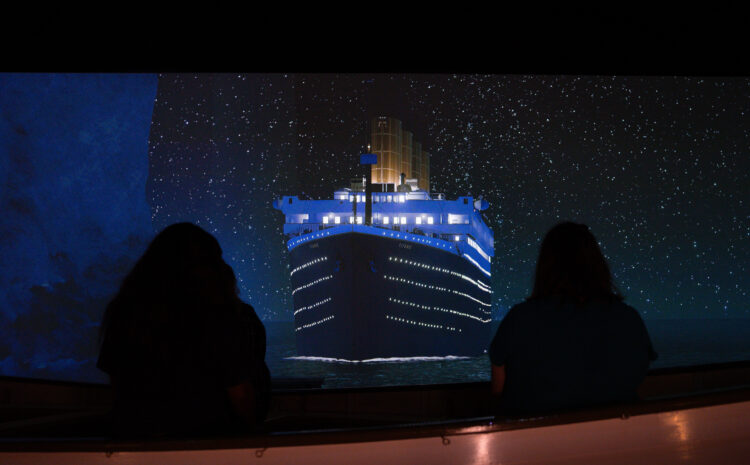
A new exhibit hopes to provide visitors a new, technology-heavy look at the Titanic
This April marks 113 years since the passengers of the Titanic were struck by tragedy. In the early hours of a chilly April morning in 1912, the ocean liner sank, leaving 1,500 people dead.
The now infamous shipwreck has gone on to inspire numerous retellings of this story including the 1997 Oscar-winning flick, the 1997 Best Musical at the Tonys and countless books.
Despite this apparent surplus of media for those interested in the boat, “Titanic: An Immersive Voyage,” a new exhibit from Exhibition Hub Entertainment opening March 12 in Cincinnati, is hoping to provide visitors with a new, technology-heavy look at the tragedy.
“We really want to make a powerful connection,” says John Zaller, executive producer of the exhibit. “The other thing that we really want is to engage all the senses through technology in a way that hasn’t been done.”
As such, in addition the showcasing items retrieved from the wreckage, the exhibit utilizes colorized pictures of the Titanic “to get the feeling of being onboard the ship,” says Zaller.
To further that immersive experience, virtual reality helps take guests through the entire life cycle of the ship, from its construction to the moment it hits the iceberg.
Something else that Zaller, who has worked on Titanic museum exhibits for 25 years, notes is the use of stress signals in the immersive reality. While watching the show, visitors sit in reconstructed lifeboats allowing them to “witness these wireless messages that they can do nothing about, in the same way that the passengers and the survivors did.”
Another distinguishing feature of the exhibit according to Zaller is its emphasis on not only the Titanic but also its sister ships and the ships that came to the rescue. More notably, though, is the emphasis on the iceberg itself.
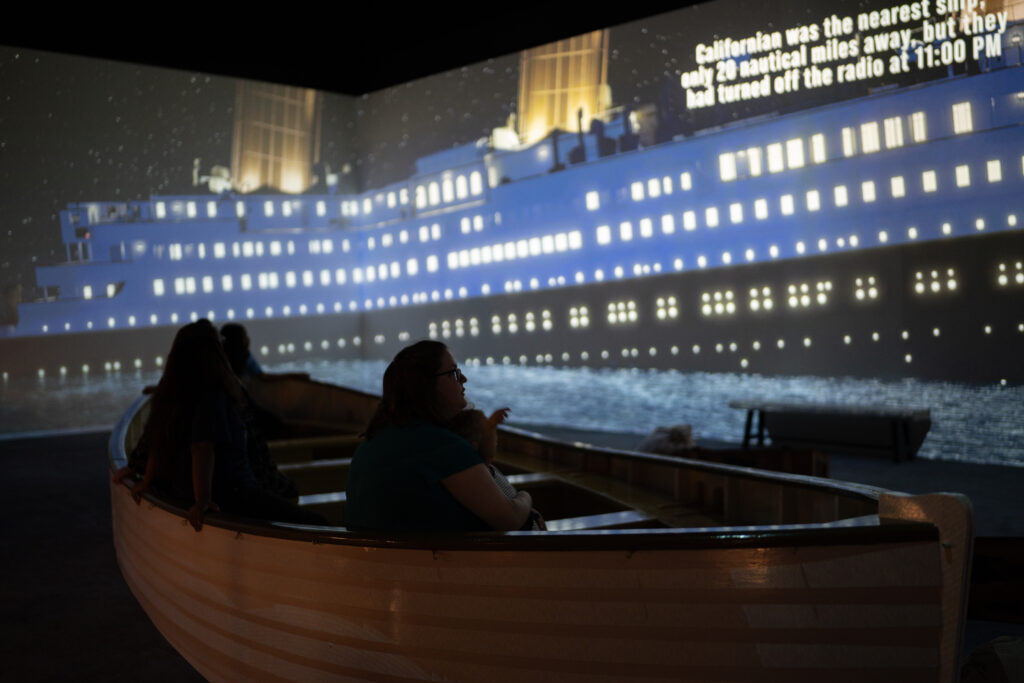
“We learned that the iceberg was actually formed the same year that Titanic’s construction started,” Zaller says. “So, you know, Titanic is—in a lot of ways—a Greek tragedy of our modern times.”
Overall, while the emphasis on technology certainly makes for an impressive experience, Zaller and his co-creators hope that visitors walk away feeling an emotional connection to the passengers on the Titanic. “I hope everyone takes a moment to reflect on the series of events that led to this tragedy,” he says. “But also, the power of the story and the frailty of human life, and yet, the power of resilience that allowed so many of those passages to survive.”
The exhibition will take place at 18 W. 4th Street in downtown Cincinnati and is open to all ages (children 4 and under enter for free). You can learn more about the exhibit and buy tickets online.
