

In our 17th annual Rating the Burbs feature, we look at our local communities to see how they stack up against one another. Where did your community fall in this year’s list?
1. The Village of Indian Hill
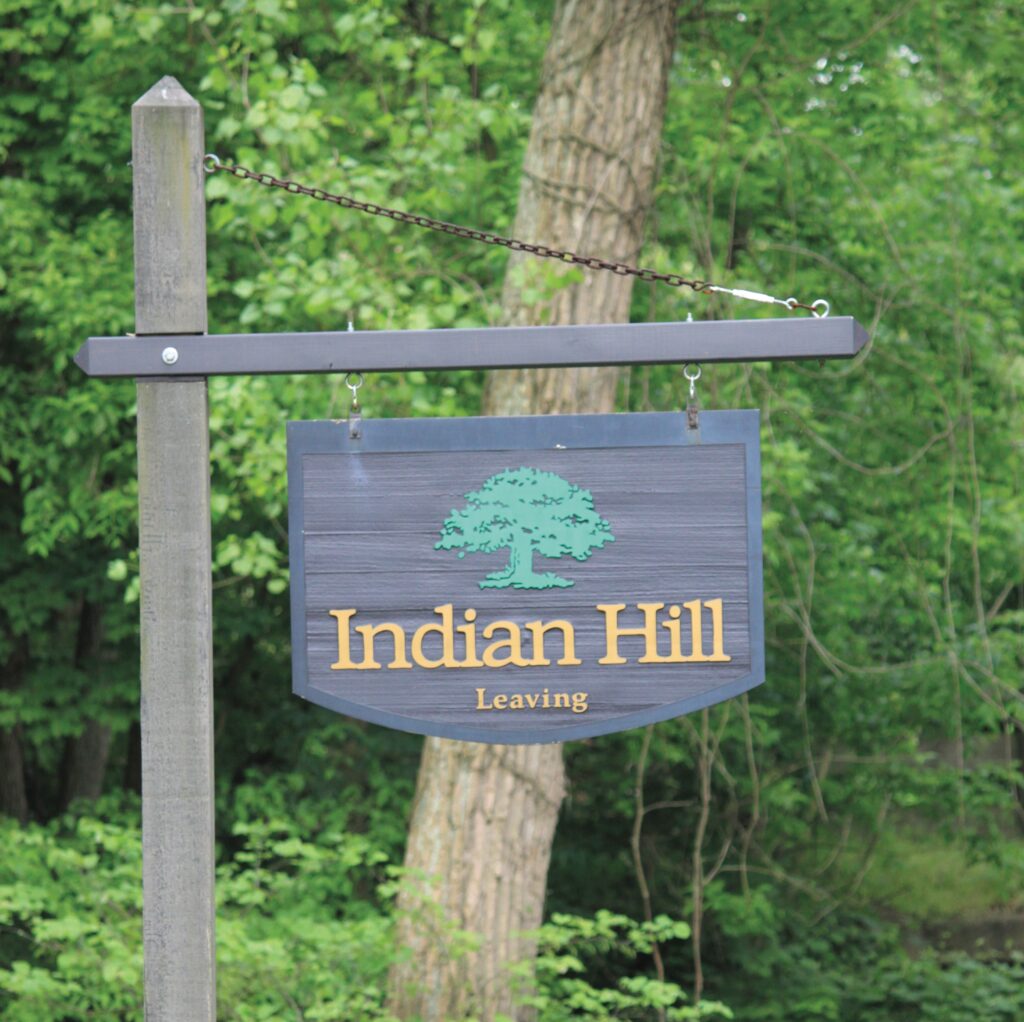
The city of the Village of Indian Hill tops the list for the second time since Rating the Burbs began in 2007 and makes its 10th Top 10 appearance since 2010. With an education system ranked No. 1 this year (Indian Hill Exempted Village School District), low crime and fourth-highest homeownership rate, Indian Hill returned to the top for the first time since 2015. Indian Hill was settled as a farming community in 1795 and prospered as the Little Miami Railroad provided good transportation for its products. The city’s police department, the Indian Hill Rangers, dates to 1903. Why the long community name? Indian Hill was incorporated as a village in 1941. When it grew to 5,000 residents in the 1960s, it became a city by state statute. Residents wanted to maintain its rural nature, so they changed the official name to the city of the Village of Indian Hill. In various national surveys, it regularly ranks among the 20 wealthiest U.S. neighborhoods in both median and average household income. Residents can find plenty of exercise, fun and relaxation opportunities at 12 parks and recreation areas, including a bird sanctuary, and 75 miles of horse-riding trails.
2. Union Township
(Warren County)
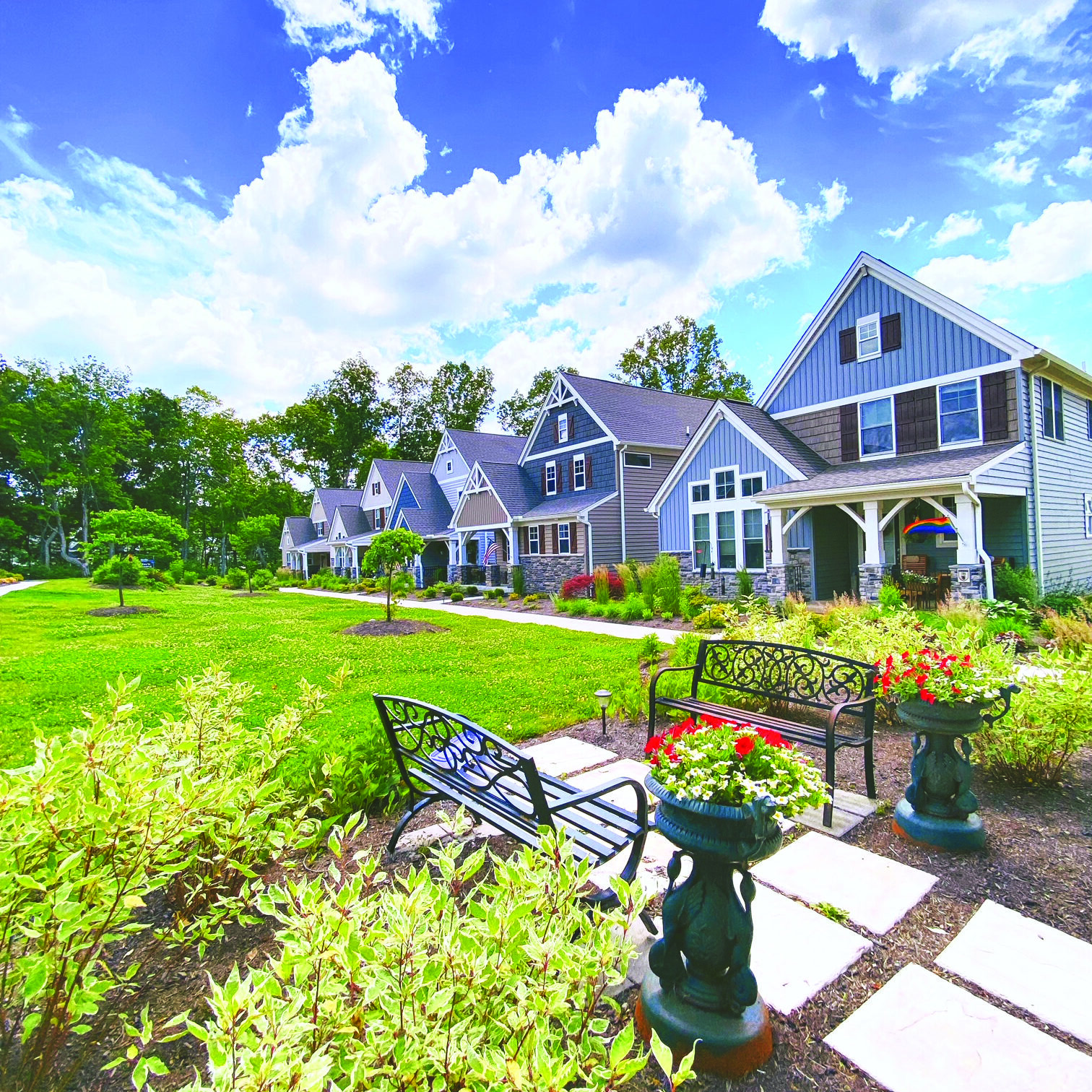
Union Township is the only township to place first in Rating the Burbs (last year) and continues a good showing at No. 2 this year. Relatively low crime and a strong housing market (No. 8, with a 102.71% gain in the median home-sale price to almost $505,000 in the past five years), along with good schools, led to its seventh Top 10 showing since 2014. Two neighborhoods—Highlands at Heritage Hill, the site of the 55th Homearama in 2018, and the 141-acre Aberlin Springs, described as a conservation community, an agri-community or farm-to-table living—provide high-end living for residents. Union was established Jan. 3, 1815, after its formation from parts of Deerfield and Turtlecreek townships in the central part of the county. More than half of the township is agricultural, and Union owns and operates two parks. Four school districts serve the township.
3. Madeira
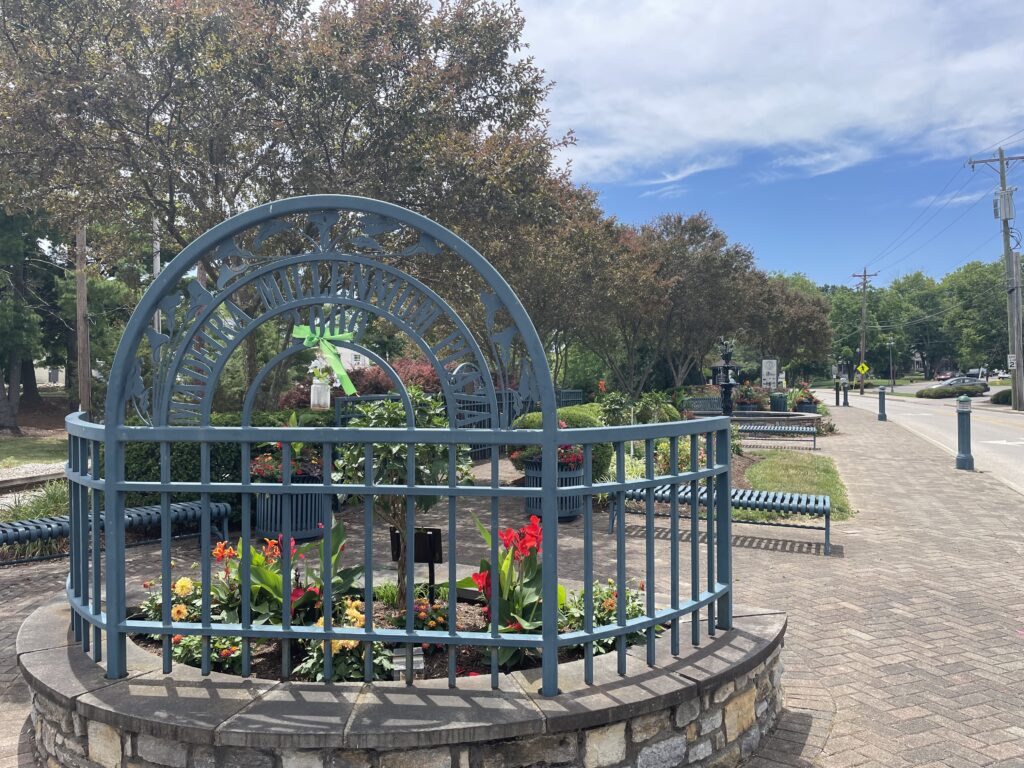
The city of 9,397 residents is a perennial Top 3 community—ranking first six times, second six times and third twice since 2010. A strong education system (Madeira City Schools, No. 3 this year), low crime and a short average commute-to-work time keep it among the top burbs. The city, incorporated in 1910, operates three parks: Sellman Park (10 acres); McDonald Commons Park (17 acres and currently undergoing a $13.4 million renovation); and Nelle V. Hosbrook Bird Sanctuary (2 acres). The Madeira Street Dance, held annually in August, is the premier summer event, with live music, food trucks and other entertainment. The city this year is updating its 2019 Comprehensive Plan, which shows that almost 71% of developed land in Madeira is for single-family use, and 17% is devoted to recreational use, with commercial/office/industrial, institutional and transportation/utilities making up the remainder in the 3.4-square-mile city.
4. Wayne Township
(Warren County)
Wayne Township returns to the Top 10 for the fourth time since 2010. The 46.3-square-mile township, named after Revolutionary War Gen. “Mad Anthony” Wayne, is one of the original townships in Warren County, created May 10, 1803, just nine days after the county was founded. The township is mostly rural, with more than half of its land undeveloped or agricultural. Strong schools, primarily the Wayne Local School District, along with four other districts, and a 75.68% jump in the median home-sales price last year to $325,000, helped propel the township to its No. 4 rating. Residents can easily access Caesar Creek State Park, which includes hiking, boating and camping. The Little Miami River flows through the township, while the Little Miami Scenic Trail passes through the township along the route of the now defunct Little Miami Railroad.
5. Villa Hills, Ky.
A seventh-best homeownership rate of 95.38%, strong gains in home sales and relatively low crime placed Villa Hills at No. 5 this year. The city of 7,331, incorporated in 1962, has appeared in the Top 10 nine times since 2010, including a No. 1. The bedroom community, which sits along the Ohio River, experienced a 125% increase in its median home-sale price to $522,136 last year from five years earlier. Six parks and recreational areas—Franzen Fields, City Civic Park, Harry Rigney Park, Villa Madonna Complex, Tom Braun Fields and Cunningham Fields—provide plenty of opportunities for outdoor fun. Villa Hills is in an ideal location 15 minutes from downtown Cincinnati, a mile from Interstate 275 and close to Cincinnati/Northern Kentucky International Airport.
6. Hamilton Township
(Warren County)
Hamilton Township moves to its highest Rating the Burbs ranking at No. 6 this year, with its low crime rate, good schools and high homeownership. The township of almost 30,000 residents has placed in the Top 20 for eight consecutive years. It is served primarily by Little Miami Local School District, along with three other districts (Goshen Local, Kings Local and Loveland City). Hamilton Township’s median home-sale price in 2022 jumped 60% to $365,000 from 2017, and it came in at No. 6 for its safety ranking. Its homeownership rate of 91.87% placed eighth highest. The township’s almost 600 acres offer plenty of space for sports activities, picnics and walking trails, and a new Fire Training Tower sits in Marr Park. A portion of the Little Miami Scenic Trail—the Loveland section—runs through the south-central Warren County township.
7. Carlisle
Low crime, good schools and strong home sales help Carlisle move up a notch to No. 7 from No. 8 in 2022. The city ranked No. 3 in safety in 2022, while its median price of homes sold last year rose 75% to $262,450 from five years earlier. On its website, the city of 5,436 touts, “Our town is home to an excellent school system, a diverse commercial and industrial base, and a strong, family-oriented community.” Recreational activities are available at the city’s three parks: Roscoe Roof Park, Cook Park and Lions Park (Jill Park). Early settlers came from the East Coast at the turn of the 18th century, and as the nation became more industrialized, a train station was built in Carlisle in the mid-18th century. The city was named after George B. Carlisle, a railroad entrepreneur, who donated land for use by the community.
8. Mariemont
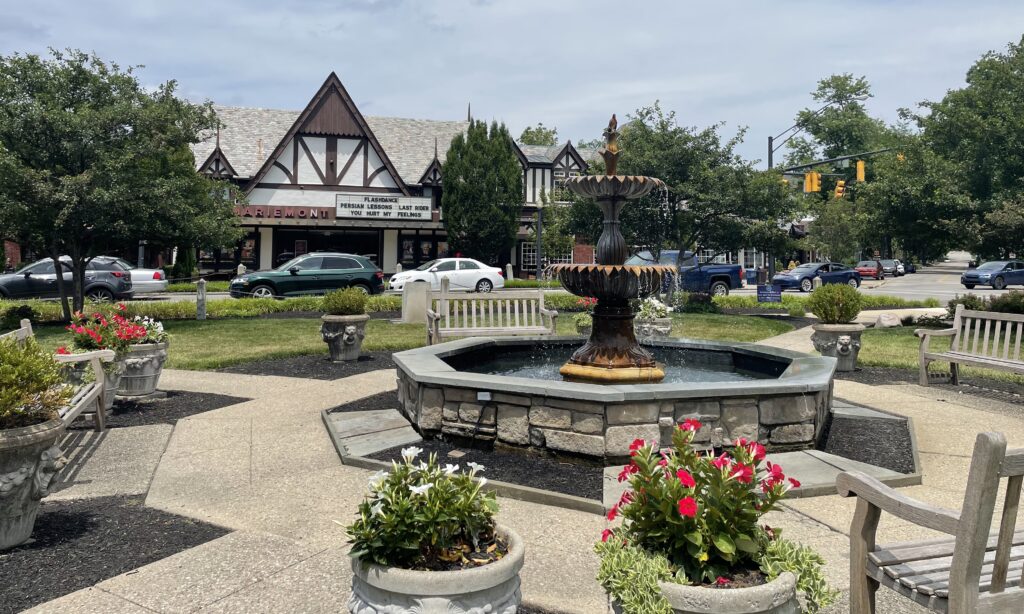
Mariemont makes its first Top 10 appearance primarily on the strength of its education system (No. 2 Mariemont City Schools) and its low crime rate. The village of 3,497 was settled in 1788 and later became one of the first planned communities in the United States. Its median home-sale price of $523,500 was up 55% from 2017 and is among the highest in the area. Mariemont is named for the Rhode Island summer home of Mary Emery, who bought land for a new “model town” and hired John Nolen, an internationally known town planner. Village construction started in the early 1920s. The village was incorporated in 1941. According to the village website, Mariemont also has one of a dying breed of North American town criers. “The first Criers date back to biblical times and were advance men, sent into towns and villages by merchants to announce the next day’s sale of cattle, slaves or imported goods,” it says. “Once towns became more developed and the merchants remained as permanent fixtures, the role of the Town Crier shifted.” One of the town crier’s official duties in Mariemont is leading the Memorial Day Parade.
9. Amberley Village
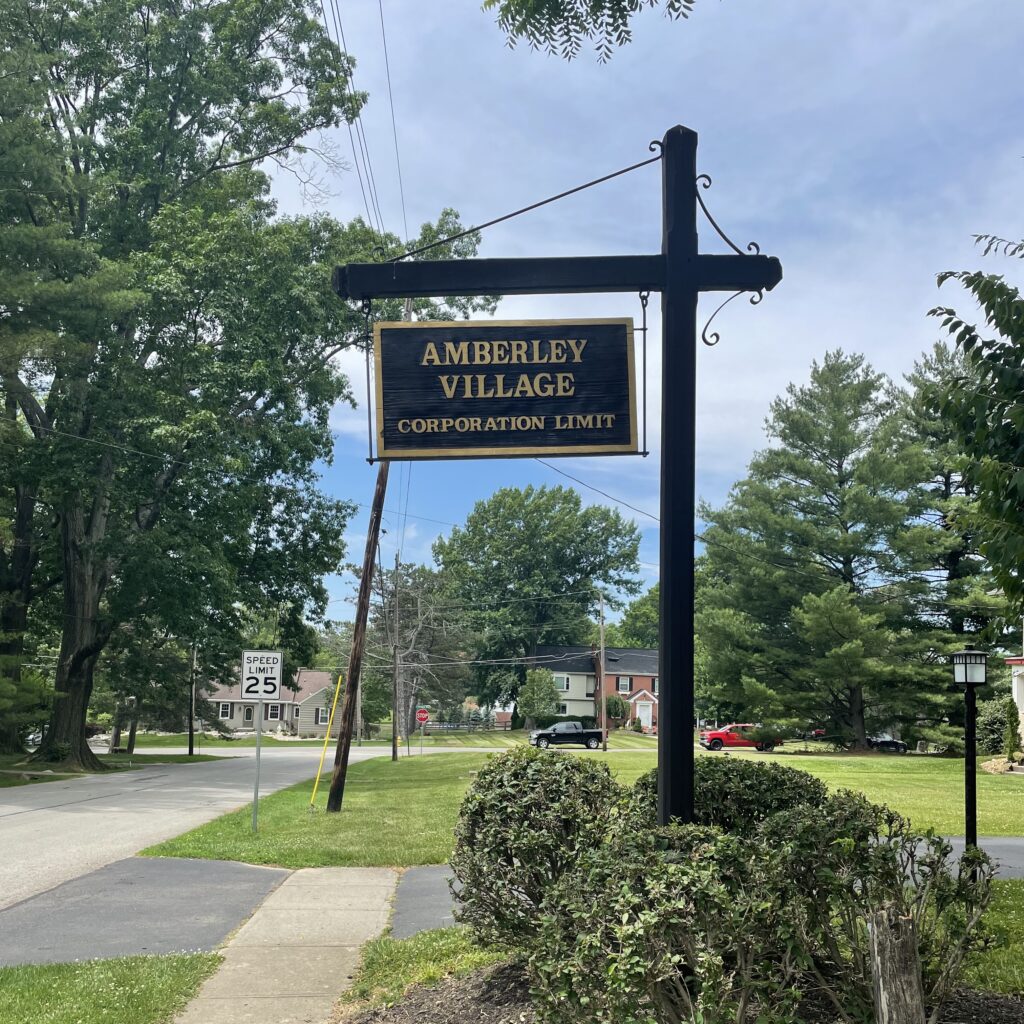
After three straight years at No. 11, Amberley Village moves into the Top 10 at No. 9. With a third-best homeownership rate of 98.19% and a low commute-to-work time of 18.9 minutes on average, the village of 3,798 residents has been a regular Top 30 community in the past eight years. Amberley’s median home-sale price of $550,000—fourth-highest in the area in 2022—was up 73.69% from five years earlier. The village was incorporated April 5, 1940, with 606 residents. The book Amberley Village: Its History and Its People, published at the direction of village council, says that Herbert French, a Procter & Gamble vice president, donated land for the administration building and named the village after an English town, Amberley. The village’s location along Ronald Reagan Highway gives residents quick access to the entire metro area.
10. Maineville
The village of Maineville, which was No. 9 last year, remained relatively stable with a low crime rate (No. 5 safest this year) and good schools. It also saw its median price for homes sold rise to $310,000 last year, up 77.75% compared with 2017. Little Miami Local School District offers Maineville a good K-12 education system, and the Hamilton Township Police Department provides coverage for the village’s 1,990 residents. Maineville’s Wikipedia page says it was named because its original settlers—100 families who relocated during a 30- to 60-day period in 1815—came from Maine (primarily Phillips and Farmington). The village was incorporated March 23, 1850.
Honorable Mentions
The Honorable Mentions category shows communities that did not place among the Top 75 Communities but did place in the top 25 in at least two categories among the 136 communities of 1,000 or more population. This year, those communities are:
- Aberlin Springs in Union Township
- Aberlin Springs
- Blue Ash
- Lockland
- Oxford
- Silverton
- Springdale
- Mariemont
Indian Hill Returns to No. 1
Whether it’s called a village or a city, the community has much to offer
By Bill Ferguson Jr.
The city of the Village of Indian Hill makes a return to the top this year in the 17th annual edition of “Rating the Burbs.” Indian Hill was No. 1 in 2015 and has finished in the Top 20 every year since 2010.
Indian Hill was at the top of the list of median home-sale prices in Greater Cincinnati in 2022 at $1.475 million, up 56% from five years earlier. Plus, the city has the fourth-highest homeownership rate in the area at 98.14%. Indian Hill Exempted Village School District is its primary education system and ranks No. 1.
When asked what’s new in Indian Hill, City Manager Dina Minneci noted that the city is back to normal, “whatever normal can be, after the pandemic. We brought back our Fourth of July last year, which we hadn’t done in a couple of years, and we’re having our community events again,” including a new-residents party in which those who have moved to the city can mingle with city officials and learn more about the community.
The Village of Indian Hill, which is zoned 100% residential/agricultural, also is in the midst of developing a new neighborhood, the Meadows of Peterloon, off Montgomery Road. The 42-lot project began in March 2021. The neighborhood is expected to be completed in two to three years, according to Jon West, assistant city manager. Lot prices are ranging from $625,000 to $775,000. The housing development is part of Peterloon, the 2,000-plus-acre estate developed in 1929 by John “Jack” Emery and his wife, Irene. Emery developed Carew Tower in 1931 among other Cincinnati sites.
If you’re confused by the city-village designation, you’re not alone. Indian Hill was a village until it grew to more than 5,000 residents in the 1960s, requiring it to identify as a city by state statute. Residents wanted to maintain its rural, residential feel and officially adopted the name “Village of Indian Hill,” which is listed by the U.S. Census. So with its population of 6,017, it’s the city of the Village of Indian Hill.
Indian Hill’s challenges involve its infrastructure, Minneci says. With its own water-distribution system that goes beyond the city boundaries into other adjacent areas, it must replace many of its 75 miles of water mains that are 75 to 100 years old, a costly proposition. It also maintains 80 centerline miles of paved roads, culverts and five bridges in its 20.5 square miles.
Minneci says she is impressed by the level of volunteerism and community involvement.
“We have extremely generous residents here,” she says, pointing to two Madeira & Indian Hill Joint Fire District fire stations built in 2015-17—one in each city—with donations from an Indian Hill couple, replacing older stations.
A primary theme for the Burbs project in the past several years has been the booming housing market. With interest rates increasing the cost of mortgages, a slowdown could be expected.
While the number of sales did decrease in 2022, the area’s median home-sale price increased. MLS of Greater Cincinnati reported that the number of sales peaked in the record year of 2021 for the entire area covered by MLS at 27,863 and fell to 24,439 last year. Meanwhile, the median price, which was $235,000 in 2021, rose to $250,000 last year. As of June 12 this year, the median price was up another $10,000 on sales of 8,131.
Highest-priced Burbs, 2022
Sources: Multiple Listing Service of Greater Cincinnati, Northern Kentucky Multiple Listing Service, Southeastern Indiana Board of Realtors
Cincy’s 17th ‘Rating the Burbs’ a Compilation of Many Data Sources
By Bill Ferguson, Jr.
This is the 17th year of Cincy’s “Rating the Burbs,” covering 136 communities of 1,000 or more population in Boone, Butler, Campbell, Clermont, Dearborn, Hamilton, Kenton and Warren counties.
With thousands of data points from government agencies, real-estate professionals and informative websites, the annual Burbs cover story/project is a comprehensive examination of many of the topics that are most pertinent to quality-of-life issues for residents, businesses and officials across the region.
Review of hundreds of spreadsheets and websites on various topics determines the Top 75 Communities, Top Public School Systems and 50 Safest Neighborhoods in the eight-county metro region. The project is driven by comparative data, which means collection of all data for each community is important.
With the release of the 2020 decennial census last year, a new official population number was established. The U.S. Census Bureau’s American Community Survey updated the 2020 census last summer with 2021 numbers and also updates other data through 2021. The Census’ Population Estimates Program will also be offering a slightly different population total from year to year, based on a different methodology.
More than 270 villages, cities, townships, Census County Divisions and Census Designated Places are located in the eight counties, and Cincy collects data on those with populations of 1,000 or more, bringing the total rated to 136 Greater Cincinnati communities.
Each year, we collect median home-sale prices from the Multiple Listing Service of Greater Cincinnati, the Northern Kentucky Association of Realtors and the Southeastern Indiana Board of Realtors. A few communities are unavailable through those three organizations, so sales data are gathered from county auditor websites.
Education data are collected from state report cards, state education department websites and school district websites for the 69 school districts that serve K-12 students in at least some part of the eight-county area. One Kentucky district serves K-8 and is not included in the final results. We also make public-records requests to the state departments of education themselves.
The FBI’s Uniform Crime Reporting program, available through the agency’s Crime Data Explorer, lists four categories of property crime and four categories of violent crime; the latest breakdown of numbers is from 2021. Reporting to the FBI is voluntary, so not all jurisdictions report their statistics. For those, we check community and state websites, and contact our county sheriffs’ offices and township, city and village police departments through emails and phone calls.
County auditors, treasurers and property valuation administrators in the three states provide property-tax rates, and we break down the tax charts for all localities and compare taxes in each area for $100,000 of house value.
City Median Home-sale Prices at Least Double in 10 areas in ’22
By Bill Ferguson Jr.
Despite a rise in interest rates and a cooling in home sales, a number of Cincinnati neighborhoods experienced large gains in median home-sale prices in 2022 compared with 2017.
For a fifth consecutive year, residents in at least 10 city of Cincinnati areas saw median sale prices rise by double or more compared with five years earlier. All 39 city areas tracked by the Multiple Listing Service of Greater Cincinnati registered gains. The MLS breakdown of areas does not correspond exactly to the 52 neighborhoods, but some areas are true neighborhoods.
Topping the list was East End, where the median sale price skyrocketed to $615,000 last year from $91,400 in 2017. Evanston (307%), Spring Grove (271%), Riverside (240%) and Fairmount (234%) all at least tripled in prices during the five-year period. Five additional neighborhoods at least doubled.
Sales totaled 2,986 in the city areas, down from 3,320 in 2021, as mortgage rates increased in a period in which the Federal Reserve raised its target for interest rates seven times—four by three-quarters of a point. The Fed has continued to raise rates this year.
Mount Adams led the highest-priced list for 2022 median sale price at $720,000 on 21 sales, followed by East End ($615,000; 21), Mount Lookout ($600,000; 120), Hyde Park ($500,000; 229) and Columbia Tusculum ($413,500; 72).
Below are the 15 city areas with at least 10 sales that experienced the largest price gains from 2017 to 2022:
Source: Multiple Listing Service of Greater Cincinnati
The Top 75 Communities
Information for the education chart was collected primarily from the 2021-22 Ohio School Report Cards, 2021-22 Kentucky School Report Cards, Indiana’s 2021-22 Annual Performance Reports and data available from the state departments of education websites or public-records requests. N/A means the data were not available, not calculated, not reported or not applicable.
Education: Public School Systems
2022 Blue Ribbon Schools
The National Blue Ribbon Schools Program recognizes public and private elementary, middle and high schools throughout the U.S. based on schools’ overall academic excellence or progress in closing achievement gaps among student subgroups, demonstrating that all students can achieve at high levels. The program celebrated its 40th year in 2022; almost 9,400 schools have been recognized since it began in 1982, with the first awards in 1983. Schools are honored in one of two categories—Exemplary High Performing Schools or Exemplary Achievement Gap Closing Schools, each of which include several criteria. A total of 273 public and 24 private schools were honored in 2022. Each school was recognized in a two-day ceremony in November in Washington, D.C. The schools serve as models of achievement for schools throughout the United States. Locally, three schools were selected:
Longbranch Elementary School (Boone County Schools), 2805 Longbranch Road, Union, Kentucky.
St. Therese School (Diocese of Covington), 2516 Alexandria Pike, Southgate, Kentucky.
Samuel Woodfill Elementary School (Fort Thomas Independent Schools), 1025 Alexandria Pike, Fort Thomas, Kentucky.
Information for the education chart was collected primarily from the 2021-22 Ohio School Report Cards, 2021-22 Kentucky School Report Cards, Indiana’s 2021-22 Annual Performance Reports and data available from the state departments of education websites or public-records requests. N/A means the data were not available, not calculated, not reported or not applicable.
Source: U.S. Department of Education
*About ACT and SAT averages: Ohio did not report ACT or SAT scores for 2021-22 on the School Report Cards. Through a public-records request, Cincy obtained scores from the Ohio Department of Education; however, the department provided only scores it received from ACT and the College Board (SAT) through the state-administered tests and does not include those students who took the nationally administered tests. SAT scores, but not ACT scores, were provided for only Indian Hill; ACT scores, but not SAT scores, were provided for other southwest Ohio districts. Kentucky students take the ACT, and scores are reported for 2021-22; some take the SAT, and the state does not report SAT scores. Indiana students take the SAT, and scores are reported for 2020-21.
**About Advanced Placement: Some schools have quit offering AP classes, replacing them with other dual-credit options. Kentucky provides numbers of students taking AP courses, not percentages of graduates. Indiana participation data were not available. Data anomalies exist for some districts on Ohio report cards, and the Department of Education has indicated that some students could be taking Advanced Placement courses/tests even if a district has no AP classes. The numbers of AP classes are collected from test provider College Board.
Crime: Safest Communities
SOURCES: FBI; STATE CRIMINAL JUSTICE DEPARTMENTS; LOCAL POLICE AND SHERIFF’S DEPARTMENTS
