

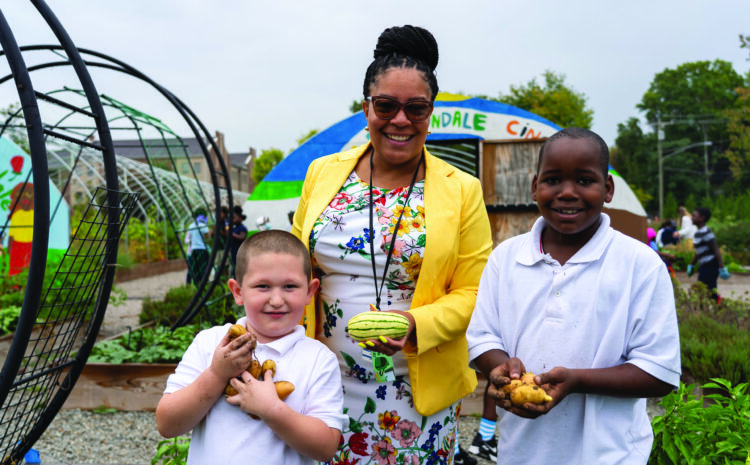
Rockdale Academy’s Urban Learning Garden connects students to the outdoors
Nestled within the countless townhouses and bustling city streets of Avondale is Rockdale Academy’s Urban Learning Garden, a vibrant oasis of greenery and growth.
Rockdale Academy houses 239 students in preschool through sixth grade who help to maintain the school’s garden. The garden, which is across from the school’s cement playground and accessed through the chain-linked gate, has become a bit of a utopia for Rockdale students, who can touch, see, feel and—most importantly—taste the fruits of their labor. At any given time, students are in the garden, their hands covered in dirt and their faces lit up with curiosity and pride.
At Rockdale Academy, which is part of the Cincinnati Public School District, learning extends beyond the confines of the traditional classroom, according to the teachers and staff involved with the Urban Learning Garden.
Rockdale Academy’s Urban Learning Garden was built during the summer of 2021 and serves as an outdoor classroom and hub for growing plants. The plants grown and nursed here find new homes in various areas within the Cincinnati Zoo & Botanical Garden. The plants housed in the garden also are planted around Avondale and in different communities around Cincinnati.
The garden is a collaborative project among the school, Cincinnati Zoo, Cincinnati Children’s Hospital, P&G and Cincinnati Reds Community Fund, a nonprofit affiliate with the Cincinnati Reds. But according to Jerome Stenger a zoo horticulturist who worked on the Urban Learning Garden, this garden serves a bigger purpose than just an aesthetic patch of green amid the gray concrete of the city. To those involved, it’s a testament to the power of the Cincinnati community working together to create something transformative.
The Urban Learning Garden is a community effort on all fronts. “The Cincinnati Reds Community Fund is a Cincinnati Reds department that year to year goes into the Cincinnati community to beautify the community,” says Stenger. “It’s all tied around community engagement getting outside.”
Rockdale Academy’s garden was originally established as a part of the 2021 Reds Community Fund Community Makeover project—an initiative aimed at strengthening Greater Cincinnati communities and their youth. Every year, the Reds Community Fund chooses a neighborhood in Cincinnati and works to improve its sports fields, recreational centers, schools, parks and public spaces. In 2021, Charley Frank, the executive director of the Reds Community Fund, led Avondale’s makeover, which brought together about 500 different volunteers and partners.
Rockdale Academy’s garden was created on a vacant green space of about 2 acres adjacent to Rockdale Academy. The garden features a range of interactive educational areas and garden beds dedicated to testing out new plant varieties for the zoo.
And to Carlos VanLeeuwen, a Cincinnati Zoo horticulturist in charge of maintaining Rockdale’s Urban Learning Garden, the garden is a space for students to become familiar with nature.
“Classes will come out here and use this as an outdoor classroom,” explains VanLeeuwen. “And as the kids grow up through the school and get older, you see their familiarity with the garden, where you have older kids, knowing the drill when it comes to tending to plants and knowing what to look for in the garden.”
Here, amidst the raised beds, students are able to learn from nature through their hands-on work with the garden. From witnessing a plant’s life cycle to blending nutritious smoothies from freshly harvested produce, every activity is a learning experience.
But the impact goes beyond Rockdale Academy, says Jaren Finney, who was principal at Rockdale when the program began and is now assistant superintendent for Student Support for Covington Independent Schools. Rockdale’s partnerships with the Cincinnati Zoo and the Cincinnati Reds Community Makeover extends the reach of the garden far beyond the school’s boundaries. “With this being a food desert, having a garden here is crucial,” Finney says, highlighting the significance of addressing food insecurity within Rockdale Academy’s community.
“We give as much to the students as we can,” says VanLeeuwen.
The garden allows both students and community members to have access to the fresh produce harvested from the garden. Multiple times a year, students harvest the produce and have a sort of farmers market, inviting community members to come and purchase what they grew. In addition to these farmer’s markets, the Urban Learning Garden also donates produce to the community, says Finney.
According to a 2009 report by the U.S. Department of Agriculture (USDA), there are 23.5 million Americans living in designated food deserts. Food deserts are a national issue, not just a local one. In Cincinnati, roughly 25% of the population lives in a food desert, according to the Center for Closing the Health Gap, a Cincinnati-based nonprofit community-health grassroots organization. Individuals living in food deserts have limited access to affordable healthy food and face elevated rates of obesity and illnesses linked to diet. Rockdale Academy’s Urban Learning Garden provides a community space where local residents have access to the produce grown by the students.
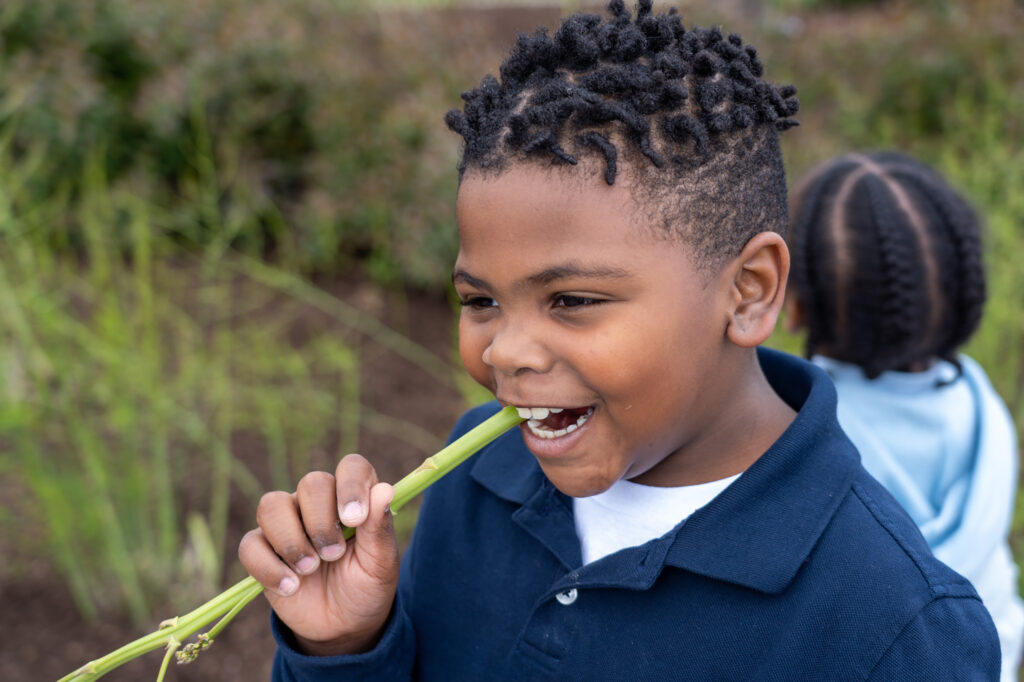
Rockdale Academy’s students are able to partake as well. “You’ll see kids planting and then they’re picking out peppers and eating them,” says Kathryn Robinson, interim marketing and communications lead for Cincinnati Public Schools, describing the students’ enthusiasm to taste the things they helped grow. “The kids get to take the produce home with them.”
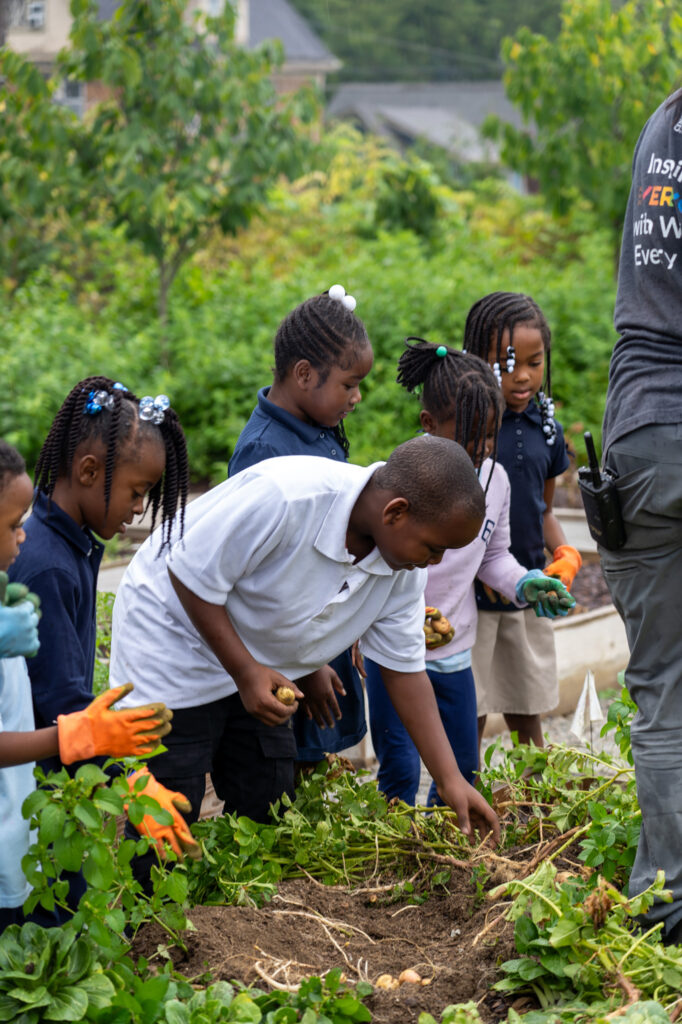
Rockdale Academy has created many opportunities for students to utilize the plants they helped to grow and harvest. The garden has multiple harvest days where produce is given out to students and community members. And to celebrate Thanksgiving, students and staff gathered up sage, thyme, rosemary and parsley from the garden and each student made up their own herb bag to take home for their Thanksgiving dinners.
The garden isn’t just a beautiful collection of various kinds of greenery, it’s a space for community and opportunities for growth, according to students. As they witness seeds sprout into seedlings and eventually bear fruit, they forge a deeper connection with the natural world.
The more time they spend learning about the garden, the more they can connect with the organisms inside of it. Even the insects in the garden have become their companions. “I’m not very scared of them, I got used to it,” says a young Rockdale Academy student involved in the Nature Club, an after-school club aimed at teaching kids further about nature using the plants in the Urban Learning Garden.
But the Urban Learning Garden’s impact doesn’t end with the students. The garden serves as a hub for community engagement, with volunteers and residents actively participating in its upkeep and harvest. “It’s a community effort,” Finney says, emphasizing the collaborative spirit that the garden is based upon.
The community plays a big part of maintaining the garden. According to the zoo’s 2022-2023 report on the garden, more than 150 zoo volunteers, community members and local corporate groups logged over 2,000 hours of service in the Urban Learning Garden’s first year.
Staff and students involved believe the Urban Learning Garden can be something more. “It’s not just something that impacts Avondale or Cincinnati; it has impacted us globally,” says Finney, reflecting on the garden’s influence.
