

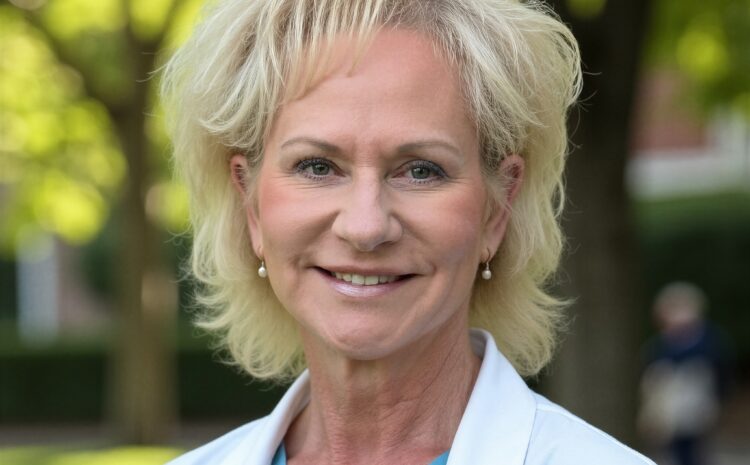
Tristate Preventive Health Consultants brings on-site medical screenings to employers
Few people think about the long-term health risks firefighters carry with them after the flames are out. While dashing into a burning building carries obvious risks, many firefighters face other dangers for much of their lives. A 2025 study by the Centers for Disease Control and Prevention (CDC) and National Institute for Occupational Safety and Health (NIOSH) show that firefighters are 9% more likely to be diagnosed with cancer and 14% more likely to die from it than the general population.
It is here that the work of Dr. Ginny Loewenstine, founder of Tristate Preventive Health Consultants, lies. A board-certified family physician, Loewenstine has spent more than three decades in preventive and occupational medicine. After starting her career in emergency rooms in the early 1990s, she found herself drawn to not just treating illness, but to stopping it before it starts. Over time, that focus narrowed to first responders, workers whose risks, she says, are unique. From there, Tristate Preventive Health Consultants was born, a company built around “taking care of the people that take care of us” in Ohio and Kentucky.
Firefighters, in particular, face hazards that extend far beyond what most people imagine. “We all know what they do,” Loewenstine says. “But it’s the interrupted sleep cycles, the exposures, the stress—anything that makes the body not function at 100%.” Those factors compound over time, contributing to elevated rates of cardiovascular disease, cancer and mental health challenges, Loewenstine says.
Yet one of the biggest gaps, Loewenstine says, runs deeper. Traditional health care guidelines and the insurance systems built around them aren’t designed with firefighters in mind.
“Private doctors are using general population guidelines,” she says, referring to national screening standards. “But we’re dealing with a subpopulation and we know the risks.”
As a result, conditions that develop earlier or more aggressively in firefighters can be missed. “If we followed those guidelines,” she says, “we would miss a lot.”
Tristate Preventive Health Consultants operates without a traditional clinic, instead traveling directly to firehouses, police departments and municipal workplaces. There, Loewenstine and her team turn conference rooms into temporary screening centers, conducting what she describes as “almost like an executive physical,” including bloodwork, EKGs, pulmonary testing and more. Weeks later, she returns to sit down individually with each participant.
According to Loewenstine, many first responders initially fear that medical findings could threaten their jobs. “The first year, it’s all about trust,” Loewenstine says. “They think we’re going to find something and tell somebody.”
But, according to Loewenstine, like any other doctor, trust is an incredibly important part of her job. “By the third year, that’s the golden year,” says Loewenstine, where she sees tangible changes. In some departments, she’s seen significant portions of the workforce lose weight, lower blood pressure or improve overall fitness.
Perhaps thanks to Loewenstine’s proactive approach, she says the results have been promising. “Every one of our people have been back to work,” she says. “That’s what we strive for.”
In practice, that means screening earlier and more aggressively than standard guidelines might suggest. “If you don’t look for it, you’re not going to find it,” Loewenstine says. “We can’t take away the risk, but we can find it and get rid of it really quick.”
