

Southwest Ohio’s Aerospace Industry is poised for another strong year
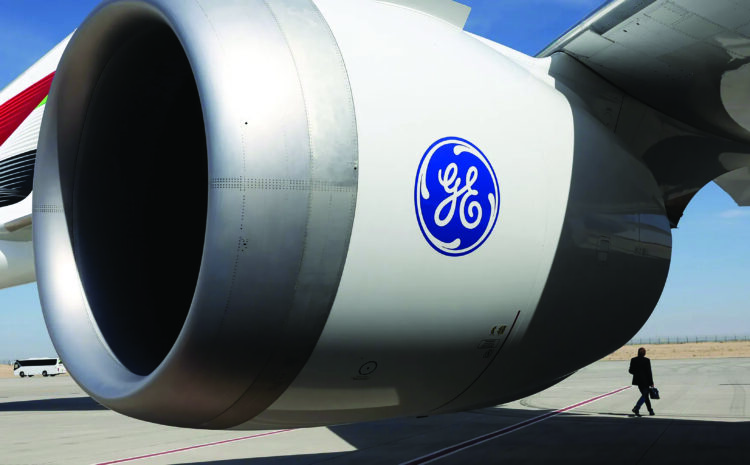
With GE Aerospace’s announced investment of more than $107 million in its Greater Cincinnati advanced manufacturing operations, it looks like it will be another banner year for the entire Ohio aerospace industry.
The state is already the largest supplier to Boeing and Airbus and is rated as the No. 2 state in the country when it comes to attractiveness to aerospace companies looking to relocate. More than 150 companies are involved in the industry in the Greater Cincinnati area alone, and they employ more than 16,000 people. The area also is home to numerous aerospace companies along with hundreds of Tier 1 and Tier 2 suppliers.
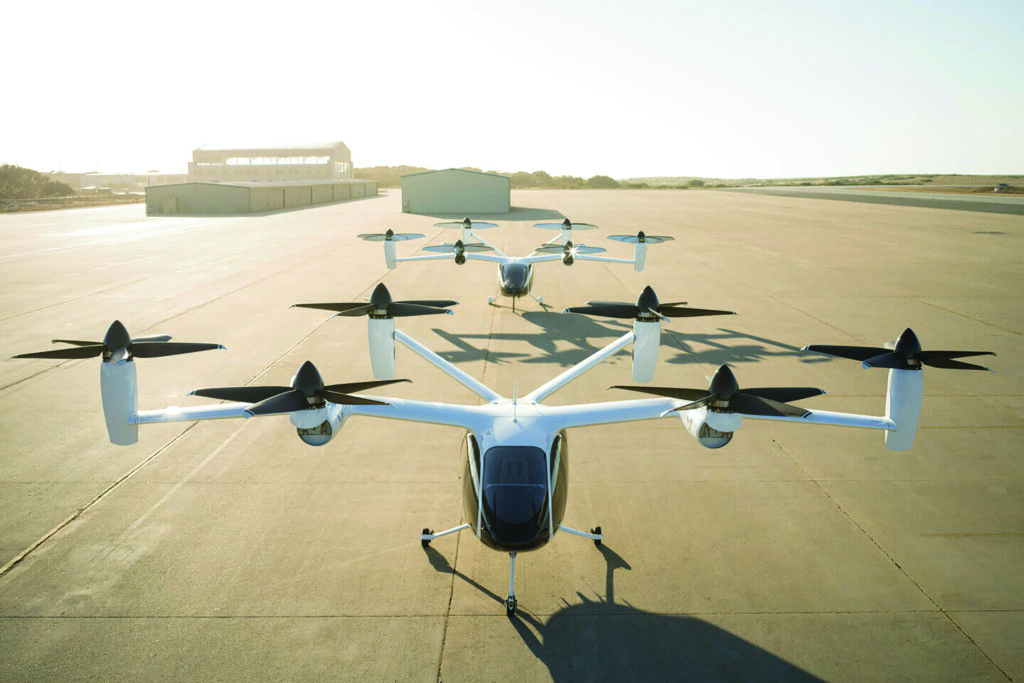
The GE investment comes on the heels of several significant developments in Southwest Ohio’s Aerospace Industry, including Joby Aviation’s plans (announced last fall) to build an electric air taxi manufacturing facility at the Dayton International Airport. While that announcement will impact primarily civilian aviation, GE’s announcement will impact both civilian and defense related projects. However, both will create advanced manufacturing and engineering jobs. The former creating approximately 2,000 jobs up in Dayton, while that latter expected to play a heavy hand in the creation of more than 1,000 jobs company-wide for GE.
“Ohio has a long, rich history in aviation, and we are proud to bring the next chapter of that story to life in the place where it all started,” says JoeBen Bevirt, founder and CEO of Joby Aviation. “As one of the top states in the country for aviation manufacturing and innovation, Ohio will play an important role in the future of our industry and we’re looking forward to growing our team here.”
Joby recently announced that it has acquired an existing facility at the Dayton Airport and has begun hiring in support of the company’s initial manufacturing operations, which are expected to begin later this year. It represents the company’s first step in its plans of building more than 50 aircraft a year in Dayton.
“We’re pleased to be able to acquire an underutilized facility at Dayton International Airport and repurpose it as a modern, high tech manufacturing center to serve as our initial manufacturing footprint in the region,” says Didier Papadopoulos, president of Aircraft OEM at Joby. “I am deeply appreciative to the Dayton community, and Ohio more broadly, for the warm welcome we have received as well as the high interest in joining our team. We look forward to continued collaboration and to growing our presence in the Miami Valley region as we build the future of flight in the birthplace of aviation.”
Joby’s production facility is expected to draw other advanced air mobility opportunities to Ohio, creating a ripple effect that could lead to an overall economic impact of more than $13 billion in the state as well as the creation of 15,000 jobs by 2045.
Obviously, the investment by GE Aerospace could cause an economic tsunami as well.
In addition to Southwest Ohio getting the lion’s share of a total GE-announced investment of more than $650 million company wide, perhaps the best news, at least for the local aerospace industry, is that an additional $100 million will go to supplier partners based in the United States to strengthen the company’s supply chain, helping suppliers build and maintain capacity and capabilities for sustained growth. Many of the suppliers provide materials (castings and forgings) as well as some early-stage parts for commercial and military engines. This could prove to be a boon to Ohio’s aerospace industry.

“GE Aerospace’s investment provides a significant boost to Ohio industry and further cements our critical role in the nation’s aerospace infrastructure,” says John Sankovic, vice president of research and development at Parallax Advanced Research in Dayton and president of the Ohio Aerospace Institute in Cleveland. “This holds the promise to be an asset to the regional supply chain and beacon for other businesses considering a new site for expansion or relocation. The Ohio Aerospace Institute performs significant high temperature materials research and development, and this investment also provides an excellent opportunity to see that work commercialized.”
While GE Aerospace’s investment in the region is expected to be used for additional additive manufacturing machines, new tooling and equipment, modernizations and upgrades to test cells that will allow the company to increase production capacity of its engines used in both commercial and military aircraft, it is just a fraction of the company’s overall investment, some of which will also be used to invest in its supply chain. The move comes on the eve of GE Aerospace becoming a standalone company.
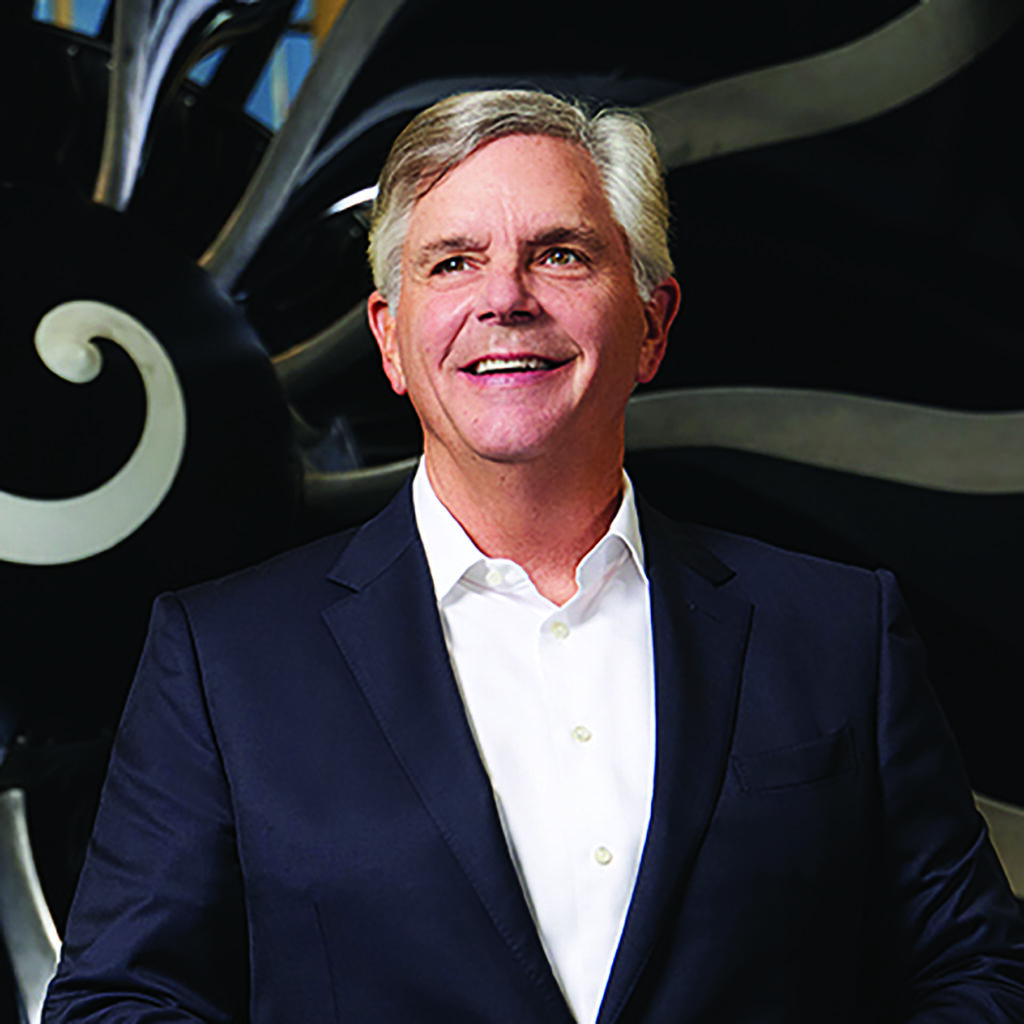
“As GE Aerospace prepares to become a standalone company this spring, we are making significant investments in the future of flight and in the dozens of communities and supplier partners helping us build it,” says H. Lawrence Culp, Jr., chairman and CEO of GE and CEO of GE Aerospace. “These investments are part of the next chapter for GE Aerospace, supporting cutting-edge equipment and safety enhancements that will help us meet our customers’ growing needs.”
GE Aerospace and its partner engines power three out of every four commercial flights around the world and two-thirds of U.S. military aircraft. The company continues to see strong demand from its military and commercial customers for new engines and to maximize the availability of engines in operation. The 2024 investment plan expands the company’s capacity to continue ramping LEAP engine production, prepare for production of the GE9X and continue supporting the U.S. military and its allies around the world.
The company’s 2024 investment strategy calls for nearly $450 million to go across the company toward new machines, inspection equipment, building upgrades, and new test cells and safety enhancements at 22 GE Aerospace facilities across 14 states.
In its Auburn, Alabama, site, GE Aerospace is investing $54 million in additional 3D printing machines and tooling to increase production of military rotorcraft engine components as well as narrow and widebody aircraft engines. In North Carolina, $46 million will be used to produce and assemble engines for either narrowbody or widebody commercial engines just to keep up with growing demand. Engine assembly and testing that support U.S. production of U.S. and Allied military helicopter and fighter jets engines, in Lynn, Massachusetts, will get a $30 million investment.
“This is an investment in the future of manufacturing, ensuring we can continue producing high-quality, cutting-edge engines and services while meeting customer demand,” says Mike Kauffman, GE Aerospace Supply Chain vice president.
Many of these investments are being made as the result of employees and leaders coming together to find ways to improve safety, quality, delivery and costs through the company’s Lean operating model, Kauffman adds.
The push for increased manufacturing is one of several strategic initiatives for GE Aerospace this year, one of which is the creation of more training programs.
“These are investments not only in the future of flight, but in strong futures for the communities where we operate, ensuring our ability to continue making innovative, high-quality engines in the US and around the world,” says Tara DiJulio, GE Aerospace’s chief corporate affairs officer.
It’s also in line with a strategy to meet traffic demand as the amount of air travel worldwide grows.
“More and more people are flying to see family, do business and make connections around the world, and we are using every tool we have—especially Lean—to help airlines maximize the availability of their fleet and to deliver the engines they need to meet demand,” adds Kauffman.
Take GE Aerospace’s site in Greenville, South Carolina.
The team used Lean to make the CFM engine lines 25%more efficient while reducing the resource used by 34%.
In the Tristate, GE’s On Wing Support facilities near the Cincinnati/Northern Kentucky International Airport looked at how to reduce the time it took to teardown an engine, order parts and reassemble the engine. Through Lean, they were able to reduce the time by more than 33%, getting planes back in the sky sooner for airlines.
With the estimated increase in civilian aviation, the projected need for aerospace workers shows no signs of abating. One report from AAR Corp, an American provider of aircraft maintenance services to commercial and government customers nationwide, forecasts that the global aviation market will need 34,500 new mechanics annually, in addition to thousands of aerospace engineers needed each year in the coming decade, and even more workers who need trade skills to perform the many projected good paying jobs in aerospace.
“A job in aerospace can become a great career,” says Russell Stokes, president and CEO of GE Aerospace Commercial Engines and Services. “There are plenty of workers, but we must expand our outreach to recruit and provide people with those skills,”
Look for aerospace manufacturers throughout the Greater Cincinnati area to expand their apprenticeship programs, build partnerships and try new models to recruit and retain workers in the very near future.
