

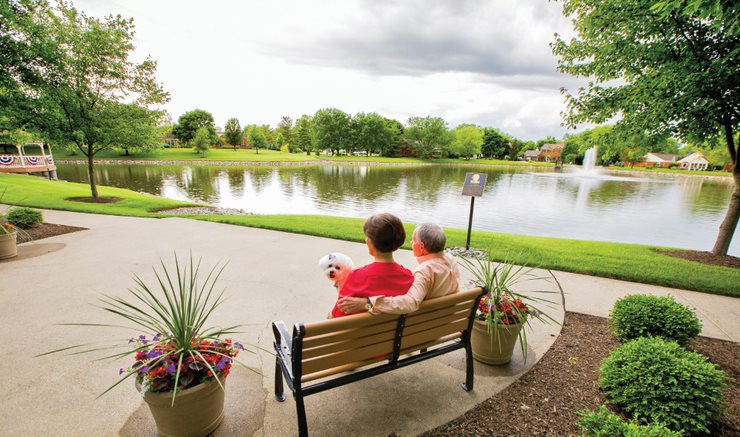
Local retirement communities are bringing back visitors and activities after a difficult year
The COVID-19 pandemic, as we all know, turned the world on its head. While it affected us all, it was particularly difficult for seniors, especially those living in retirement community. They were suddenly left without their usual visitors, events and outings. Many residents were not able to see their families for over a year.
These residents were considered the highest risk during the pandemic because of their age and health risks. According to the Centers for Medicare & Medicaid Services (CMS) data website, as of June 6, there have been 38,648 confirmed COVID-19 cases for retirement home residents in Ohio, with a total of 655,623 total confirmed cases for retirement home residents in the country.
Those in retirement and nursing communities relied on workers and nurses to stay safe, but with high-risk residents—some with pre-existing conditions—it was difficult to maintain the balance.
Now, with Ohio and the country’s COVID-19 restrictions being lifted and many moving towards a post-COVID life, where are retirement community residents left in the mix?
Data provided by CMS shows that 76.44% of residents have completed COVID-19 vaccinations in Ohio, while only 48.01% of staff have completed vaccinations as of June 6. Ohio falls low on the retirement community vaccination lists, at 37th and 39th respectively.
“Nearly 100% of our residents signed up for the first round of vaccination,” Larry Monroe, president and CEO of Christian Village Communities, which includes The Christian Village at Mason and The Christian Village at Mt. Healthy, says. “They were very anxious to do all they could to safeguard their own protection and that of our entire team.”
While numbers are going in the positive direction, residents may still not feel comfortable leaving the facility, visiting with family and spending time with other residents.
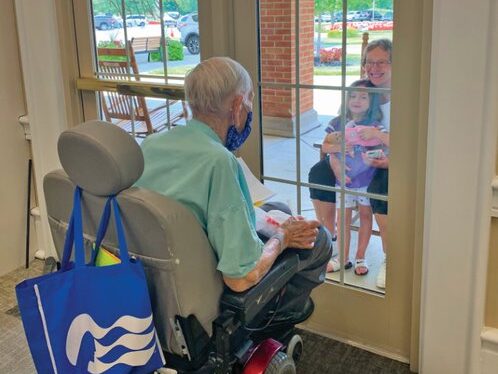
“It would be difficult to describe the full measure of suffering the pandemic imposed upon our residents from the standpoint of the loss of human interaction and loving touch,” Monroe says. “This was particularly true for those residing in our health care centers, many who typically live for that occasional visit from a loved one. The reintroduction of outside visitation to resident rooms has lifted spirits and brought smiles back to so many faces. It has brought a measure of joy back to our community.”
While visitation guidelines vary by facility, recent data provided by the state shows that as of June 23, 87% of long-term care facilities in Ohio allow indoor visits, 57% allow outdoor visits and 75% offer window visits. Only 3% of facilities in Ohio are not allowing visits.
Most communities are now focusing on improving day-to-day operations for residents, bringing back activities, fitness opportunities and visiting performers. The Christian Village at Mason has the Renewal Fitness Center (RFC) available for residents as well as its own community television channel (CVC TV), which shows nature documentaries, movies and other programs.
“Of course, group day trips for residents ceased during the pandemic,” Monroe says. “As for activities, our very creative Community Life Services team maintained a robust schedule of uniquely suited activities that kept residents engaged as much as possible. With recent regulatory guidance allowing for greater flexibility of restrictions, in the last couple of days our Mason campus took two busloads of residents to a mystery destination—an ice cream stand. The excitement and chatter from those residents upon their return to campus was proof enough that the outing was a huge success.”
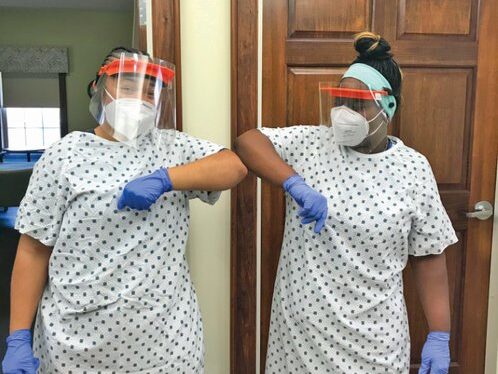
The rise of COVID-19 also lent to the development of alternative ways of providing and receiving care. There has been a rise in telemedicine since the beginning of the COVID-19 pandemic according to the CDC. Changes like this have been necessary to give patients the care they need during the pandemic, offering a remote and safer option for those at retirement age and with pre-existing conditions.
As with anything, telemedicine has limitations. Response time to emergency situations and uncomfortable conversations over bad internet connections are just two examples. Some may enjoy the flexibility of telemedicine, but there is not much that can replace a human connection and a helpful hand.
In addition, time spent without visitors or activities in retirement communities during the pandemic will not be forgotten quickly. But as visits, activities and day trips become more frequent, communities are hopeful that the residents’ lives will return to something like normal.
