

Travel back in time this summer at the Cincinnati Museum Center
Travel back in time this summer with the reopening of the beloved Ice Age Gallery on July 1 at the Cincinnati Museum Center.
The Ice Age Gallery closed in May 2016 prior to the restoration of Union Terminal says Cody Hefner, senior director of Marketing and Communications at the Cincinnati Museum Center. During its closure, the museum center renovated and updated parts of the gallery.
“The Ice Age Gallery has been such a fan favorite for so long that we wanted to keep those pieces that people really enjoy but we also know it’s started to age,” Hefner says.
Hefner says the museum center focused on refreshing the most iconic aspects by surrounding them with new plants and foliage, projections that add to the immersive environment and a new soundscape.
“There are also a lot of animal specimens from our collections that are new to the gallery centered around a fully articulated mastodon skeleton but also including giant bison and modern-day animals and their Ice Age ancestors,” Hefner says.
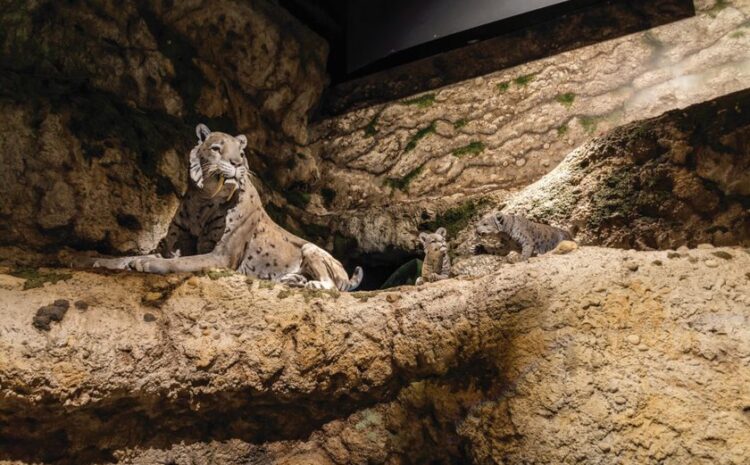
Hefner says the gallery is popular because it’s an immersive experience. Guests will walk through an ice cave that actually feels cold, then emerge into a dynamic landscape with dire wolves stalking alongside you, saber-toothed cats lounging in the rocks and other prehistoric beasts all around you.
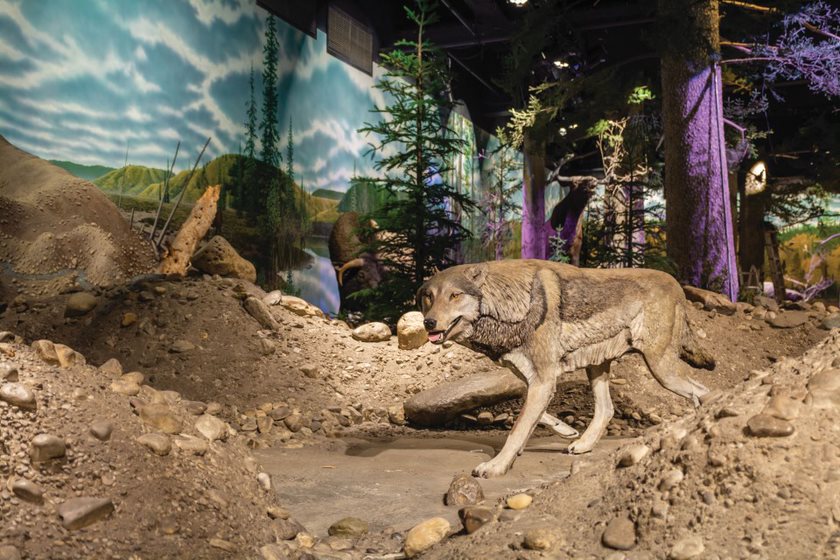
“We want them to feel like they’re time travelers, transported back 23,000 years to the Pleistocene with this sense of awe in what’s around them,” Hefner says.
Hefner says kids will enjoy the Ice Age Gallery because it’s visually fun for them to see and interact with the wolves, saber-tooth cats, sloths, bison and giant fossils. Kids will also enjoy the ice cave because it adds a sensory component with having a cooler temperature.
Despite the Ice Age Gallery being an immersive experience, it’s not just for kids, Hefner says.
“I think adults will really enjoy the timeline in action nature of the gallery,” Hefner says. “The animal specimens show very clearly how animals are built for their environment, and how drastic changes to that environment can lead to extinction or significant adaptations.”
Hefner says part of the experience is simply visualizing what the Ice Age looked like and what animals were stomping or prowling around at the time. Guests will also learn the impact of climate, how it has naturally changed in Earth’s history and why the current rate of climate change influenced by humans is so concerning.
“We walk on the same ground that mastodons thundered across thousands of years ago. We were at the crossroads of this incredible web of predator and prey courtesy of the natural salt licks that drew massive animals here,” Hefner says. “The fact that so many of these animals are now extinct because of climate change is a powerful reminder of how critical it is that we’re mindful of how we’re accelerating the changes to our climate today.”
