

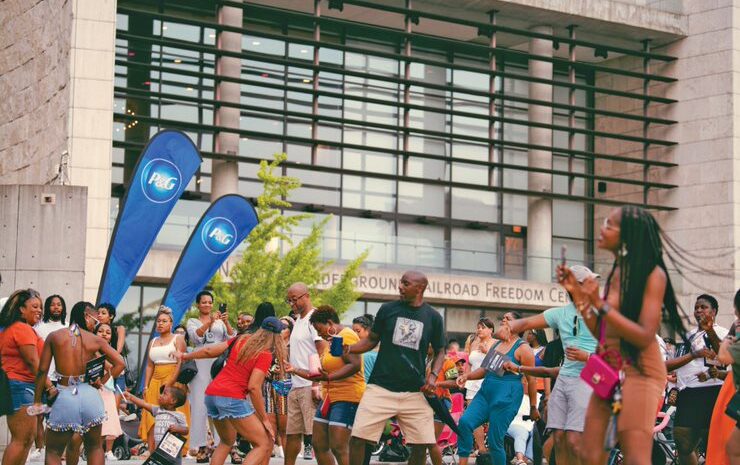
Despite losses due to pandemic, Cincinnati’s arts scene remains strong
When public health restrictions were imposed by Governor Mike DeWine in March of last year, arts and performance venues were among the hardest hit. Coming out of the pandemic this year, the impact on the Cincinnati arts scene was even more than you could imagine.
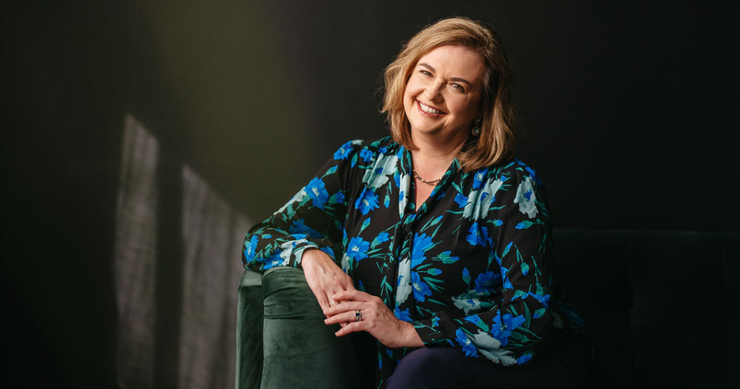
“We estimate that the region’s arts sector has lost $130-plus million as a result of COVID-related government shutdowns,” says Alecia Kintner, president and CEO of ArtsWave, a primary funder of arts in the Cincinnati region.
As the pandemic hit, ArtsWave’s role became even more important in providing emergency grants, loans, information resources, technology assistance, collaborative spaces and government outreach on behalf of organizations and artists. Without annual local government support for arts, and with other funders providing primarily project-based support or shifting to social service relief, ArtsWave was at the front of COVID response as arts organizations reported losses in the tens of millions.
“Performing arts organizations laid off dozens of staff members due to the total loss of earned revenue from canceled events and inability to bring audiences or performers together first due to the ban on mass gatherings and later due to the state-imposed limit on audience size,” says Kintner. “Most museums also reduced staff due to the precipitous drop in revenue from canceled school and group contracts, halted facility rentals and shuttered gift shops and cafes.”
During the pandemic, the state of Ohio ranked arts and entertainment workers as the industry group with the highest percentage of unemployment—an astonishing 47%. This was nearly 20 percentage points higher than the next-largest industry group, hospitality, at 30%. While those statistics might seem high, they are actually consistent with statistics across the entire nation.
Within a month of the government-imposed shutdowns last year, ArtsWave accelerated $2.4 million in payments to 43 organizations that receive operating support grants, expanded its $10,00 Working Capital Bridge Loans for eligible arts organizations and provided $30,000 in Emergency Arts & Cultural Organization grants to 47 organizations. Later in 2020, ArtsWave also administered $3,700,000 in CARES Act relief funds to arts organizations and independent artists on behalf of Hamilton County and the city of Cincinnati.
“This combination of human and financial resources has allowed us to pivot quickly, show flexibility in our funding processes, leverage endowment reserves and be in front of elected officials, corporate leaders and media in advancing the case for arts relief,” says Kintner. “Our 2020 ArtsWave Campaign chair, Jill McGruder, and her cabinet extended their commitment by three months in order to get close to our pre-pandemic goal, with $10.8 million raised by Aug. 31 versus our $12.4 million goal.
“On top of this fundraising, which included 40 virtual employee campaigns, we secured $1 million for a new Arts Vibrancy Recovery Fund,” Kintner adds. “We matched these dollars 2:1 from board reserves, creating a flexible pool of $3 million to backstop the campaign shortfall and enable additional grants. Thanks to this effort, we did not need to cut operating grants for 41 organizations—unlike other cities across the country and the Ohio Arts Council, which were forced to reduce their funding last year.”
So did ArtsWave take any other lessons away from COVID?
“During the pandemic, it became all-too-clear that our region hadn’t put enough infrastructure in place for independent, individual artists who aren’t affiliated with organizations,” says Kintner. “Along with others, ArtsWave provided significantly more funding in 2020 for these artists. Going forward, we’ll see how we can better make Cincinnati a region where artists really thrive and feel supported.”
Though not a new role, ArtsWave also doubled down on its role of as convenor during the pandemic.
“The first week after the shutdown, I pulled together the leaders of the largest dozen-plus cultural organizations for a crisis management phone call,” says Kintner. “Everyone agreed we should talk again the following week. Soon we transitioned to Zoom.
“We met every single week until February, a full year of weekly conversations. Now we have pulled back to every two weeks, but each one of my colleagues says that this weekly touch-base was part of our story of resiliency and problem-solving,” adds Kintner. “ArtsWave’s chief operating officer, Kate Kennedy, pulled the leaders of 15 or 16 mid-sized arts organizations together on zoom every two weeks, as well.”
The arts scene has also shifted toward a new normal that includes increased use of digital media.
“Digital is here to stay,” says Kintner. “Most organizations plan to continue to incorporate live streaming and other online content even as live performances resume. They discovered new audiences around the world over the last year, and they invested in the capacity to work this way so it’s now going to be much more widely incorporated.”
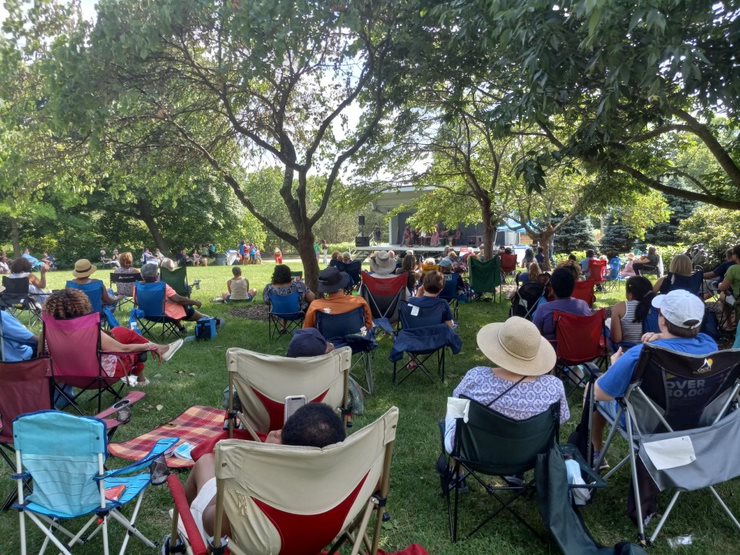
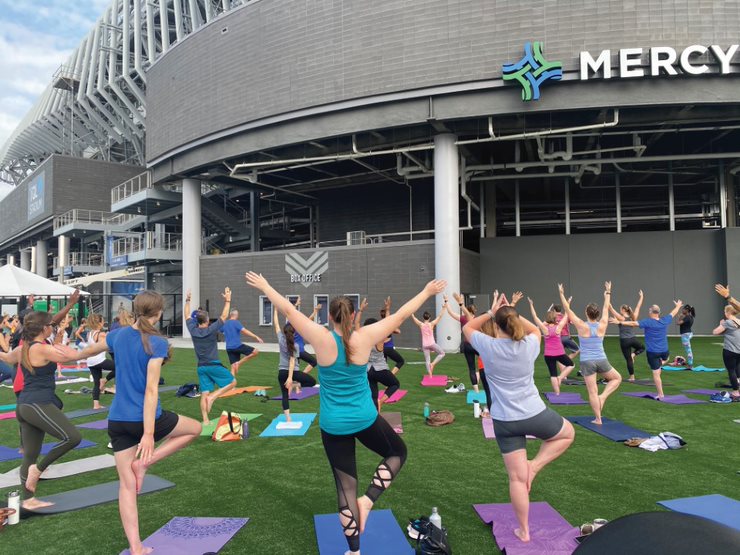
The pandemic also prompted many organizations to take their art outside, performing or presenting in public spaces like parking lots, parks and even on the back of flatbed trucks.
“I think that will continue as well,” adds Kintner.
With public safety restriction and capacity limits lifted, restart plans are already unfolding. However, many economists don’t expect the arts to make a full recovery until 2024 or 2025. ArtsWave’s strength coming into this current unusual year has been its loyal donor base, its endowment, its committed board of directors and other volunteers, and its professional staff.
In April, ArtsWave’s board of directors adopted a new strategic plan called “Retooling the Playbook as a Leading Engine for the Arts” for the next several years of operations, anticipating the 100th anniversary of the establishment of the Cincinnati Institute of Fine Arts, its new corporate name, in 2027.
“Strengthening fundraising, government advocacy for arts funding and growing our endowment are among the plan’s objectives,” says Kintner. “Between now and then, we’ll advance our sector-wide plan, ‘The Blueprint for Collective Action in the Arts,’ and we’ll keep working to make the Cincinnati region’s arts sector inclusive and diverse through a diversity, equity, inclusion and access plan called ‘Lifting as we Learn.’”
ArtsWave has begun winding down its 2021 Campaign and is projecting to meet its $11 million goal to fund the region’s arts.
Funds raised from the campaign will be used to support 100-plus arts organizations and projects in the year ahead that build Greater Cincinnati’s national reputation, deepen residents’ roots in the region, enliven neighborhoods, bridge cultural divides and fuel creativity and learning for the region’s children.
Terry Horan, president and CEO of HORAN and chair of the 2021 Campaign, shared the $11 million news with his campaign cabinet at the first in-person meeting and celebration for the group.
“In this unprecedented year, I thank the tens of thousands of residents and the hundreds of companies that have invested in the arts as a way to restart our entire region,” says Horan. “Cincinnatians recognize how important a vibrant arts culture is to our growth and enrichment as a community and as individuals.”
Horan is also appreciative of all the organizations and individual donors who supported his Innovation & Restart Challenge; in total, over $250,000 of the 2021 Campaign total was raised through this effort.
Under Horan’s leadership, more than 22,000 individual donors and 350 companies and foundations to date have participated in the campaign. As is the case every year, the total dollar amount announced includes contributions already received and reported, as well as projections for campaigns that are ongoing.
Due to the pandemic, there are more businesses than usual that are running employee campaigns this summer.
“For those companies and individuals who are still finishing their campaigns, please know that your support is essential and appreciated,” adds Kintner. “In this unprecedented year, I thank the tens of thousands of residents and the hundreds of companies that have invested in the arts as a way to restart our entire region. Cincinnatians recognize how important a vibrant arts culture is to our growth and enrichment as a community and as individuals.”
