

Life Science sector continues to thrive across Greater Cincinnati
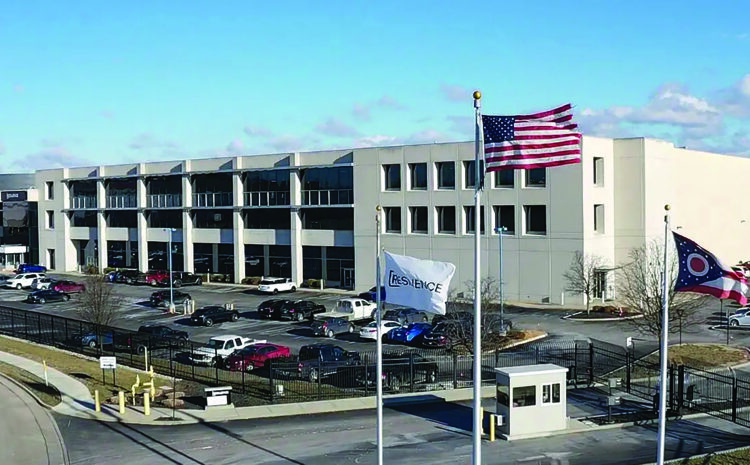
With the start of the next phase of its growth strategy in our area, National Resilience, the California-based biotech company with operations in Cincinnati, is simply the latest example of the dynamic growth in the life science, medical and pharmaceutical business sector in Southwest Ohio.
Life science alone in the Cincinnati region is a $6.3 billion industry seeing 21% job growth over the past five years. This thriving sector encompasses a wide range of specialties, including biomedical research, pharmaceutical manufacturing and medical device production. Together, these areas are driving innovation, advancing health care solutions and delivering significant economic impact across the region.

“We are excited to continue our successful partnership with JobsOhio and REDI Cincinnati, as we reach new milestones in expanding our capabilities and impact,” says William Marth, president and CEO of Resilience. “Since our inception, we’ve worked tirelessly to build a resilient future—and we’re excited to announce this recent growth, which enhances our expanding drug product manufacturing capabilities in Ohio.”
The next growth phase for the company involves bolstering its presence in West Chester while expanding operations in Blue Ash. This latest phase will add 200 new jobs to the local economy and comes on the heels of a previously announced addition of 440 new jobs with an associated annual payroll of more than $29 million in 2023. This expansion was also done in collaboration with REDI Cincinnati and JobsOhio.
The planned expansion at the 190,000-square-foot Blue Ash location will add additional highly automated Device Assembly and Packaging capabilities for DP (Drug Product) filled at the West Chester location. Additionally, the Blue Ash location will add significant cold and ambient storage capacity to support both locations.
Resilience is anticipating that the Cincinnati workforce will grow to nearly 1,000 workers, marking a significant milestone in its rapid growth in the area.

President and CEO of REDI Cincinnati
“Resilience’s second expansion and its approach to 1,000 local jobs underscores why the Cincinnati region is a hub for leading life sciences organizations, including biotech, pharmaceuticals and medical devices,” says Kimm Lauterbach, president and CEO of REDI Cincinnati. “The life sciences sector contributes $6.8 billion to the region’s gross product (GRP) and employs over 20,000 people, highlighting its critical role in our region’s diverse economy.
“The relationships between REDI Cincinnati, JobsOhio and Ohio Life Sciences (OLS) are absolutely essential to the growth of the life sciences sector in our region and across the state,” adds Lauterbach. “These partnerships create a unified approach to business attraction and expansion, providing companies like Resilience with the support, resources and connections needed to succeed. When paired with the assets of the Cincinnati Innovation District—like access to research, talent and cutting-edge facilities—these collaborative efforts become a powerful driver of growth. It’s this alignment across regional and state partners that positions our area as a top destination for life sciences innovation and investment.”
REDI Cincinnati, OLS and JobsOhio’s Talent Acquisition Services team are leading a strategy to develop a biomanufacturing training program to help fill technician roles at Resilience and other pharmaceutical industry leaders in Southwest Ohio. By sharing curriculum, best practices, and ecosystem relationships, REDI, OLS and JobsOhio are enabling a robust pipeline of talent for Ohio’s life science employers. JobsOhio will also assist Resilience in attracting out-of-state talent.
The Cincinnati Innovation District (CID) is playing a key role in those efforts as well. The CID is made up of a growing ecosystem of researchers, students, industry leaders and innovators focused on developing the next big ideas and solving real-world challenges. Anchored by the University of Cincinnati, the CID plays a key role in cultivating and connecting top talent—especially in the life sciences sector—ensuring that companies have access to the skilled workforce and solutions they need to thrive.
“The CID is a key asset in attracting life sciences talent and companies to our region,” says Lauterbach. “It creates an environment where research, education and industry intersect—offering access to world-class talent, state-of-the-art facilities and collaborative opportunities. For life sciences companies, this kind of ecosystem is essential for advancing innovation, accelerating commercialization and building a strong talent pipeline. The CID signals that our region is not only open for business but committed to being a leader in the life sciences.”
REDI Cincinnati recently launched its strategic plan for the next three years, building on the momentum and successes of its previous roadmap. One sector that continues to hold strategic importance is life sciences.
It remains a top target for attraction efforts, thanks to the region’s strong foundation of biomedical research, a robust talent pipeline and collaborative public-private partnerships.
“Our ‘right to win’ in this sector is grounded in the assets we already have—from the Cincinnati Innovation District and Cincinnati Children’s Hospital to the top-tier academic institutions and a growing network of health and bioscience companies—which position us to compete globally for life sciences investment and talent,” says Lauterbach.
There have also been a large number of very positive developments in the medical sector for the region, especially in Mason.
Last year, AtriCure, a global leader in surgical treatments for atrial fibrillation, post-operative pain management and left atrial appendage management, announced plans to further invest in the expansion of its global corporate headquarters campus on Innovation Way in Mason. This multi-year phased investment will fuel AtriCure’s research, development and manufacturing capabilities, building upon the critical mass of the city of Mason’s MedTech and life sciences clusters.
Just four years after getting its start in a 200-square-foot Mason Tech Elevator launch space, Mira Precision Health expanded its headquarters to nearly 9,000 square feet in the Mason Tech Elevator. About two thirds of the expanded headquarters is dedicated to Clinical Laboratory Improvement Amendment-accredited laboratory operations and R&D facilities.
Haag-Streit, a Swiss manufacturer of optical instruments for optometrists and ophthalmologists, made a long-term commitment to its future in the region with a reimagined North American headquarters campus and enhanced manufacturing capabilities, an overall investment of nearly $4 million in Mason over the next few years. It marked the fourth biohealth HQ investment announced in Mason in 2024.
Partnerships in the medical sector also continue to grow unabated across Greater Cincinnati, Northern Kentucky and Southeast Indiana. GE HealthCare, University of Cincinnati (UC), UC Health and Cincinnati Children’s have established a new collaboration with the goal to accelerate magnetic resonance imaging (MRI) innovation. The collaboration created a co-located MRI Research and Development (R&D) center of excellence on UC’s medical campus to foster interaction between clinical investigators and GE HealthCare scientists.
As part of this academic-industrial collaboration, GE HealthCare is receiving assistance in the form of an R&D grant from JobsOhio, to support engineering and manufacturing job growth at its Aurora, Ohio, MRI coils facility, as well as new clinical and scientific roles at the Cincinnati R&D center of excellence facility.
Just last month, Cincinnati Children’s and GE HealthCare announced a strategic research program focused on driving clinical and technical research to advance innovation for pediatric care delivery across modalities, including MRI, ultrasound, molecular imaging (MI) and computed tomography (CT).
The research program will establish the first pediatric Care Innovation Hub nationwide, representing a new model established by GE HealthCare and Cincinnati Children’s to combine their talents and resources to accelerate the impact of innovation and scientific activities for the benefit of pediatric patients.
