

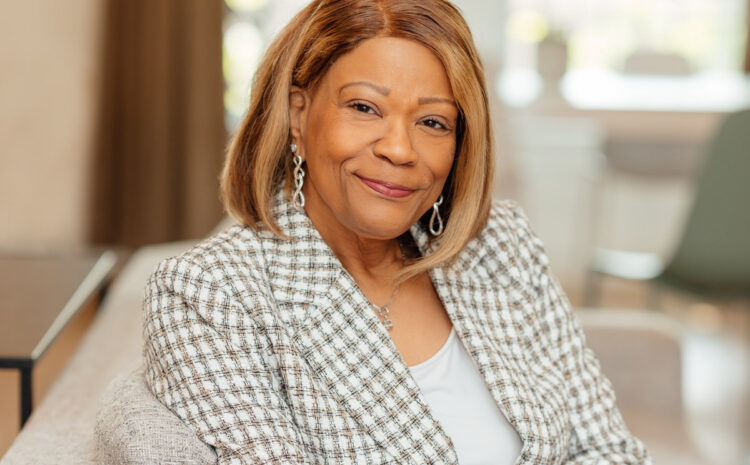
Warsaw Federal CEO Robie Suggs aims to support East Price Hill and beyond
In high school, Robie Suggs was a bit of an overachiever. By the end of the first semester of her senior year, she had accumulated enough course credits to graduate ahead of the rest of her class and get on with her post-high school life. But she wanted to join her classmates in the ceremony, the walk across the stage, the diploma, the applause. So she stay enrolled in school but, because she didn’t need to take any more classes, a guidance counselor helped her find a job doing some back-office duties at a Central Trust branch.
That introduction was the start of a decades-long career in banking, finance and community development that culminated last April when she was appointed CEO of Warsaw Federal, a community bank based in East Price Hill.
“I thought I’d be there a few months until I graduated,” she says of her Central Trust gig. “When I graduated, they offered me a full-time position.” That included the possibility of tuition assistance for college. “I was like, OK, I’ll stay here for a minute. Forty-some years later, I’m still in banking.”
In her first year at Warsaw Federal, she completed the process of earning the bank a federal designation as a minority depository institution. The designation recognizes the bank as a community-based, mission-driven organization that promotes growth in underserved communities, often by providing access to mortgages and loans for applicants that other banks would have turned down. The majority of its board of directors are people of color, which is a requirement for MDI designation. Warsaw Federal is only the second such institution in Ohio.
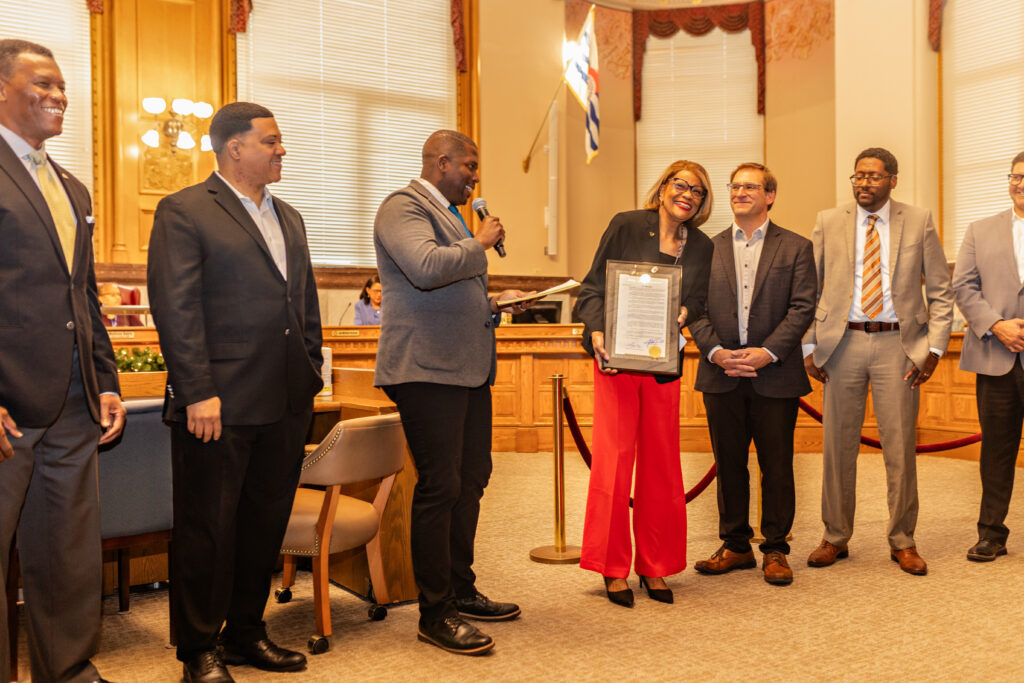
“This will allow us to do more of this work, to reach more people, to make more businesses stronger, so they can support the community, where they wouldn’t have been able to do that otherwise,” Suggs says. “Those are the kind of things that we’re going to be able to do now that we can be a little more innovative.”
In some ways, it’s the culmination of a career in community development for the Cincinnati native. “It’s a way for me to continue the work I’ve been doing and do it on a larger scale,” she says. “A way for me to start something that leaves it to someone else to carry on when I’m no longer doing this. A way to support the community in a way it has not been supported before.”
The work of lifting up underserved communities may have been instilled while growing up in the Cincinnati neighborhood of South Cumminsville. Although it’s one of the poorest neighborhoods in the city, it enjoys a high home ownership rate, with nearly half of its 400 or so housing units owned by their occupants. Her family rented one floor of a two-family until they purchased a home on Llewellyn Street when Robie was 4. Her father worked nearby as a butcher at the old Kahn’s meat packing plant.
“One of the things I learned from him is how to be frugal, because being a butcher, he knew how to use every part of the animal. He grew up in the South, where they didn’t have a whole lot and you learned how to do that.
“The neighborhood was always diverse,” she says. “It was a safe neighborhood. You could play out late at night. You didn’t have to worry. I could walk through the backyard and cross the street and I was at my grade school.”
After graduating from the old Courter Tech high school (on what is now the campus of Cincinnati State), Suggs enrolled at University of Cincinnati, then Cincinnati State, but graduated from neither. “So my journey has been on the job, feet to the fire, and in many cases that’s what it was.”
That journey started at Cincinnati’s Central Trust, and as the banking business evolved, merged and consolidated, she worked at ever-more responsible positions at PNC Bank, Provident Bank, National City and First Financial.
At one stop she was “somewhat of a fixer,” assigned to figure out what was going on at under-performing retail branches. “I literally walked into a branch one time and I heard somebody say, ‘Oh, my God, she’s here.’ And I was like, ‘Oh, my goodness, I’ve got that kind of reputation.’”
She was in the mortgage side of the business in the lead up to the financial crisis of 2008 and 2009. “I saw what that was doing to people, especially older people with their life savings going away,” she says. At Cincinnati-based First Financial, she built up the community development department.
“I recognized that a certain group of folks were marginalized as far as financial options that are available to them,” she says. “Underserved, unbanked and underbanked low- to moderate-income folks were not getting a fair shake. So one of the things I decided to do, if I could do anything, was to determine what the bank could do and what I could do to support this group of folks.”
In 2021, she was named chief lending officer of Cincinnati Development Fund, a not-for-profit financing organization that supports affordable housing and other neighborhood revitalization projects. Joe Huber, the Development Fund’s president, called her “an accomplished problem solver and a bridge-builder who prioritizes community needs and programs that transform low-income neighborhoods.”
She helped create a loan product to underwrite community-based and women-owned real estate developers of color, as well as community development corporations and other organizations that are focused on building affordable housing. “That came out of us having the foresight to talk to people and then say maybe we can provide a solution that the banks don’t have, and that’s what we did.”
She plans to do a lot more listening to the community in her CEO role at Warsaw Federal. “The Price Hill neighborhoods and surrounding areas are losing financial institutions, not gaining them,” she says. “So it’s really important to be able to be in that space. We have to listen as if we’re not the bank. We have to listen as part of the community.”
Warsaw Federal is a mutual bank, owned by its depositors, not by corporate investors. That structure, and its minority depository designation, will help with her No. 1 goal: growing deposits. “When people invest with us, they’re investing with an organization that is going to put the funds back into the community,” she says.
