

The Port’s new initiative aims to bring manufacturing back to urban neighborhoods
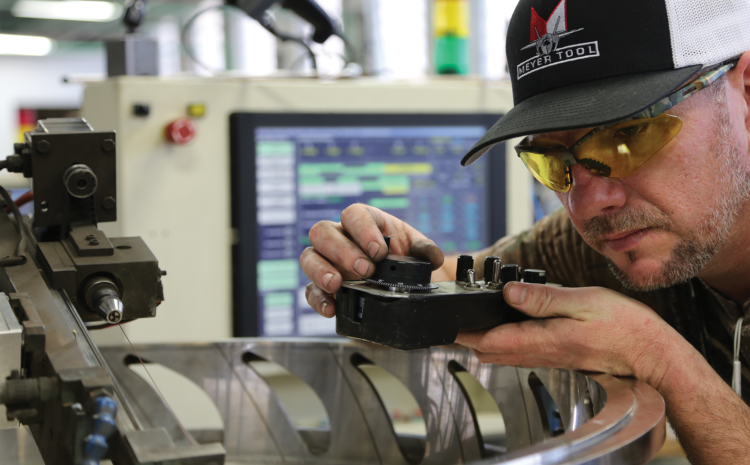
Founded in the back of a motorcycle garage in the early ‘50s, Meyer Tool has grown into a manufacturer that crafts precision parts to supply aerospace and power companies around the world. The company that Bud Meyer started in a chop shop garage in 1951 now operates in eight states and two foreign countries, supplying engine makers like GE Aerospace, Pratt & Whitney and Rolls-Royce. Throughout its growth, Meyer Tool has maintained its headquarters in the Cincinnati neighborhood of Camp Washington, where it employs 750 in a community that was once the city’s hub of manufacturing.
But Camp Washington and surrounding urban neighborhoods like Queensgate, South Fairmount and South Cumminsville, all of which have experienced losses of jobs and people over the decades, could be poised to benefit from the uptick in manufacturing now occurring around the U.S.
An ambitious initiative started by the Port of Greater Cincinnati Development Authority aims to restore manufacturing jobs to these city neighborhoods. The Port is in the early stages of raising $170 million that it plans to use to buy and clean up old industrial sites, resell them to manufacturers and, in the process, return jobs to the city’s old industrial neighborhoods.
“There’s a big demand for manufacturing, and we want to capture it here,” says Laura Brunner, president and CEO of The Port.
The number of manufacturing jobs in the Greater Cincinnati metro region has actually been growing for more than 10 years. That trend was upended in 2020 by the pandemic, which caused a sharp but temporary decline in factory employment. Once the shock of the shutdown wore off, however, growth returned, and the number of manufacturing jobs has exceeded pre-pandemic levels, according to U.S. Bureau of Labor Statistics data.
Accelerating that growth has been efforts to shorten supply chains, bring offshore suppliers back onshore and the growth of foreign investment in the U.S. The goal of The Port’s program is to bring a share of those jobs to the urban core, the scene of the region’s manufacturing roots.
“We want to repurpose the industrial land that we have inside Hamilton County and attract those jobs back where they’re needed, close to the people that need jobs, and help restore the fiscal health of the municipalities inside Hamilton County,” Brunner says.
The Port’s initial goal is to acquire, clean up, prepare and resell 150 acres of industrial land, create 1,800 manufacturing jobs and increase the value of those currently underutilized properties by more than $600 million.
The agency plans to raise $170 million to carry out the program. About $70 million of that would be raised through federal, state and local grants. Another $100 million would be raised through what the agency is calling the Cincinnati Jobs Bond. That capital would be raised through $70 million in low-interest loans from national foundations such as the Kresge Foundation, which has previously invested in one of The Port’s redevelopment programs. The loans would be repaid when the rehabbed properties are resold. Another $30 million would be raised through tax-increment financing, using the expected growth in property taxes from the newly productive properties to borrow money in the short term.
Assembling the funding to carry out the plan will take money from a variety of sources. “It’s going to take public grants, it’s going to take philanthropic grants, it’s going to take philanthropic investments and it’s going to take tax increment financing,” says Eric Letsinger, founder and CEO of Quantified Ventures, a Washington, D.C.-based social investing firm. The Port is consulting with Letsinger’s firm on the design and execution of the capital formation.
This is an opportune time to undertake reinvestment in urban manufacturing, Letsinger says, as economic trends are converging with once-in-a-generation federal investments in industry, jobs and infrastructure through the Infrastructure Investment and Jobs Act and the Inflation Reduction Act.
“This is go time for cities like Cincinnati because in every single conference room at large, advanced manufacturing businesses, they are figuring out where to move their manufacturing back within the United States,” he says. “There’s an opportunity for cities to compete with the suburbs and rural communities for those companies.”
In the short term, it’s easier for companies to locate in the suburbs or rural areas, where land is available. Witness Intel’s decision to build on nearly 1,000 acres in central Ohio. “But that really is an inefficient and costly long-term solution,” Brunner says. “You have to invest in new infrastructure, and then you’ve moved the jobs away from the people that need jobs in the cities.”
In old working-class neighborhoods like Camp Washington and South Fairmount, the infrastructure already exists in the form of highways, rail, water and a ready supply of labor. Half of Meyer Tool’s worldwide workforce, as well as its senior management, is situated at its Colerain Avenue headquarters in Camp Washington.
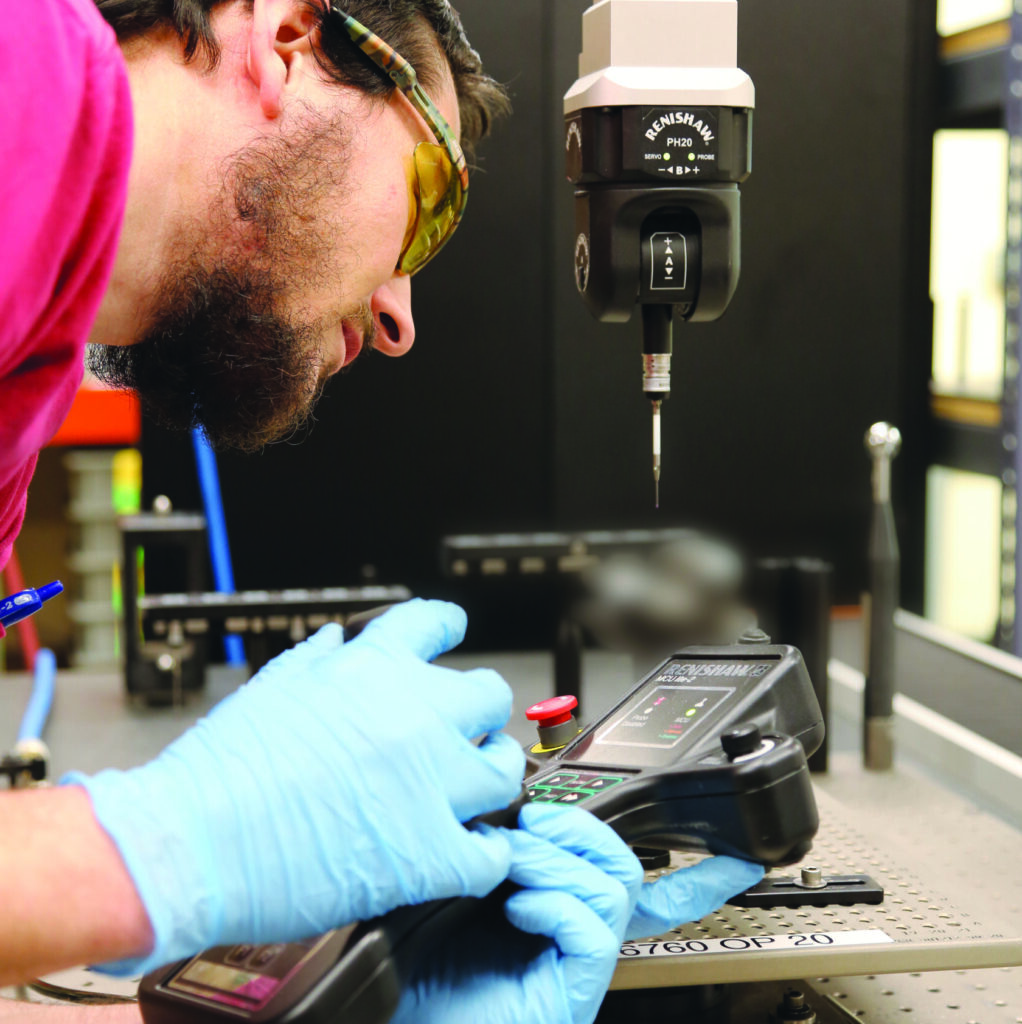
“Camp Washington is in our DNA,” says Beau Easton, the company’s chief operating officer. “We have quite a few people who have been with us for 30 or 40 years who are from Camp Washington. We have a good talent pool in the area.”
Kao Corp. is another manufacturer that has grown in Camp Washington, having acquired Andrew Jergens Co., a firm that dates to the 19th century in Cincinnati, in 1988. The Tokyo-based beauty care company has expanded at its Spring Grove Avenue site and has made Cincinnati the site of its North American headquarters.
The Port is prototyping its strategy in the community of Reading, where it purchased a 25-acre site once owned by Dow Chemical. The site has been vacant and deteriorating since Dow closed its plant there in 2014, putting 230 people out of work. With help from Hamilton County, Greater Cincinnati Foundation, Procter & Gamble, Alloy Development Co. (formerly HCDC) and others, The Port was able to fund six months of site assessment before buying the site in 2019. The project has qualified for more than $5 million in state funding to help pay for environmental clean-up and demolition.
“That’s a good example of a property that has had environmental damage, the buildings are in bad shape, demolition is needed, and there’s a need for capital coming from lots of different places,” Brunner says.
The larger effort will take time to gather the funding and acquire properties. But those involved say Cincinnati is taking the lead in what could be a model of revival for other older, manufacturing-based cities. “Cincinnati is far ahead of any other city in recognizing this once-in-a generation opportunity and putting a marker out there saying we’re going to take a real big swing at this,” Letsinger says.
