

The last year and a half have been a trying time for everyone, but it’s been particularly difficult for schools. Remote learning, hybrid education, masking policies, differing parental opinions and increased infections have made school anything but business as usual. Despite the obstacles, schools—both public and private—have found ways to shine. While many schools throughout the Tristate are doing amazing things, we chose five to profile for this year’s Best Schools feature. Read on to learn more about unique, impressive and even inspirational programs that can be found at our local schools.
EAST
Saint Ursula Academy Goes Global
By Amari Brandy
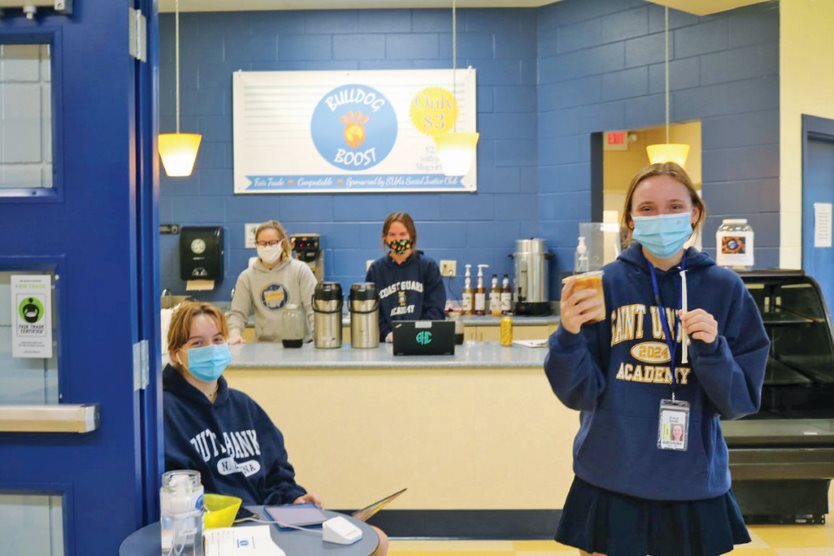
In 1910, Saint Ursula Academy first opened its doors, but it remains committed to the values that the founding Sisters of Saint Ursula established on that first day. At Saint Ursula Academy, young women are encouraged to grow, achieve goals and make changes in society, the community and the world. For over 100 years, Saint Ursula Academy has represented the values of integrity, courage and faith. These values were once again on display at a recent October event.
The school recently hosted an event called Going Global, presented by SUA Global and Community Service Learning Department. From 7-8:30 p.m. on Oct. 19, students, parents, families and alumnae were invited to engage in several different culturally diverse activities. Located in Saint Ursula’s Keller Student Center, guests experienced cuisine from other countries, student musical performances from around the world, a design and art show, fair trade uniforms displays and much more. soHza Sister, a fair-trade boutique in Covington, Kentucky, was on hand, selling fair trade items, along with other local vendors like Ten Thousand Villages.
This event matches well with the school’s goals: “Saint Ursula Academy is committed to building a better world. Building a better world means understanding our global society and how to be a good citizen in the world,” says the school.
CENTRAL
Cincinnati Public Schools Advances Its CCP Program
By Corinne Minard
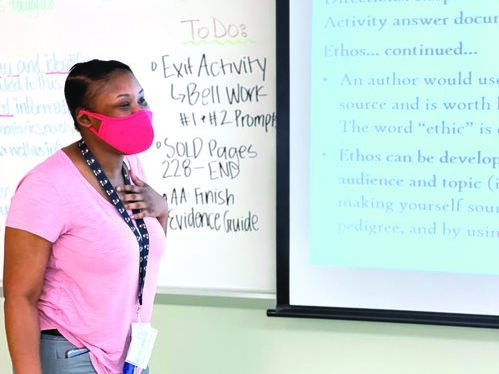
In Cincinnati Public Schools (CPS), everything from classes to the dining program was forced to adjust thanks to COVID-19. Even CPS’ annual College Credit Plus Information Night was affected.
Previously, this event would be held in-person with a PowerPoint that would later be uploaded online. Danielle Reid-Filak, CPS college specialist, says that typically about 70 families would come to the event. In 2020, the session was moved online due to the pandemic.
“I think that everyone has sort of been pushed into the digital age as a result of COVID and, in some ways, it’s been really positive,” she says. “Last year when [the session was] through Facebook Live, it was viewed over a thousand times. So you have a lot of people that, because they’re not bound by time and space, they can either watch the recording after or they can engage virtually… We’re seeing a lot higher numbers of students and families engaged.”
And more engagement is exactly what CPS wants to see with its College Credit Plus (CCP) program. CCP is an Ohio program that allows students to earn both high school and college credit by taking a course through a college partner. Students can take college courses that have been embedded into a high school, attend classes at a local college (Cincinnati State, Chatfield College, University of Cincinnati and Sinclair College are all partners) or participate online. Tuition fees and books are covered by the school, not the student, enabling students to access opportunities they may not have been able to take advantage of before.
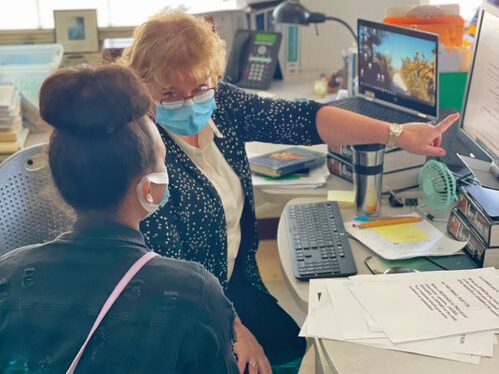
However, CPS goes even further to make these classes accessible. That may mean assisting students with transportation or helping students access laptops or Wi-Fi hotspots. “We will go above state requirements to make sure that they can get there and get the class they want,” says Reid-Filak.
This commitment to accessibility has paid off for CPS students. Last year, 617 students across the district took CCP courses. CPS also reports that 91% of credits attempted were earned. CPS students took 1,435 courses, earning 4,516 credit hours and saving a total of $934,327.65 in tuition costs.
CPS would like to see even more students participate next year. Students are more likely to take CCP classes that occur within their school (due to either physical or perceived barriers), so CPS is looking to embed more classes. “We are really focused on increasing access and availability of college credit across the district,” says Reid-Filak.
In 2019, 26 classes were embedded in physical high schools and this year there were 33. In the 2022-2023 school year, there will be 56 CCP courses offered at schools throughout the district, from the School for Creative and Performing Arts and Walnut Hills High School to Oyler High School and Riverview East Academy.
With this expansion, CPS also wants to help more students earn associate degrees while in high school and assist more students in making informed class decisions that help them work toward their goals.
“[We’re] helping students and families bleed together the language of high school and college,” adds Reid-Filak.
Due to the success of last year’s virtual information session, CPS is hosting another virtual session this year on Nov. 16. Interested families can watch the session on Facebook Live from 6-8 p.m., where they’ll learn more about CCP at CPS and hear from local colleges and universities. The recording will then be made available online afterwards for anyone who was unable to attend the session.
NORTH
Global Pandemic Can’t Stop Moeller from ‘Raising the Shield’
By Val Hunt Beerbower
Archbishop Moeller High School has been molding young minds since 1960. The all-boys Catholic school in Kenwood boasts a prestigious—and generous—alumni roster, as evidenced by the school’s recent capital campaign, which is its most successful fundraiser in history. In a little over a year, the campaign reported a total of $22.4 million raised, blasting through the $14 million goal.
“The ‘Raise the Shield’ capital campaign began with the development of the Endowment and Facility Master Plan with input from more than 300 constituents, including parents, faculty and staff, students, alumni, board members, and community leaders,” says Tara Grewe, Moeller’s director of Marketing. “The vision was clear—to make Moeller the best high school in the country with much-needed facility upgrades, and to make Moeller financially accessible for those who may not otherwise be able to afford it.”
Many students worked hard on the campaign, including a select group of ambassadors nicknamed the Development Team, or D-Team.
“These young men completed a variety of responsibilities regarding donor outreach,” Grewe says. “The D-Team helped organize and staff campaign events, such as donor receptions and groundbreaking celebrations, and sent acknowledgments to campaign supporters via personal video message and phone calls. In addition, various sports teams worked with the D-Team to reach out to the Moeller family via several phone-a-thons to solicit support.”
Thanks to their combined efforts, upgrades to Moeller facilities include:
– Relocation of band/chorus room, which includes a new sound system and storage, and locker room. These were completed in the fall of 2020.
– The new Student Commons, completed just this September, will enhance the lunchtime gathering experience and serves as a gathering place for students.
– A baseball stadium is slated to be complete by the end of 2021 on 30 acres of donated land.
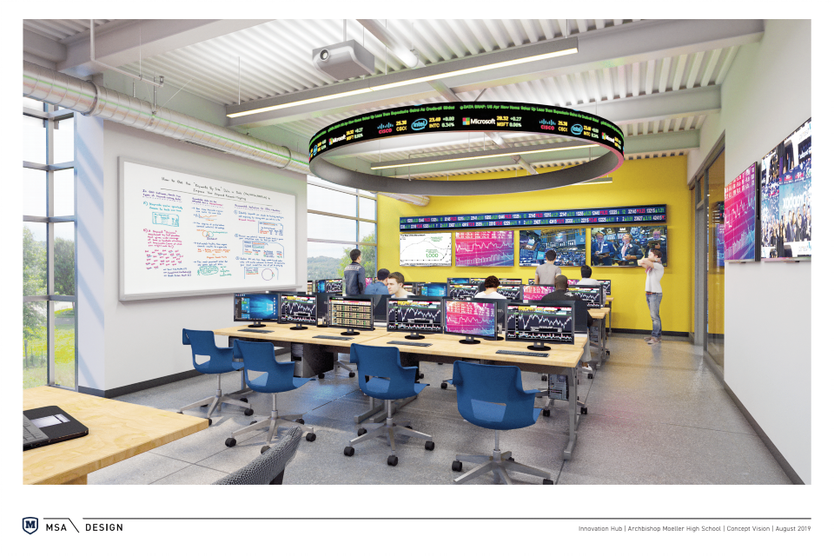
– Moeller’s Innovation Hub, coming in 2024, is designed to promote experiential learning and critical thinking as well as enhance teacher/student relationships. This learning environment will cross-pollinate technology, art, engineering and business classes.
– Also coming in 2024, a fully renovated, 500-seat performing arts center, as well as upgrades to the administrative offices.
“These donors believed in Moeller’s mission and we’re grateful to be a part of a transformational campaign,” Grewe says. “The pandemic pushed us to do things in a different way, creating new and innovative ways to communicate and ultimately surpass our goals.”
The school’s achievements don’t stop at fundraising; Moeller recently opened its first student-run company—an apparel-decorating business, specializing in printed and embroidered products.
“The class will focus on all aspects of starting and running a business, including building a business from scratch, learning accounting and financial components, managing the sales and marketing of the business and products, developing and designing the products, learning business operations and functions, and other important skills,” Grewe says.
Moeller is also kicking off a student-run endowment program. “Adam Molina, ’96, began the ground-breaking program at University of Dayton during his time there as a student,” Grewe says. “With $100,000 to begin, Moeller’s student-run endowment will be the largest in the country.”
WEST
Mercy McAuley Students Lend a Hand
By Joseph Frye
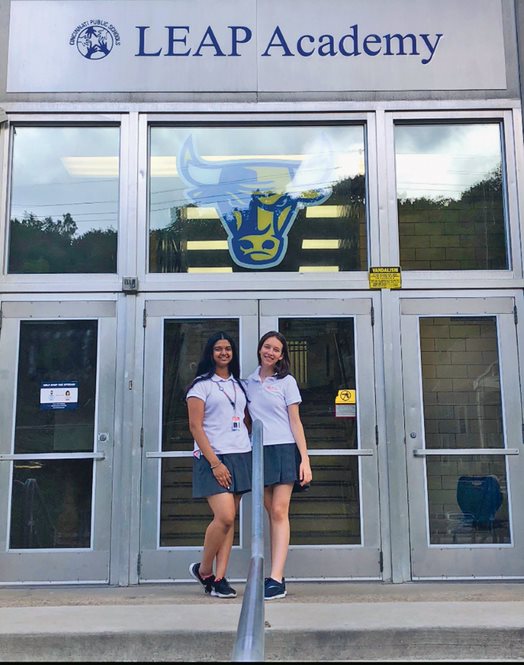
Ava Surendorff and Jiya Patel, two juniors at Mercy McAuley High School in College Hill, recently partnered with Blue Manatee Literacy Project to help raise money to purchase books for LEAP Academy, a Spanish language magnet school that serves students in preschool to sixth grade.
The idea started when Surendorff heard from a relative who works at LEAP that the school’s library lacked enough dual language books for its students. Surendorff and Patel, who are both children of immigrants, understood the struggle that comes along with adapting to a new culture and new language, and therefore wanted to help the school in any way they could. The two students reached out to the Blue Manatee Literacy Project and they agreed to work with Surendorff and Patel to help them achieve their goal.
The Blue Manatee Literacy Project, which has been working to “spread the love of reading to all children in Cincinnati”—according to its website—since 2018, has donated over 40,000 books to children and schools in the area. The nonprofit has arranged a wish list of books for the school, where those looking to donate can browse by grade level.
“It’s great [to know we’re helping out],” Surendorff says. “We love helping out the kids because we really relate with them. My dad is from South Africa, so we can understand being children of immigrants and how it can be difficult for them in a new culture and as they try to learn a new language.”
Since partnering with Blue Manatee Literacy Project, the two students have set a goal to raise $16,000 to help purchase the books for the new library. In order to help raise the money, Surendorff and Patel have done interviews with Local 12, held fundraisers at their school and set up a booth at the Hispanic Heritage Festival. They also set up a website where the public can donate or participate in the “Buy One, Give One” program.
“There is something truly uplifting in watching one student reach out a hand to help another student,” says Amanda Kranais, the executive director of the Blue Manatee Literacy Project, in a statement realized by Mercy McAuley. “The Mercy McAuley community is an excellent example of how collaboration equates to real impact. The Blue Manatee is fortunate to be a part of this initiative.”
As of when this publication went to print, the two students have raised about one fourth of the $16,000 goal to help provide the school with over 1,500 books. “We just really are hoping that will this will make an impact on the many students that go to LEAP Academy and students who will go to LEAP Academy in the future,” says Surendorff.
NORTHERN KENTUCKY
Beechwood Schools Giving Students an EDGE
By Natalie Hamren
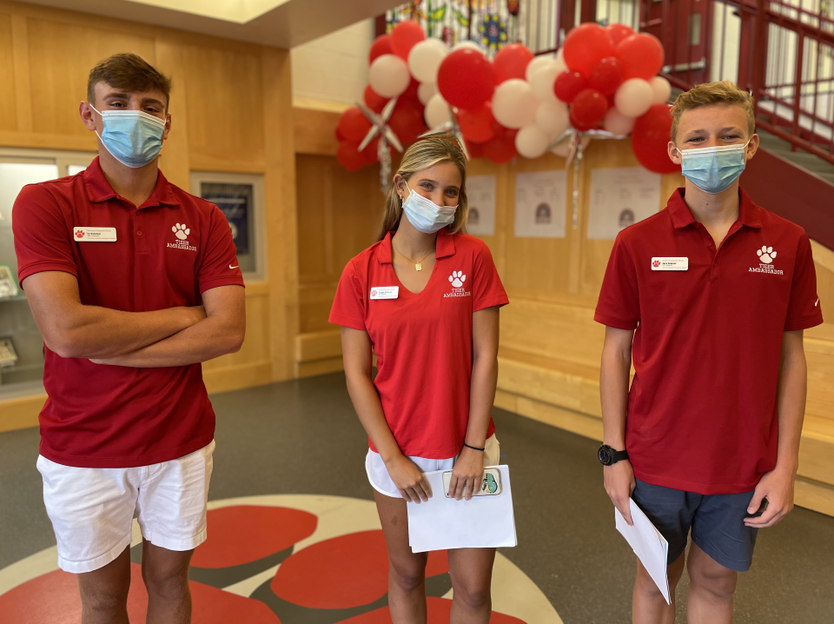
Beechwood Independent Schools, located in Fort Mitchell, Kentucky, is preparing students for college and beyond through an innovative program called EDGE or “Educational Design Geared toward Experience.”
Superintendent Mike Stacy says the EDGE program is a culmination of six years of work. Most Beechwood graduates go on to attend a two-year or four-year institution. However, Stacy says, traditional education programming doesn’t give students an opportunity to fully understand what a major is like and how that translates into a professional job.
The EDGE program has three main goals, Stacy says.
“No. 1: We want bright kids up and out of their seats—at least for a portion of the day. No. 2: We want a kid to really understand that being great in the content doesn’t necessarily equate to loving a job or a professional setting,” Stacy says.
“No. 3: We want that interaction between businesses and universities to transition the kid from K-12 to post-secondary in a much more successful way, not only for grades but also for what a kid really wants to do when they get out of college.”
The program starts all the way down in preschool, where all students experience individualized learning opportunities. In elementary school, Beechwood works with business partners, who develop projects for the students. These relationships then continue all the way into high school and, hopefully, into an internship. Stacy says students don’t have to actively seek out university or industry partners since those relationships have already been established for them.
Recently, a student who wanted to go into nursing visited a local lab where medical professionals and students practice on cadavers. During this visit, the student realized she no longer wanted to go into nursing. She then worked with an adviser at St. Elizabeth to further explore what medical career options were available.
When developing the program, Beechwood staff met with various universities and companies in Northern Kentucky and asked what deficits they saw within first-year students or employees. Stacy says the responses weren’t that they wanted students to be better in math or other traditional skills, rather they wanted them be more experienced in problem-solving, time management and being a good collaborator.
“On top of just having a much better idea of what a major looks like, in relation to a career, we do feel like we’re building a better, more resilient student,” Stacy says. “And a more resilient student is going to turn into a more resilient human being. That’s good for not only your job but just your life in general.”
Stacy says that when a student graduates from Beechwood, they should be equipped with academic skills, as well as interpersonal skills—such as being a good teammate, knowing how to work through problems and having determination.
“You’re not always going to be on top of your class. But that doesn’t mean you’re not a good team, and that doesn’t mean you’re not a great student. We really just want to develop that idea of work ethic and collaborative spirit and resiliency and leadership that isn’t always embedded into a K-12 curriculum,” adds Stacy.
