

Local health care providers finding ways to improve care
Women’s health care is ever evolving with the latest medical advances, treatment options and technologies. We spoke with top experts in the region to discuss how research, a patient-centered focus, counseling and the latest treatments can benefit women in Greater Cincinnati.
Collaboration Spurs Progress
At the University of Cincinnati, research has been groundbreaking when it comes to treating patients. In one new study, experts at UC have collaborated to develop an app that explores the impact of music therapy on the brain after cancer.
Dr. Soma Sengupta, associate professor of neurology at UC and associate director of the UC Gardner Neuroscience Institute’s Brain Tumor Center, recently collaborated with Claudia Rebola and her team at the UC College of Design to bring the “chemobrain” study to life. The pilot study will take place over the course of 18-months.
“We’ve developed an app for expressive music therapy in patients with breast cancer, who have ‘chemobrain’ or brain fog, and that study has just started,” says Sengupta.
Sengupta says she chose music is because there’s a lot of research in the music therapy area that shows music is very helpful in patients that have degenerative issues such as Alzheimer’s.
Pre-Conception Counseling
Dr. Andrea Hamel at UC Health says pre-conception counseling helps prepare women for pregnancy.
“Over the last few years, we’ve seen a lot more advancements in women’s health, in these three main fields, one being pre-conception, counseling and meeting with patients while they are considering pregnancy soon or starting to try, so that we can help to optimize their health and help get them ready for pregnancy,” Hamel says.
Counseling is also beneficial in the first few weeks of pregnancy, she says, when patients are learning about what’s normal, or what might be abnormal.
“Patients feel a lot more comfortable in how they are doing, or to pick up on a problem, before they are able to get into their physician’s office for that early pregnancy visit,” Hamel says.
Individualized Focus
Dr. Sarah Bartlett, a gynecologist with The Christ Hospital Health Network, is an innovator when it comes to prevention and wellness. She has structured her office so that patients feel at home and have more time during an appointment to address whatever concerns they may have. By spending more time with patients, she can connect women to a variety of services such as The Christ Hospital Women’s Heart Center, or even a with a psychologist who works out of her office one day a week.
“What I’m doing is a little different than what I’ve done in the past, and what a lot of other people are doing. It’s interesting, because when you think of innovation, you think of technology and big things, but I think it’s more of my approach to doing a traditional job in a more nuanced way… I really wanted to shift my focus to wellness, prevention, and a more complete picture of health,” Bartlett says.
Bartlett has built her practice on longer 20-to-40 minute appointment blocks in a relaxed environment with attention from a small staff. Focusing on gynecology and non-pregnant women at her primary office in Liberty Township, she’s the only provider in the space.
“I’ve found that it’s challenging to take care of what are often complex women’s problems in the setting of a high-volume, quick visit, or even address it in a way where patients would feel like that they’ve been heard and would feel satisfied by the response,” says Bartlett. “When patients come to me with complex needs, I then have the ability to utilize the many resources that I have working for Christ Hospital, and these allow me to give a more comprehensive and holistic approach to their care.”
Reducing Recovery Time
Dr. Michael Platt-Faulkner, OB-GYN at St. Elizabeth Physicians, says robotic surgery continues to benefit women and advance women’s health care.
“We are constantly fine-tuning our abilities and different surgical techniques that we can do with the robotic surgical system. One of the main ways I use robotic surgery is for hysterectomies,” he says, “We’ve taken a surgery that several years ago required a large abdominal incision and a week or more stay in a hospital down to a surgery that takes a couple of hours, and a patient leaves the same day.”
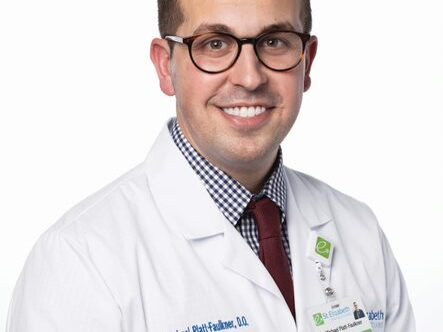
Acessa, a laparoscopic, radiofrequency ablation procedure for treating fibroids, is another technology used at St. Elizabeth. The new Acessa procedure uses a minimally invasive approach with two tiny stomach incisions, instead of a large incision and an overnight stay in the hospital.
“Uterine fibroids are something that affect many women, both pre-and-post-menopausal women. They can cause significant pelvic pain. They are notorious for causing extremely heavy periods, which can be distressing, and our options have been pretty limited,” Platt-Faulkner says.
The Acessa procedure has shortened patients’ hospital stays and recovery times. People are leaving the same day, and usually feeling like themselves within a week.
Improving Pregnancy Outcomes
“One of our big pushes throughout the past 18 months has been decreasing poor pregnancy outcomes, so we’ve been making sure that the morbidity and mortality associated with pregnancy is as low as possible,” says Dr. Kristin Coppage, System Chief, TriHealth Women’s Services.
TriHealth is committed to improving the safety of pregnant women, including issues like reducing hemorrhage after delivery, decreasing the primary C-section rate, decreasing hypertensive issues in pregnancy and making sure that patients with pre-existing cardiac conditions are cared for as well as taking care of women who have opioid use disorders, she says.
“For example, for the opioid use disorder here at TriHealth, we have a program called the HOPE Program, and it stands for Helping Opiate-Addicted Pregnant Women Evolve,” Coppage says.
The program takes a team approach, involving the hospital’s resident program, the maternal fetal medicine specialists, hospitalists, social workers and care navigators to help women who may be experiencing opiate-dependence to be able to undergo treatment.
Immediate Testing Results
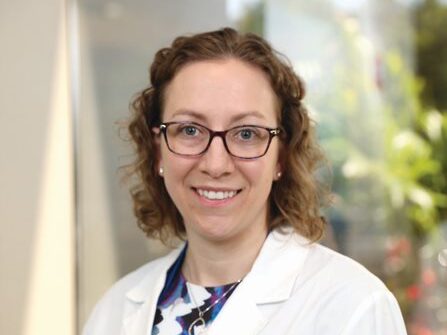
Dr. Abigail Tremelling, a fellowship-trained surgical breast oncologist at Mercy Health, says the “I Know” quick notification mammography program is another advancement that allows patients to get mammography screening results, almost immediately before they leave their office visit.
“From the beginning of a patient’s experience, they are getting a mammogram, and the ‘I Know’ program that we’ve developed through Mercy allows us to decrease the wait time, and thus, we minimize the associated anxiety with waiting for results,” Tremelling says
When a woman signs up for their mammogram, they can elect to be placed into the program, which allows them to come in for mammogram. If there is an abnormality and if they need additional imaging, instead of having to come back, it can be done the same day. After the additional imaging, if there’s still another recommendation for something further to be done like a biopsy, it can also be done on the same day. Biopsy results take from 24-to-48-hours, so there’s also decreased waiting time.
