

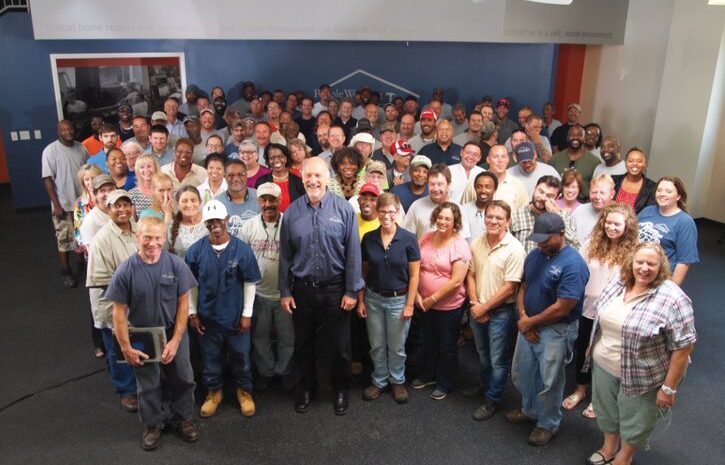
Executive Director of People Working Cooperatively
Cincinnati City Council has spent much of 2021 discussing how to build new affordable housing, but People Working Cooperatively, a nonprofit that assists low-income residents in 19 Tristate counties, says there are other ways to help people live in affordable homes.
“We’re really unique in the fact that we have a workforce of over a hundred people that apply their construction skills to keep people safe and secure and healthier in their homes,” says President Jock Pitts. By fixing homes before they deteriorate, Pitts says that the community can help people stay in their homes instead of creating new ones.
How does PWC fit into the affordable housing conversation?
There’s an existing housing stock out there that low-income folks are living in. Sometimes they’ve been there for multiple generations, yet they may need a little help. PWC’s typical customer, if you will, earns about $14,000 a year. After you take out the essentials for food and so forth, there isn’t money for home repair. We provide that kind of stop gap, that emergency services, for people that might be elderly, disabled or veterans.
Our typical service ranges. It could be from a low of a $100 to a high of $20,000. But typically it’s in the range of $1,500 to $2,000 for a home repair. And if you juxtapose how many of those weekend repairs we can make for that kind of money that allows someone to stay in their home versus what it costs for a new development, you start to see it’s dramatic.
What are the health benefits of helping people stay in their homes?
There’s incredible health benefits to it. People are healthier in the homes that PWC has been able to work in than those that were eligible for our services, but we weren’t able to provide them. There’s data that suggests 40 to 50% healthier. What does all that mean? What are the areas where PWC makes the bigger difference or biggest difference?
One of them is fall safety. We have a huge impact on reducing falls, and that’s a really huge problem in our society today. We remediate lead-based pain. That has such a negative consequence for children zero to six. If you’re lead poisoned at that period of your life, the consequences are usually lifelong. A third one would be breathing and respiratory related issues. Asthma is the No. 1 reason children go to the emergency room at Cincinnati Children’s Hospital. We have a lot of work that we do that [address] the triggers for asthma.
Are there other types of benefits, to both individuals and community?
Another benefit is tax base. If you keep someone in their home, they’re likely to be paying your taxes and it keeps the community more vibrant and stronger. [Experts have] looked at Hamilton County over a 10-year period and there was a 10% increase in value for the homes that we serve. Over a 10-year period, homes immediately surrounding the homes we serve were 3% more valuable. Once you increase the value of a home, it brings up the value of the surrounding housing stock.
How can someone support PWC?
Volunteering is a wonderful thing here and it gets you more aware of our mission and the importance of it. People don’t have to have construction skills. We just had Prepare Affair in November, where you can rake leaves and clean gutters and do some things, but you start to get a glimpse of how people are living and what the needs are. And then you usually want to donate money after that.
